
Why HR Compliance is Your Business’s Most Critical Investment
HR compliance is the process of ensuring your business follows all applicable labor laws, regulations, and internal policies. It covers everything from hiring and paying employees to keeping them safe and treating them fairly.
Quick Answer: What is HR Compliance?
- Legal Adherence: Following federal, state, and local employment laws (FLSA, FMLA, ADA, Title VII, OSHA)
- Policy Management: Creating and enforcing workplace policies that protect employees and your business
- Risk Mitigation: Avoiding costly fines, lawsuits, and reputational damage
- Fair Treatment: Building a workplace culture based on equality, safety, and ethical leadership
While many see HR compliance as tedious paperwork, the reality is that non-compliance can bankrupt your business. Business leaders spend an average of 5.3 hours per month on wage and hour compliance, plus another 5 hours per month on workplace safety laws. That’s over two full workdays every month spent on compliance tasks alone.
The penalties for getting it wrong are severe. I-9 infractions can cost up to $30,000 per violation, while discrimination claims can destroy your reputation overnight.
But compliance isn’t just about avoiding disaster; it’s about creating a workplace where people want to work. Organizations that support caregivers see 71% employee engagement, compared to just 48% for those that don’t. When you build a culture of fairness and follow the rules, everyone wins.
The challenge is a constantly changing compliance landscape. Federal, state, and local laws overlap and sometimes contradict each other. Remote work adds another layer of complexity, as employers must comply with laws in every state where they have employees.
This guide will break down the essential laws, common mistakes, and practical strategies to help you steer this complexity.
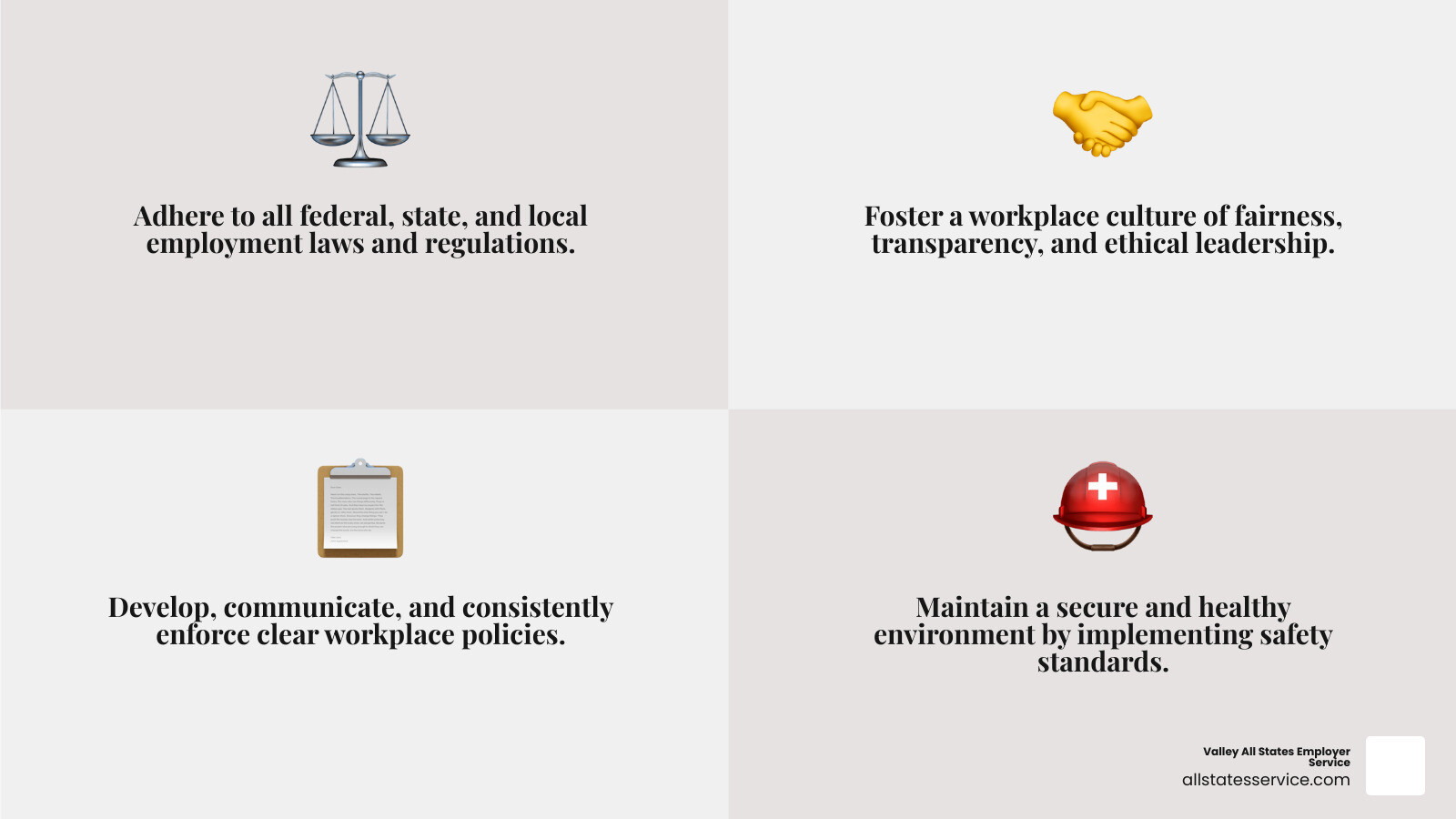
Know your hr compliance terms:
What is HR Compliance and Why is it Crucial?
At its core, HR compliance means aligning your business practices with the laws and regulations designed to protect employees and ensure fair workplaces. This legal and ethical framework is crucial for businesses of all sizes, from a small startup in Lutherville, Maryland, to a large corporation.

The answer involves both safeguarding your business and fostering a thriving work environment. HR compliance is a comprehensive system of obligations that touches every aspect of the employment relationship.
The Four Main Types of HR Compliance
We can break down HR compliance into four main types:
- Statutory Compliance: These are laws passed by federal, state, and local governments that dictate fundamental employment rights like minimum wage, overtime, and anti-discrimination. Key examples include the Fair Labor Standards Act (FLSA) and the Family and Medical Leave Act (FMLA).
- Regulatory Compliance: These are rules from government agencies that enforce statutory laws. For instance, the Equal Employment Opportunity Commission (EEOC) provides guidance on anti-discrimination laws, while the Occupational Safety and Health Administration (OSHA) sets workplace safety standards.
- Contractual Compliance: This involves following the terms of legally binding agreements, such as employment contracts, non-disclosure agreements, or severance agreements.
- Union Compliance: If your workforce is unionized, you must comply with collective bargaining agreements and union laws like the National Labor Relations Act (NLRA). These agreements often dictate wages, benefits, and working conditions. For example, businesses must be aware of unions like The Association of Flight Attendants – CWA (AFA-CWA) when working with their members.
The Business Case for Strong HR Compliance
Strong HR compliance is a strategic investment in your business’s stability and growth. Here’s why it’s crucial:
- Avoiding Fines and Penalties: Non-compliance can lead to hefty fines and back pay awards. Penalties for I-9 infractions alone can reach up to $30,000 per violation, which can be devastating for small businesses.
- Preventing Costly Lawsuits: Beyond fines, non-compliance often leads to expensive and time-consuming litigation, such as wage disputes or discrimination claims.
- Protecting Company Reputation: News of compliance failures spreads quickly, damaging your brand and making it hard to attract talent and customers. A strong ethical reputation is invaluable.
- Improving Employee Morale and Productivity: When employees feel protected and treated fairly, they are more engaged and productive. Organizations supporting caregivers see 71% employee engagement, compared to 48% in those that don’t. This positive environment reduces turnover.
- Fostering Fairness and Equality: HR compliance helps create a workplace with equal opportunities. It reinforces ethical leadership and promotes a culture of respect, benefiting everyone.
Understanding these facets of HR compliance is the first step toward building a resilient business. To dig deeper, explore our Human Resources Compliance guide.
The Tangled Web of HR Compliance Laws and Regulations
Navigating employment laws is complex. Businesses in the U.S., including those in Maryland, face a multi-layered system of federal, state, and local regulations. Rules can vary significantly by location, making compliance a challenge. Staying informed and adaptable is essential.

Key Federal Laws Every Employer Must Know
Federal laws establish a baseline for employment standards across the U.S. and are critical for every employer to understand. Here are some of the most prominent:
- Fair Labor Standards Act (FLSA): This law establishes federal minimum wage, overtime pay eligibility, recordkeeping, and child labor standards. It defines which employees are “exempt” and “non-exempt” from overtime.
- Family and Medical Leave Act (FMLA): The FMLA provides eligible employees with up to 12 weeks of unpaid, job-protected leave for specific family and medical reasons. It applies to employers with 50 or more employees, covering 56% of U.S. employees. The law’s complexity is highlighted by the 89% of employers who say more FMLA training is needed.
- Americans with Disabilities Act (ADA): The ADA prohibits discrimination against individuals with disabilities and requires employers to provide reasonable accommodations, unless it causes undue hardship. The Job Accommodation Network (JAN) is a free resource for information on the ADA.
- Title VII of the Civil Rights Act of 1964: This landmark law prohibits employment discrimination based on race, color, religion, sex (including pregnancy, transgender status, and sexual orientation), and national origin. The EEOC’s website offers extensive resources for employers.
- Occupational Safety and Health Act (OSHA): OSHA requires employers to provide a workplace free from recognized hazards. Complying with these safety laws takes business leaders an average of 5 hours a month.
- Immigration Reform and Control Act (IRCA): This law requires employers to verify every employee’s identity and employment eligibility using Form I-9. Failing to properly complete and retain I-9 forms can lead to significant penalties. Our team at Valley All States Employer Service specializes in outsourced E-Verify workforce eligibility verification, helping businesses minimize errors and administrative burdens.
For more details, the U.S. Department of Labor (DOL) provides comprehensive resources.
The Growing Impact of State and Local Laws
While federal laws set a baseline, state and local laws often add complexity with stricter requirements, especially in areas like minimum wage and pay transparency. When laws conflict, employers must follow the one that is most beneficial to the employee.
Consider these examples impacting businesses, including those in Maryland:
- Minimum Wage Differences: The federal minimum wage is $7.25 per hour, but many states and cities have higher rates. For instance, Oregon’s minimum wage is $14.70, while the District of Columbia’s is $17.50 per hour. In Maryland, the state rate is higher than the federal one, and some counties have even higher rates, making it critical to track local variations.
- Pay Transparency Laws: Several states, including Illinois and Minnesota, now require salary ranges in job postings. Maryland’s law, effective October 1, 2024, also mandates this. Businesses hiring remotely must comply with the laws in the employee’s state.
- Ban-the-Box Ordinances: These laws restrict when employers can ask about an applicant’s criminal history. For example, Prince George’s County, Maryland, expanded its ordinance in 2024. A national trend towards “clean slate” laws, which automatically expunge certain records, also affects what employers see in background checks.
- Marijuana Legalization: The patchwork of state cannabis laws creates challenges. While employers in states like Kentucky can often maintain drug-free policies, others like California and New York have limitations on THC testing. The proposed federal rescheduling of marijuana could further complicate drug testing policies.
This dynamic environment shows that understanding federal law isn’t enough. Businesses must track and comply with varying state and local requirements. For a comprehensive look, see our Employment Compliance Guide 2025.
Common Pitfalls: HR Compliance Issues and Their Consequences
Even with the best intentions, businesses can fall into common HR compliance traps due to a lack of awareness or outdated policies. The consequences are severe, leading to financial, legal, and reputational damage.
Examples of Common HR Compliance Failures
Here are some of the most frequent areas where businesses stumble:
- Wage and Hour Violations: This is a common problem. Examples include miscalculating overtime, paying the wrong minimum wage (e.g., in Maryland), misclassifying employees as “exempt,” or failing to pay for all hours worked. Despite leaders spending 5.3 hours a month on this, violations are rampant.
- Discrimination and Harassment: Failing to prevent or properly address discrimination or harassment creates a hostile work environment and leads to costly lawsuits. This includes refusing reasonable accommodation for a disability without a valid reason.
- Improper Employee Classification: Misclassifying employees as independent contractors to avoid taxes and overtime can lead to significant back wages, penalties, and legal challenges from government agencies.
- I-9 and E-Verify Errors: As experts in this area, we know Form I-9 errors are critical. Mistakes like incomplete sections or incorrect documentation can lead to fines up to $30,000 per I-9 infraction. Incorrectly using E-Verify, especially where mandated in states like Maryland, also carries risks.
- Workplace Safety Lapses: Neglecting OSHA standards can result in serious injuries, fatalities, and substantial fines. Complying with safety laws takes an average of 5 hours a month, but this investment is crucial. An example is a construction company not providing essential protective gear.
- Data Privacy Breaches: Failing to secure sensitive employee data can lead to privacy breaches and legal issues. Laws like the California Consumer Privacy Act (CCPA) show a growing focus on data protection that affects businesses nationwide, including those in Maryland.
The High Cost of Non-Compliance
The repercussions of these compliance failures are far-reaching:
- Steep Legal Penalties and Fines: Penalties can range from thousands to millions of dollars, eroding profits and threatening business continuity.
- Costly Litigation: Lawsuits are expensive due to legal fees, settlements, and the time and resources diverted from core business operations.
- Damaged Brand Reputation: A reputation for being unfair or unsafe makes it hard to attract top talent and customers. Rebuilding a damaged reputation can take years.
- Decreased Employee Morale and Productivity: When employees witness non-compliance, trust erodes, leading to disengagement, increased turnover, and a toxic work culture.
The risks are too high to ignore. Proactive HR compliance is a necessity for protecting your business and fostering a positive work environment. Learn more about how to Reduce HR Compliance Risk by Outsourcing.
Proactive Strategies for Mastering HR Compliance
The good news is that HR compliance doesn’t have to be a reactive, fear-driven exercise. By adopting proactive strategies, we can transform it from a burden into a strategic asset that strengthens our organization and protects our people.
These strategies involve a combination of clear policies, leveraging technology, and continuous training and communication.
Building a Framework with Policies and Audits
A solid compliance framework starts with well-defined policies and a commitment to regularly checking their effectiveness.
- Creating a Compliant Employee Handbook: Your employee handbook is more than just a rulebook; it’s a foundational document for HR compliance. It should clearly outline company policies on everything from conduct and leave to anti-discrimination and workplace safety. This document needs to be kept current with federal, state (like Maryland’s laws), and local regulations. A well-crafted handbook ensures employees understand expectations and rights, and provides a defense against claims of ignorance.
- The Role of Regular HR Audits: An HR audit is a systematic review of your HR policies, procedures, and practices to ensure they align with current laws and best practices. This includes reviewing I-9 forms, wage and hour classifications, leave administration, and anti-discrimination policies. Regular audits, perhaps annually or bi-annually, help us identify gaps and correct issues before they become costly problems. For comprehensive guidance, consult our HR Compliance Audit Guide 2025.
- Consistent Policy Enforcement: Having great policies is only half the battle. They must be applied consistently across the board, without favoritism or bias. Inconsistent enforcement can lead to claims of discrimination and undermine the credibility of your HR department.
- Secure Record-Keeping: Proper documentation and secure storage of employee records (applications, I-9s, payroll, performance reviews, disciplinary actions) are vital. Records must be kept for specific periods as mandated by law. Ensure these documents are stored appropriately and accessible only to authorized personnel, protecting employee privacy and supporting your defense in legal challenges.
Leveraging Technology and Outsourcing
In today’s complex regulatory environment, technology and external expertise can be powerful allies in managing HR compliance.
- HRIS Platforms and Compliance Software: Human Resources Information Systems (HRIS) and specialized compliance software can automate many compliance-related tasks, such as tracking leave, managing payroll, and ensuring accurate employee data. Many HR tools today have integrated compliance modules to make it easier. Examples include BerniePortal Compliance and Namely. This helps streamline processes and reduce human error.
- Outsourcing Compliance: For many businesses, especially small to medium-sized enterprises, the burden of keeping up with ever-changing laws is immense. Outsourcing HR compliance functions to external providers can provide access to expert knowledge and resources that might otherwise be too costly or complex to maintain in-house. This frees up internal HR teams to focus on strategic initiatives rather than administrative tasks. The statistic that 18% of HR teams outsource HR technology that supports compliance and business needs shows a growing trend in this area. To explore this further, see our guide on Outsourced HR Compliance.
The Power of Training and Communication
HR compliance is a shared responsibility. It requires everyone in the organization to be aware of their roles and obligations.
- Training Managers on Compliance Topics: Managers are on the front lines of employee relations. They need to be thoroughly trained on key HR compliance topics, including anti-discrimination laws, harassment prevention, FMLA policies, and proper disciplinary procedures. This equips them to make legally sound decisions and identify potential issues before they escalate. The fact that 89% of employers say more training is needed on FMLA rights and responsibilities underscores the critical need for this type of education.
- Communicating Policies to Employees: Regular and clear communication of policies to all employees is essential. This can be done through onboarding, annual training sessions, and readily accessible employee handbooks. Employees should know their rights, responsibilities, and how to report concerns without fear of retaliation.
- Staying Informed: The legal landscape is constantly evolving. We must stay updated on legislative changes at the federal, state, and local levels. Subscribing to relevant newsletters, such as HR Dive’s Compliance newsletter, and following reputable HR news sources are excellent ways to stay informed.
By proactively building these frameworks, leveraging appropriate tools, and fostering a culture of informed responsibility, we can confidently steer the complexities of HR compliance.
Frequently Asked Questions about HR Compliance
We often hear similar questions from businesses striving to understand and implement effective HR compliance strategies. Let’s address some of the most common ones.
What are the main areas of HR compliance?
The main areas of HR compliance are broad and interconnected, covering the entire employee lifecycle from hiring to separation. We categorize them as:
- Employment Law Compliance: This includes adhering to federal laws like FLSA (wages, overtime), FMLA (leave), ADA (disability accommodations), Title VII (anti-discrimination), OSHA (workplace safety), and IRCA (I-9 verification). It also encompasses state and local laws, which often have stricter requirements than federal mandates. For more details on this, refer to our HR Regulatory Compliance guide.
- Workplace Policies and Procedures: Developing and consistently enforcing policies on conduct, attendance, social media use, drug testing, and harassment prevention.
- Compensation and Benefits: Ensuring fair pay practices, accurate payroll, proper classification (exempt vs. non-exempt), and compliance with benefits administration (e.g., COBRA, ACA if applicable).
- Employee Relations and Discipline: Managing grievances, investigations, and disciplinary actions in a fair and legally defensible manner.
- Data Privacy and Recordkeeping: Protecting sensitive employee data, adhering to privacy laws, and maintaining accurate records for legally mandated retention periods.
- Workforce Eligibility: Properly verifying the right to work for all employees, a service where Valley All States Employer Service provides expert outsourced E-Verify solutions.
How does HR compliance differ for small businesses?
While the core principles of HR compliance apply to businesses of all sizes, the specific laws and the resources available to manage them can differ significantly for small businesses.
- Employee Thresholds for Laws: Many federal laws, like the FMLA and ACA (Affordable Care Act), only apply to businesses with a certain number of employees (e.g., 50 or more for FMLA). However, state and local laws often have lower thresholds, meaning even a small business in Maryland could be subject to specific leave laws, minimum wage rules, or anti-discrimination statutes.
- Resource Constraints: Small businesses often lack dedicated HR departments or legal counsel, making it challenging to stay updated on complex and changing regulations. This is where external support, like outsourced HR compliance services, becomes invaluable.
- Core Principles Remain: Regardless of size, fundamental principles like fair treatment, anti-discrimination, and a safe workplace are always applicable. Small businesses must still be diligent in these areas.
- Importance of Foundational Policies: For small businesses, establishing foundational policies and an employee handbook early on is crucial. It sets expectations, documents procedures, and provides a framework for growth.
We understand these unique challenges. For custom advice, check out our HR Compliance for Small Business resources.
What is an HR compliance audit?
An HR compliance audit is a systematic and comprehensive review of an organization’s HR practices, policies, and procedures to ensure adherence to applicable laws, regulations, and internal standards. Think of it as a health check-up for your HR functions.
The process typically involves:
- Systematic Review: Examining all areas of HR, including hiring, onboarding, payroll, benefits, performance management, employee relations, and termination processes.
- Policies and Procedures: Evaluating existing policies to ensure they are current, legally sound, and clearly communicated.
- Identifying Gaps: Pinpointing any areas where current practices fall short of legal requirements or best practices. This could involve outdated handbooks, incorrect employee classifications, or inadequate record-keeping.
- Ensuring Legal Adherence: Verifying that the business is meeting all federal, state, and local employment law obligations.
- Action Planning: Developing a plan to address any identified deficiencies, including policy updates, process changes, or additional training.
Regular audits are a proactive measure that helps us identify and mitigate risks before they lead to costly fines or lawsuits. It’s an essential tool for maintaining ongoing HR compliance. For more in-depth information, our HR Compliance Review guide offers further insights.
Your Partner in Navigating Compliance
As we’ve explored, HR compliance is a dynamic and essential aspect of running any successful business. It’s not just about avoiding penalties; it’s about building a robust, ethical, and attractive workplace. From understanding federal mandates like the FLSA and ADA to navigating the specific nuances of Maryland’s state laws, the journey can be complex.
We believe in a proactive approach—one that prioritizes clear policies, consistent application, continuous training, and strategic use of technology and expert partnerships. By doing so, you protect your business from legal and financial risks, safeguard your reputation, and foster a positive culture where employees thrive.
At Valley All States Employer Service, we understand these challenges intimately. Our expertise in outsourced E-Verify workforce eligibility verification, combined with our broader understanding of employment compliance and HR services, positions us as a trusted partner for businesses across the United States, including those right here in Maryland. We are committed to minimizing your administrative burden and ensuring your peace of mind.
Ready to simplify your HR compliance journey and ensure your business is on solid ground? We’re here to help you steer every turn.