HR Compliance Audit: 5 Essential Steps
Why Your Startup Can’t Afford to Ignore HR Compliance
An HR compliance audit is a top-to-bottom review of your company’s HR policies, practices, and documents to ensure they meet federal, state, and local employment laws. It spots gaps in everything from hiring and payroll to workplace safety, protecting your business from legal risks, fines, and reputational damage.
What an HR Compliance Audit Covers:
- Recruiting and Hiring: Job descriptions, applications, interviews, and I-9 verification.
- Compensation and Benefits: Pay equity, overtime, benefits administration, and employee classification.
- Employee Records: Personnel files, training documents, and recordkeeping.
- Policies and Procedures: Employee handbooks, anti-discrimination policies, and safety protocols.
- Regulatory Compliance: Adherence to FLSA, ADA, FMLA, OSHA, and more.
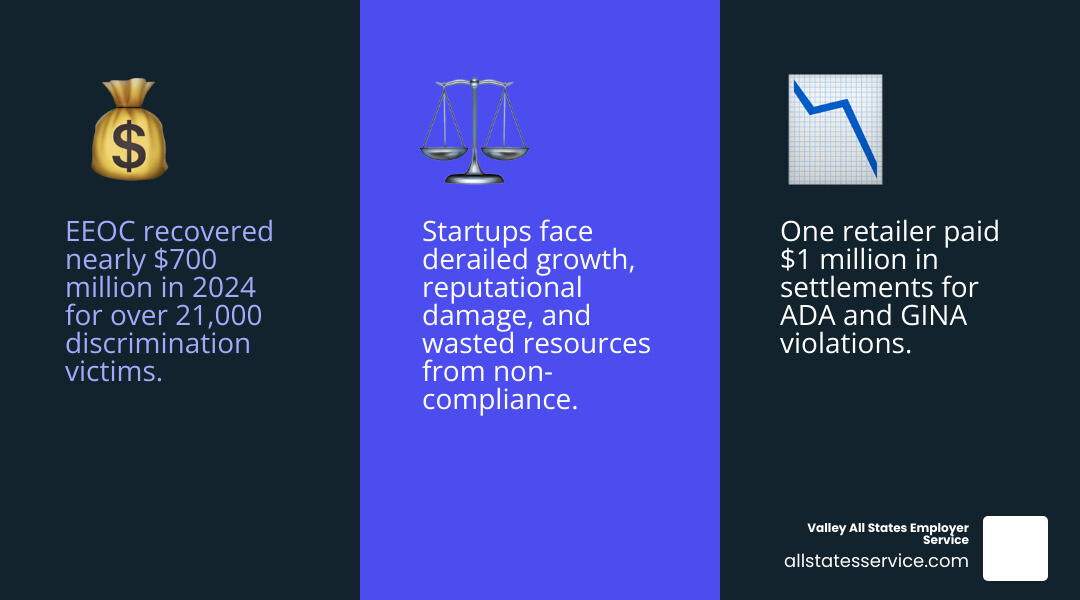
Why It Matters: In 2024, the EEOC recovered nearly $700 million for workplace discrimination victims. These aren’t isolated incidents; they’re warnings. For startups, the stakes are higher. You’re building a culture from scratch, and every decision matters. Getting it wrong early doesn’t just risk a fine, it risks your entire business.
Many founders think HR compliance can wait. That’s a dangerous myth. Employment laws apply whether you have 5 employees or 500, but startups have fewer resources to absorb mistakes. A single compliance failure can derail growth and consume time and money you can’t afford to lose.
The good news is that an HR compliance audit is a proactive way to fix problems before they become crises. Think of it as a health checkup that protects your team, your budget, and your future.
The Anatomy of an Effective HR Compliance Audit
Think of an HR compliance audit as a health checkup for your business. It examines your HR practices to spot issues before they become expensive emergencies. The goal isn’t to find fault, but to protect your company, create a fair workplace, and build a foundation for growth.
During an audit, we compare legal requirements with your day-to-day operations. We look at written policies and how they play out in practice. Are managers following the handbook? Is your documentation in order? The answers directly impact your legal exposure and your team’s trust. A well-executed audit gives you a clear roadmap for what to fix, what’s working, and where to improve.

Key Areas Under the Microscope
An effective audit covers the areas where most companies run into trouble.
Recruiting and Hiring is where many compliance problems start. Job descriptions must comply with the Americans with Disabilities Act, and interview questions must be legally sound. The biggest minefield? I-9 forms and E-Verify compliance. Missing or improper I-9s can cost you thousands per violation. That’s why Valley All States Employer Service specializes in outsourced E-Verify verification. We handle the paperwork correctly, so you avoid administrative errors and fines. Our E-Verify Program Complete Guide breaks down what you need to know.
Compensation and Benefits is where we dig into the numbers. Are you classifying employees correctly (exempt vs. non-exempt)? Calculating overtime properly? Are there pay equity issues in your salary structure? With new pay transparency laws, this area requires constant attention.
Employee Files and Recordkeeping might sound boring, but proper documentation is your best defense in a legal dispute. We check that personnel files are complete, accurate, secure, and retained for the legally required time.
Policies and Handbooks form the backbone of your workplace rules. Your employee handbook should cover anti-discrimination, harassment prevention, safety, leave policies (including FMLA), and disciplinary procedures. An outdated or unclear handbook can be a major liability.
Workplace Safety is not optional. We examine your safety policies, training, and procedures to ensure OSHA compliance, including accident prevention and emergency preparedness.
Different Types of Audits for Different Needs
Not every company needs the same kind of audit. The right approach depends on your goals.
Regulatory Audits focus purely on legal compliance with laws like FLSA, ADA, OSHA, and I-9 requirements. This is your starting point if you’re worried about legal exposure.
Strategic Audits go beyond checking boxes to analyze how HR supports your business goals. Is your recruiting process bringing in the right talent? This audit treats HR as a strategic partner.
Specific Function Audits zoom in on one area, like your compensation structure or leave management process. These targeted audits let you fix specific problems efficiently.
Comparative Audits (or benchmarking) measure your practices against industry standards and competitors. This helps you understand where you stand in the market and how to stay competitive.
The right audit gives you actionable answers, not just a pile of paperwork.
Your Step-by-Step Guide to Conducting an Audit
Facing your first HR compliance audit can feel intimidating, but think of it as a wellness check for your business. You’re not looking for perfection; you’re looking for clarity on your strengths and weaknesses. A structured audit transforms this overwhelming task into manageable steps, whether you handle it internally or bring in experts.
Essential Steps for Your First HR Compliance Audit
Start with a clear plan to make your first audit far less daunting.
1. Define Scope & Get Buy-In
First, decide what you’re auditing. A comprehensive review, or a focus on a specific concern like I-9 verification or wage compliance? The scope determines your timeline and resources. Equally important, get leadership on board by explaining that an audit prevents costly problems down the road. Our guide on HR Compliance for Small Business can help define a realistic scope.
2. Gather Documents & Review Policies
Next, round up your employee handbook, job descriptions, personnel files, payroll records, I-9 forms, and other HR documents. Compare what you have written against current laws. Look for outdated language, missing policies, or vague statements that create legal exposure.
3. Analyze Practices & Identify Gaps
This is where theory meets reality. A great policy manual is useless if it isn’t followed. Are managers applying policies fairly? Are all I-9 forms completed correctly and on time? Look for gaps between what’s written and what’s practiced. This might involve sampling employee files or walking through processes with your team to spot vulnerabilities.
4. Document Findings & Report to Leadership
Compile your analysis into a clear, actionable report. Prioritize findings by severity, from a missing poster (an easy fix) to systematic employee misclassification (a major liability). Use visuals to help leadership quickly grasp the situation. Your report should tell a story: here’s where we are, here’s where we need to be, and what it will take to get there.
5. Create & Implement a Corrective Action Plan
An audit’s real value comes from what you do next. Develop a detailed corrective action plan that assigns specific tasks to specific people with realistic deadlines. Start with your highest-risk items, like I-9 violations or wage and hour issues, then work your way down. Schedule regular check-ins to monitor progress and ensure accountability.
Who Should Run the Audit? Internal vs. External Experts
One of the biggest questions is who should conduct your HR compliance audit. There’s no single right answer.
Internal auditors know your company, culture, and challenges. This can be a faster, more cost-effective option for smaller organizations. However, internal audits can suffer from blind spots, lack of specialized knowledge, and potential bias. It’s also a time-consuming task for an already busy HR team.
External auditors bring fresh eyes, specialized expertise, and complete objectivity. They stay current on regulatory changes and know exactly what to look for. At Valley All States Employer Service, our expertise in areas like E-Verify audits allows us to catch errors internal teams might miss. While external services have an upfront cost, they free up your team and provide invaluable, impartial perspective.
Many organizations use a hybrid approach, where the internal team handles logistics and an external expert provides the final assessment. This balances cost with quality.
| Feature | Internal Auditors | External Auditors |
|---|---|---|
| Cost | Lower direct cost, but takes staff time away from other work | Higher upfront cost, but doesn’t pull your team away from daily operations |
| Objectivity | Risk of bias, but deep understanding of company context | High objectivity with fresh, unbiased perspective |
| Time Commitment | Can strain internal resources and delay other projects | Minimal drain on your team’s time |
| Expertise | Varies by team; may lack current, specialized compliance knowledge | Specialized, up-to-date knowledge across diverse regulations |
Whatever route you choose, the important thing is to actually do the audit. Waiting for a lawsuit is the most expensive option of all.
Beyond the Checklist: The Strategic Wins of an HR Audit
An HR compliance audit isn’t just about avoiding lawsuits. That’s only half the story. When you approach an audit strategically, it becomes a powerful tool for building a stronger, more efficient, and more attractive company. You’re not just checking boxes; you’re investing in your team, culture, and bottom line.

The Strategic Value of a Proactive HR Compliance Audit
Let’s talk about what happens when you see audits as a growth opportunity.
Streamlining HR processes is a huge win. Audits often find inefficiencies, like manual onboarding processes or vacation tracking, that waste time and frustrate employees. Fixing these bottlenecks frees up resources for growth.
Fostering a fair and transparent culture has hard business results. When policies are clear, consistent, and legally sound, employees feel respected and trust leadership. This trust reduces conflict and improves communication.
Reducing employee turnover has a direct financial impact. Replacing an employee is expensive. People often leave due to unfair treatment or unclear expectations, issues an HR compliance audit helps you identify and fix before they drive good people away.
Building a strong employer brand is critical in a competitive hiring market. A reputation for compliance and a positive culture makes you an employer of choice. Regular audits demonstrate your commitment to doing things right, which helps attract top talent.
Gaining a competitive advantage is the ultimate result. While competitors deal with lawsuits or compliance disasters, you’re focused on innovation and growth. Your HR function runs smoothly, supporting the business instead of creating crises.
How Audits Mitigate Legal Risks and Financial Penalties
Now for the most immediate benefit: keeping your business safe.
Identifying issues early is the whole point. An audit is your early warning system for problems like illegal interview questions or outdated policies. These are fixable when they’re small but catastrophic if left unchecked.
Correcting non-compliant practices shows good faith. If an audit finds an issue with overtime calculations or leave policies, fixing it immediately can prevent legal action. It demonstrates you took steps to remedy the situation.
Demonstrating due diligence matters if you face legal scrutiny. Courts and regulators look favorably on companies that conduct regular HR compliance audits. This documented history can be the difference between a minor penalty and a major judgment.
Avoiding costly fines and lawsuits is where the real money is at stake. Litigation is a nightmare of legal fees and settlements that can run into the millions. For example, one retailer paid $1 million for discriminatory hiring practices. An audit dramatically reduces your exposure to these catastrophic events.
From Audit to Action: Maintaining Ongoing Compliance
An HR compliance audit isn’t a one-and-done exercise. Think of it like going to the gym; consistency is key. The real magic happens after the audit, when you transform findings into action. Without follow-through, even the most thorough audit is just expensive paperwork.
Common Pitfalls and How to Avoid Them
We’ve seen great audit reports lead nowhere. Here’s where companies stumble and how to avoid these traps.
Lack of follow-through is the number one killer of compliance efforts. The report gets filed away, and the risks remain. Solution: Treat your corrective action plan like any critical business project with deadlines, resources, and progress tracking.
Poor communication of findings is another hurdle. If managers don’t understand the “why” behind a recommendation, they won’t prioritize it. Solution: Clearly explain the risks and benefits of each corrective action to get buy-in.
Viewing the audit as a one-time event is a major trap. Employment laws change constantly. What’s compliant today might be a risk tomorrow. Solution: Understand that compliance requires continuous vigilance, not just a single snapshot.
Failing to assign ownership means nothing gets done. Solution: Every item in your action plan needs a specific owner and a deadline to ensure accountability.
Neglecting regular HR compliance audits hurts more than just your legal standing. It damages morale, harms your reputation, and drives away top talent.
Best Practices for Continuous Improvement
Building a culture of ongoing compliance is manageable with the right systems.
Schedule regular audits. We recommend a comprehensive HR compliance audit annually, with more frequent spot-checks on high-risk areas like recruiting or leave management.
Create a compliance calendar. Map out critical deadlines for policy reviews, training, and reporting to ensure nothing falls through the cracks.
Provide ongoing manager training. Your managers make daily HR decisions. Regular training on their legal obligations is essential to ensure your policies are applied correctly.
Use technology to automate monitoring. Modern platforms can centralize documents, track policy acknowledgments, and alert you to regulatory changes. A robust Compliance Management System provides real-time dashboards. Our E-Verify services use this technology to make workforce eligibility seamless and error-free.

Stay informed about regulatory changes. The compliance landscape is always shifting. We track new legislation to help our clients adapt proactively, keeping them ahead of the curve.
Compliance isn’t a destination; it’s an ongoing journey. With the right approach, it becomes a manageable routine that provides priceless peace of mind.
Conclusion: Make Compliance Your Competitive Advantage
An HR compliance audit is not a bureaucratic chore; it’s a strategic investment in your company’s future. It protects what you’ve built while creating something stronger.
While competitors scramble to respond to legal complaints or pay hefty fines, you can channel that energy into innovation and growth. A comprehensive HR compliance audit gives you a clear picture of your legal standing, shields you from penalties, streamlines operations, and fosters a culture where people feel valued. These are the building blocks of a sustainable, thriving business.
The real question isn’t whether you can afford to conduct regular audits, but whether you can afford not to. Every day you operate without a clear understanding of your compliance status is a day you’re exposed to unnecessary risk.
Being proactive beats being reactive every time. When you take control of your HR compliance, you build a foundation that supports growth, attracts top talent, and gives you peace of mind. You create a competitive advantage that’s hard to replicate because it’s built into how you operate.
At Valley All States Employer Service, we’ve seen how the right approach to HR compliance transforms businesses. Our expertise in areas like E-Verify processing means we handle the details that matter. When compliance is done right, it becomes invisible, allowing your team to focus on what they do best, knowing the foundation beneath them is rock solid.
Ready to build a compliant workplace from the ground up? Explore our Ultimate Guide to Outsourced HR Compliance to see how our expertise can support your journey. Let’s turn compliance from a worry into your competitive edge.