
Why HR Compliance is Your Small Business’s Best Friend
What is HR Compliance for Small Business and Why is it Essential?
- What it is: Ensuring your business follows all federal, state, and local employment laws, from hiring to firing. This covers wages, workplace safety, and anti-discrimination.
- Why it’s essential:
- Avoids costly legal issues: Prevents fines, lawsuits, and penalties.
- Protects your reputation: Keeps your business credible and trustworthy.
- Boosts employee morale: Creates a fair, safe, and positive workplace.
- Supports growth: Helps you attract and retain great talent for a more stable and productive company.
HR compliance for small business can feel like a complicated maze of changing rules and operational demands. It’s easy to feel like you’re walking through a minefield.
But what if you viewed HR compliance not as a duty, but as a strategic advantage? It’s more than just ticking boxes to avoid trouble; it’s about building a strong foundation for your business.
Good HR compliance protects your company, keeps your team engaged, and helps you grow by creating a clear, fair environment. This guide will show you how.
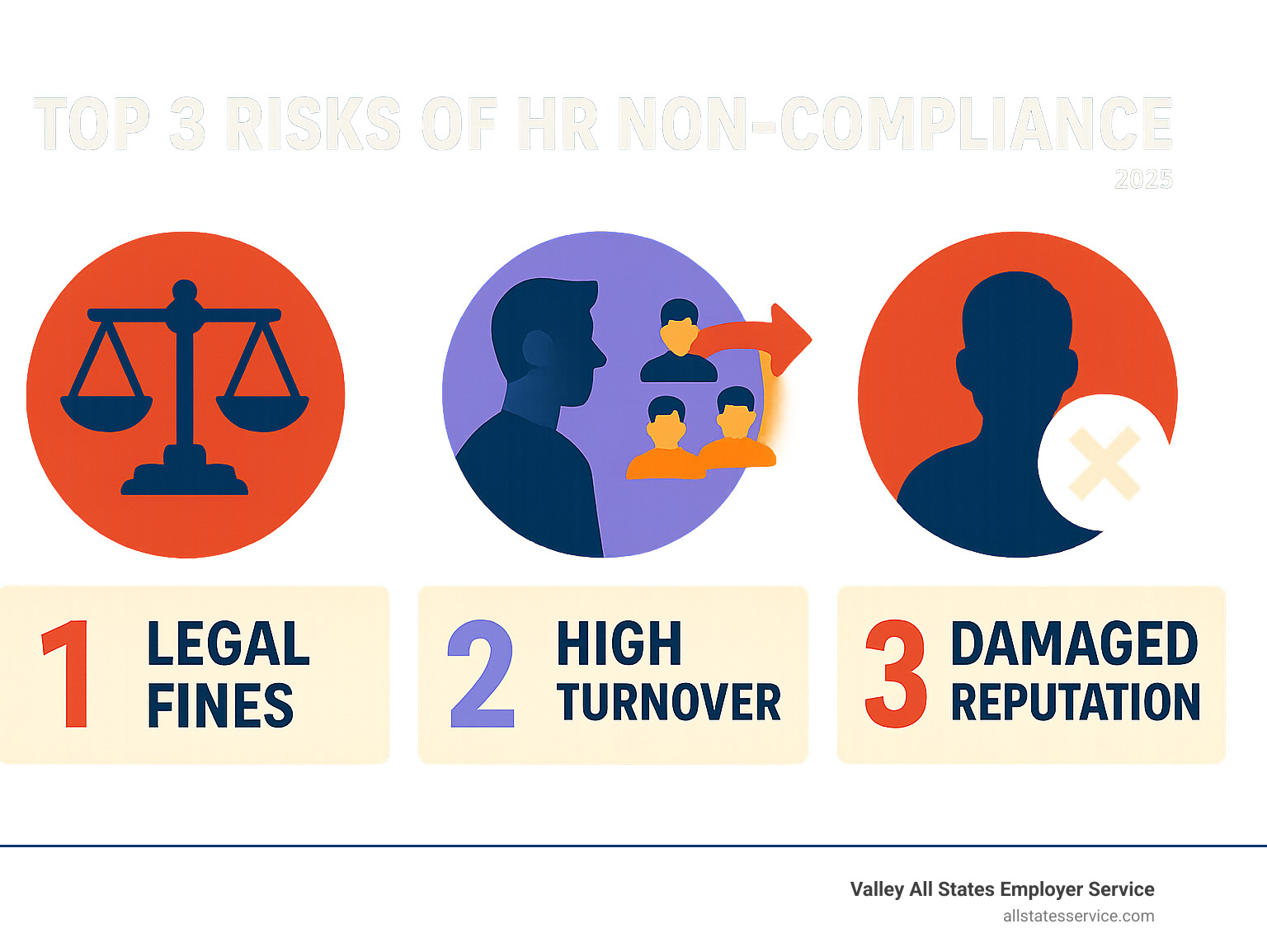
What is HR Compliance and Why Is It So Important?
At its heart, HR compliance for small business means aligning your company’s policies and practices with all employment laws. Think of it as a shield that protects your business and your team from legal troubles, misunderstandings, and costly mistakes.
This shield is vital for several core reasons:
- Meeting Legal Obligations: A network of federal, state, and local laws exists to keep workers safe and treated fairly. These laws cover wages, safety, anti-discrimination, and leave. As an employer, you have a legal and ethical duty to uphold these rights.
- Smart Risk Mitigation: Ignoring HR compliance for small business exposes you to serious dangers, including expensive fines, time-consuming lawsuits, and other penalties. A small oversight can quickly become a massive legal headache.
- Protecting Your Reputation: Your business’s good name is a valuable asset. A compliance misstep can damage your brand, making it harder to attract customers, partners, and top talent.
- Boosting Morale and Productivity: When employees feel safe, respected, and treated fairly, they are more productive. Prioritizing compliance builds trust and creates an environment where your team can shine.
- Reducing Turnover Costs: Replacing an employee is expensive, costing 50% to 60% of their annual salary in recruitment, training, and lost productivity. Strong HR compliance for small business helps you retain your best people by creating a stable and positive work environment.
HR compliance for small business is a powerful strategic advantage that empowers your business to thrive. Ready to make your HR compliance a strength? Learn more about how we can help you by visiting our Employer HR Compliance services page.
The Real Cost of Non-Compliance
Ignoring HR compliance for small business can be unbelievably costly. This means tangible financial penalties, draining legal bills, and a damaged reputation that can take years to repair.
Consider these facts:
- Staggering Financial Penalties: Fines for I-9 compliance errors are not minor. A first offense can range from $676 to $5,404, a second jumps to $5,404 to $13,508, and a third can be $8,106 to $27,108.
- Painful Lawsuits and Settlements: According to the 2017 Hiscox Guide to Employee Lawsuits, the average cost for a case involving defense and settlement was $160,000. The average payout in federal employment cases can exceed $490,000, not including legal fees.
- A Damaged Brand Image: Public accusations of discrimination, wage theft, or unsafe conditions can severely harm your reputation, eroding trust with customers, talent, and partners.
- Dipping Productivity and Morale: Compliance issues create internal chaos, disrupting productivity and lowering morale. This instability impacts daily operations and long-term goals.
Small slip-ups can lead to huge penalties, draining your resources and focus.
HR Compliance as a Strategic Advantage
Proactive HR compliance for small business is a powerful strategic advantage. It’s not just about dodging bullets; it’s about building a stronger, more resilient business.
Here’s how it works in your favor:
- Attracting Top Talent: Great candidates seek ethical companies. A reputation for strong HR compliance signals a fair, respectful, and stable workplace, making you a magnet for top performers.
- Keeping Your Best Employees: Respected employees are loyal employees. Fair practices and clear communication reduce costly turnover.
- Building a Fantastic Work Culture: Compliance helps create a workplace built on integrity and trust. This foundation empowers employees and encourages open communication.
- Gaining a Competitive Edge: While competitors fight compliance fires, you can focus on innovation and growth. A proactive approach frees up resources and gives you a distinct advantage.
By adopting a strategic HR compliance for small business plan, you minimize legal risks and create a thriving environment where your business can flourish.
Key Areas of HR Compliance for Small Business
Navigating HR compliance for small business requires understanding a mix of federal, state, and local rules specific to your location and industry.
Keeping up with these laws and maintaining perfect records is essential. Breaking it down into key areas makes it manageable.
Hiring and Onboarding: The First Step in HR Compliance for Small Business
From the moment you look for new team members, HR compliance for small business is critical. Getting it right from the start saves headaches later.
Start with clear and current job descriptions to define the role, attract the right person, and avoid discrimination issues.
Adhere to anti-discrimination laws like Title VII of the Civil Rights Act of 1964 and the Americans with Disabilities Act (ADA). Ensure your job ads are inclusive, hiring methods are fair, and managers interview without bias.
If you run background checks, you must follow the Fair Credit Reporting Act (FCRA) and state laws. This includes getting written permission and following strict procedures. Our Pre-Employment Background Check Screening services can help you steer this complex area.
A solid onboarding program is key once you hire someone. It helps new hires acclimate and understand company rules. Our Employee Onboarding Compliance services can make this process simple and effective.
Employee Eligibility: I-9 and E-Verify Compliance
Verifying an employee’s legal right to work in the U.S. is a mandatory part of HR compliance for small business. The Immigration Reform and Control Act of 1986 (IRCA) forbids knowingly hiring unauthorized workers.
Every new hire must complete Form I-9 to confirm their identity and work authorization. This must be done within three business days of their first day of pay, with an in-person review of their original documents. You can get the official Form I-9 directly from USCIS.
Penalties for I-9 mistakes are severe, with fines starting at $676 and climbing to $27,108 or more per violation.
The E-Verify system helps prevent these errors. E-Verify is an online system that checks Form I-9 information against government records to confirm work eligibility. While often voluntary, it’s required for some federal contractors and in certain states. We offer expert E-Verify for Small Businesses services to simplify this process.
To stay compliant, always use the newest Form I-9, store forms securely, and audit them regularly. Our I-9 Verification Assistance and E-Verify Best Practices guidance help you maintain accurate records and avoid costly mistakes.
Wage, Hour, and Leave Regulations
How you pay employees and manage leave are common areas for compliance issues.
The Fair Labor Standards Act (FLSA) sets federal rules for minimum wage, overtime, record keeping, and child labor. The federal minimum wage is $7.25 per hour, but many states have higher rates. You must pay non-exempt employees at least the minimum wage and overtime at 1.5 times their regular rate for hours over 40 in a workweek. Find details on the FLSA from the Department of Labor.
State and local wage laws often have higher minimums or different overtime rules. Always follow the law that is most beneficial to the employee.
Employee classification is another critical area. Correctly labeling employees as “exempt” or “non-exempt” depends on their duties and salary, not just their title. Misclassification can lead to huge penalties.
For businesses with 50 or more employees, the Family and Medical Leave Act (FMLA) provides up to 12 weeks of unpaid, job-protected leave. Some states have their own paid leave laws that may apply to smaller businesses. Learn more about FMLA on the Department of Labor website.
Many states and cities also mandate paid sick leave. You must understand and follow these rules in addition to your own company policies.
Workplace Safety and Health
Providing a safe and healthy workplace is a legal requirement.
The Occupational Safety and Health Act (OSHA) requires employers to provide a workplace free from known hazards. This includes maintaining equipment, communicating risks, and having emergency plans. You can learn more about OSHA from the EPA.
Regular safety training is necessary to ensure employees know how to work safely.
Most states require workers’ compensation insurance, which protects both the employee and your business if a work-related injury or illness occurs.
Common HR Compliance Mistakes (And How to Avoid Them)
Even with the best intentions, HR compliance for small business can be a tricky maze. Simple mistakes can lead to significant legal troubles. Understanding common pitfalls is the first step to avoiding them.

Let’s explore frequent missteps and how to proactively protect your business from legal exposure.
Misclassifying Employees vs. Independent Contractors
This is one of the most costly mistakes a small business can make. It may seem tempting to classify workers as independent contractors to save on taxes and benefits, but the IRS and state labor departments have very strict rules.
The IRS considers behavioral control, financial control, and the type of relationship to determine a worker’s status. Misclassification can lead to severe penalties, including back pay for overtime, unpaid taxes, and benefits.
It’s crucial to review IRS guidelines and state laws to classify workers correctly. When in doubt, consulting an expert can save you significant headaches and money.
Inadequate Record-Keeping and Documentation
In HR, if it’s not documented, it didn’t happen. Meticulous records are your best defense against claims and are essential for proving compliance.
Maintain complete and accurate personnel files, including applications, reviews, disciplinary actions, and training records. Store sensitive information like medical records separately and securely.
I-9 forms must be completed correctly and retained for specific periods. Regular I-9 Self-Audits help catch errors early. Accurate payroll records are also required by laws like the FLSA.
Always document performance issues or disciplinary actions, even verbal warnings. This creates a paper trail to support personnel decisions and protect against wrongful termination claims.
Overlooking State and Local Laws
Many small businesses focus on federal laws but forget that state and local regulations can be more stringent. HR compliance for small business must account for all levels of government.
For instance, your state or city may have a higher minimum wage than the federal $7.25 rate. You must always pay the higher applicable rate. Many states also have their own leave requirements or harassment training mandates that may apply to smaller employers.
It’s essential to research the specific employment laws in your state and locality. The Department of Labor offers a resource for researching state and local laws. Always adhere to the law that offers the greater benefit to the employee.
How to Build an Effective HR Compliance Strategy
An effective HR compliance for small business strategy is proactive, not reactive. It involves embedding a culture of compliance throughout your organization to minimize legal risks and create a stable, positive environment.

Create and Maintain a Comprehensive Employee Handbook
Your employee handbook is a critical tool for ensuring HR compliance for small business. It prevents miscommunication and sets clear expectations for your team.
This living document should detail your company policies, from attendance to a Code of Conduct. Include an At-Will Employment Statement (if applicable in your state) and always have employees sign an Acknowledgment Form.
Laws change, so regular updates to your handbook are essential. Review it at least annually or whenever new laws are passed.
Essential handbook sections include:
- Company Mission and Values
- Equal Employment Opportunity (EEO) Statement
- Workplace Conduct and Behavior
- Attendance and Punctuality
- Compensation and Paydays
- Overtime Policy
- Paid Time Off (PTO), Holidays, and Other Leave Policies (FMLA, state-specific)
- Benefits Information (ADA reasonable accommodations)
- Workplace Safety and Health
- Employee Classification (Exempt/Non-exempt)
- Performance Management
- Disciplinary Procedures
- Complaint Procedures (Anti-harassment, anti-discrimination)
- At-Will Employment Statement
- Employee Acknowledgment of Receipt
Implement Regular Training for Managers and Employees
Knowledge is power when it comes to HR compliance for small business. Training empowers your team to understand and uphold compliance.
Provide regular training on harassment prevention, anti-discrimination, and diversity and inclusion (DEI). Managers especially need to know how to recognize and respond to complaints.
Regular safety procedures training is also crucial. Whenever you update policies, ensure everyone is trained on the changes. We can help you develop a robust training program. Explore our HR Solutions Outsource services for comprehensive support.
Leverage Technology and Expert Support
Most small businesses don’t have a dedicated HR manager until they reach about 50 employees, leaving owners to handle compliance. You don’t have to do it alone.
HR software can streamline processes like payroll and benefits, while reliable payroll systems ensure accurate wage calculations and tax filings.
Consulting with expert support is invaluable. HR professionals or compliance consultants can conduct audits and ensure your policies align with current labor laws. HR outsourcing allows you to delegate complex tasks and minimize risk without the overhead of a full-time team.
We offer Outsourced Compliance Solutions custom for small businesses, giving you the expertise you need without the full-time cost.
Take Control of Your HR Compliance
Dealing with HR compliance for small business can feel overwhelming, but it’s more than a hurdle. It’s a smart investment in your company’s future. A proactive approach turns compliance from a source of stress into a foundation for growth.
Here are the key takeaways:
- Be proactive, not reactive. Focus on prevention and planning to cut down on legal risks and build a positive work environment.
- Compliance isn’t one-size-fits-all. You need custom strategies that account for federal, state, and local regulations specific to your business.
- Invest in your employees’ well-being. Fair practices and a safe workplace build a loyal, thriving team that attracts and retains top talent.
- You don’t have to do it alone. Leverage technology and expert support to steer complexities and stay on the right side of the law.
At Valley All States Employer Service, we empower small businesses to confidently manage HR compliance for small business. With our expertise in E-Verify, I-9 verification, and comprehensive compliance solutions, you can focus on what you do best: growing your business.
Ready to simplify your HR compliance and secure your business’s future? Get expert help with your Employer HR Compliance today!