
Why Outsourced Compliance Solutions Are Becoming Essential for Modern Businesses
Outsourced compliance solutions help businesses manage regulatory requirements by partnering with specialized providers who handle everything from employment verification to financial reporting. Here’s what you need to know:
Key Types of Outsourced Compliance:
- HR Compliance – I-9 verification, E-Verify, payroll processing
- Financial Compliance – SEC filings, AML monitoring, regulatory reporting
- IT & Data Privacy – GDPR, HIPAA, cybersecurity frameworks
- Industry-Specific – Healthcare, financial services, manufacturing regulations
Main Benefits:
- Access to specialized expertise without hiring full-time staff
- Reduced compliance costs (customers report up to 526% ROI over three years)
- Stay current with changing regulations automatically
- Focus internal resources on core business growth
If you’re an HR manager drowning in regulatory paperwork, you’re not alone. The average business faces an ever-growing maze of compliance requirements that can consume over 40 hours just for basic processes like RIA registration.
“Compliance isn’t a headache but an opportunity to thrive,” as compliance experts often say. Yet for most busy professionals, it feels more like quicksand that pulls time and energy away from strategic work.
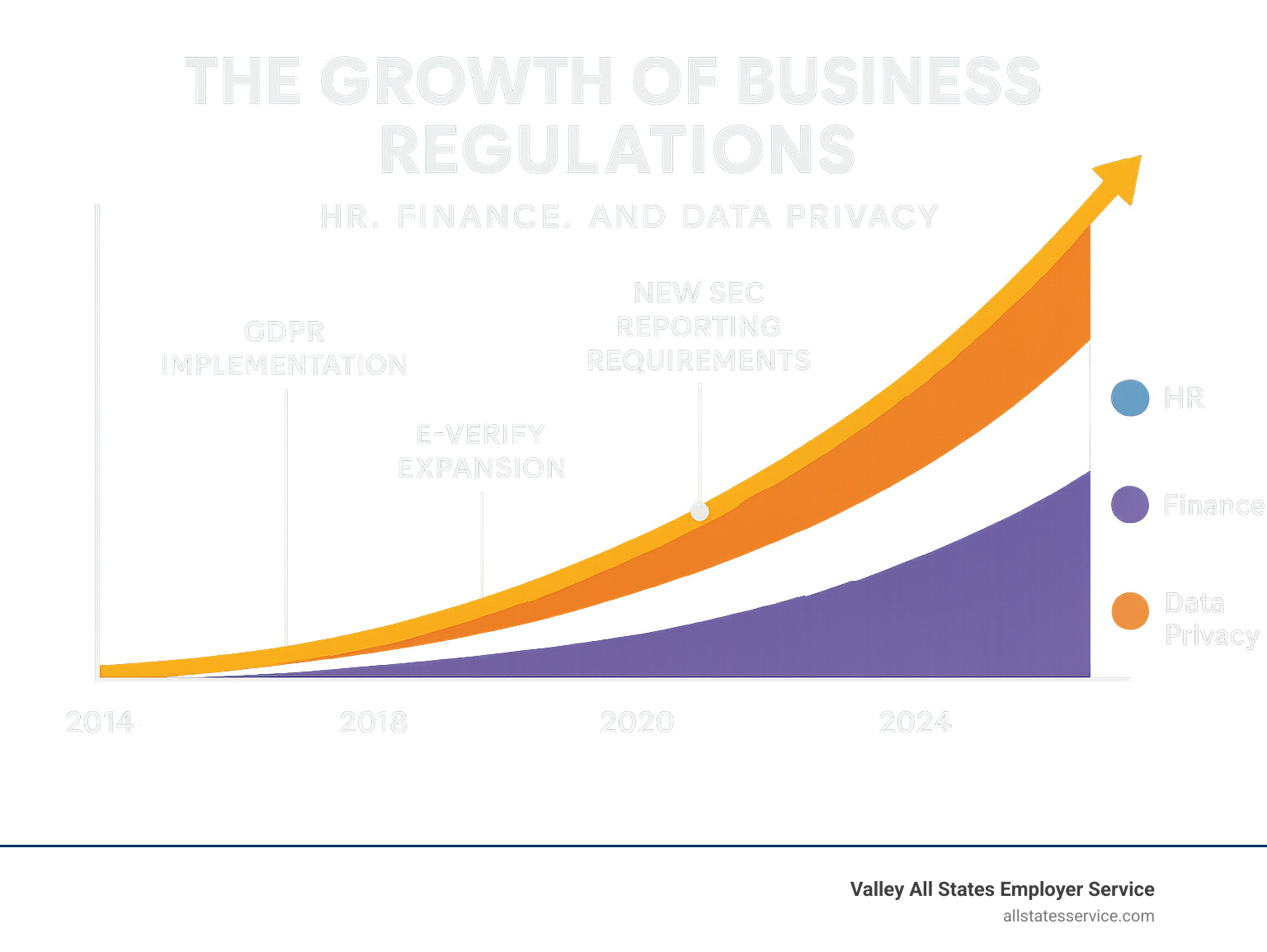
The regulatory burden keeps growing. Employment laws change constantly. Data privacy rules multiply. Financial reporting requirements become more complex. Meanwhile, your core responsibilities haven’t shrunk.
Smart businesses are finding a better way. Instead of struggling to keep up internally, they’re partnering with compliance specialists who live and breathe these regulations every day.
This strategic shift isn’t just about reducing headaches. It’s about changing compliance from a costly burden into a competitive advantage that actually supports business growth.
Outsourced compliance solutions terms to know:
Why More Businesses Are Choosing to Outsource Compliance
Running a company should feel exciting, not like drowning in paperwork. That’s why outsourced compliance solutions have exploded in popularity.
The payoff in one line: firms that offload compliance often turn a cost center into a profit driver. One independent study of SaaS businesses showed a 526 % three-year ROI after moving compliance off their plate.
But lower invoices are just the start.
Five reasons companies make the switch
- Cost-effectiveness – Salary is only half the story. Add benefits, training, software, vacations, and turnover, and an in-house officer can run well over $180 k a year. Subscription services come in at a fraction of that with predictable pricing.
- Instant expertise – Providers employ teams who live and breathe regulations, attend conferences, and speak to agencies every day.
- Sharper risk management – More than 95 % of financial-crime alerts are false positives. Specialists tune tools that separate real issues from noise.
- Scalability – Whether you have 10 employees or 1,000, the same platform and team grow with you, no new head-count required.
- Focus on revenue work – Every hour freed from forms is an hour your people can spend with customers.

The True Cost: In-House vs. Outsourced
| Expense | In-House Officer | Outsourced Service |
|---|---|---|
| Base salary | $75k–$120k | – |
| Benefits & taxes (≈30 %) | $22k–$36k | – |
| Training & certifications | $5k–$15k | – |
| Software & tools | $10k–$25k | – |
| Total annual spend | $120k–$208k | $38k–$101k |
Beyond the dollars, outsourcing removes single-point-of-failure risk. Holidays, sick leave, or turnover no longer derail deadlines.
Turning compliance into an advantage
Rules change constantly. By working with specialists you move from reactive scrambling to proactive readiness. When E-Verify or state payroll rules update, a draft policy lands in your inbox before the change even takes effect.
Looking to expand your outsourcing mix? Explore our employee benefits outsourcing companies and HR solutions outsource resources to see how the same model can streamline other admin work.
Addressing the Common Fears of Outsourcing Compliance
Handing key responsibilities to an outside team can feel risky. Most worries fade once you understand how modern outsourced compliance solutions work.
“We’ll lose control.”
You keep the decision-making authority. Think of the provider as a skilled contractor, they supply the labor and know-how, you sign off on the plans.
“Our data won’t be safe.”
Specialized vendors invest heavily in encryption, access controls, and third-party audits because their reputation depends on it. Many maintain SOC 2 reports that small businesses rarely obtain internally.
“Integration will be a nightmare.”
Today’s platforms rely on APIs that connect to HR, payroll, and accounting systems in weeks, not months. A dedicated onboarding manager keeps the project on schedule.
“Hidden costs will creep in.”
Transparent, subscription pricing has replaced unpredictable hourly bills. Ask for a clear service catalog up front, and insist every change order is approved by you.

Safeguards that keep you in the driver’s seat
- Partnership mindset – choose a firm that asks about your goals, not just the contract.
- Service Level Agreements – document response times, deliverables, and security standards.
- Regular touchpoints – monthly or quarterly check-ins plus a client portal give you real-time visibility.
- Thorough vetting – review certifications, reference calls, and security questionnaires before you sign.
Need a quick internal check-up first? Download our free I-9 self-audit worksheet.
Avoiding hidden costs and tech headaches
- Ask for a line-item quote covering setup, monthly fees, and optional add-ons.
- Confirm pricing scales sensibly as you add employees or sites.
- Map the onboarding timeline, including data migration and user training.
- Verify REST or SFTP APIs exist for each of your critical systems.
Looking for stress-free new-hire workflows? See our employee onboarding compliance guide.
A Look at the Wide World of Outsourced Compliance Solutions

Outsourcing covers far more than paperwork. Here are the most common areas growing companies offload.
Human Resources and Employment Compliance
- I-9 and E-Verify processing
- Background screening custom to role and industry
- Payroll tax filing and benefits notices
Our team handles the E-Verify and I-9 steps end to end, flagging issues before they become fines. Explore our E-Verify services, I-9 verification assistance, and payroll outsourcing solutions.
Financial and Regulatory Compliance
Banks, lenders, and investment advisors rely on experts for:
- Anti-Money Laundering (AML) alert review
- SEC and FINRA filings
- Exam preparation and policy updates
The SEC publishes updates almost weekly. A dedicated partner follows those changes so your staff doesn’t have to.
IT, Data Privacy, and Cybersecurity
- GDPR, HIPAA, and state privacy laws
- SOC 2 or ISO 27001 readiness
- Pen-testing and vulnerability management
Specialists bring tools that many businesses cannot justify buying outright.
Picking the best service model
- Project-based – one-time policy drafts or mock audits.
- Fractional – 10–20 hours per month of expert help.
- Fully outsourced – the provider operates as your compliance department.
- Technology-as-a-Service – automated platform with on-call advisors.
Start small if you like, then scale up as your needs grow.
How to Choose the Right Compliance Partner

Must-have qualifications
- Relevant industry experience – ask for case studies that mirror your regulatory environment.
- Professional credentials – look for CIPP, CISA, or other recognized designations.
- Modern technology – APIs, encryption at rest and in transit, and user-friendly dashboards.
- Solid references – speak with at least two clients of similar size.
Dive deeper into HR specifics in our employer HR compliance resource.
Smart questions to ask
- How will we communicate and how quickly will you respond?
- What integrations already exist for our HR or payroll platform?
- How does pricing adapt as we add employees or locations?
- Which metrics will you report monthly?
Grab a handy checklist in our E-Verify best practices.
Making the integration seamless
A good provider will:
- Assign a dedicated implementation lead.
- Handle data migration and system configuration.
- Train your team on new workflows.
- Review performance quarterly and tweak as needed.
If background screening is part of your scope, see how we connect that step with eligibility verification in our E-Verify background checks overview.
Frequently Asked Questions about Outsourced Compliance
What types of compliance can I outsource?
The short answer? Almost everything. But let’s break down what makes the most sense for different businesses.
HR and employment compliance tops the list for good reason. Think about all those I-9 forms sitting in your filing cabinet, the E-Verify deadlines you’re tracking on sticky notes, and the background checks that seem to take forever. These tasks require specialized knowledge and eat up valuable time that could be spent on strategic work.
Financial compliance gets complex fast. AML monitoring alone can overwhelm a small compliance team, especially when 95% of those alerts turn out to be false positives. SEC reporting, FINRA compliance, and tax preparation all require expertise that most businesses can’t maintain cost-effectively in-house.
IT and data privacy compliance has exploded in recent years. GDPR affects any business with European customers, even if you’re based in Kansas. HIPAA requirements extend to business associates, not just healthcare providers. SOC 2 audits have become essential for any company handling sensitive data.
Industry-specific regulations vary widely but often create the biggest headaches. Environmental compliance, safety reporting, professional licensing, and specialized certifications all require deep knowledge that changes frequently.
Is outsourcing compliance only for large companies?
Not at all. In fact, small and medium-sized businesses often see the biggest benefits from outsourced compliance solutions.
Here’s why: Large companies can afford full-time compliance teams. Small businesses often can’t justify the cost of even one compliance specialist. That’s where flexible outsourcing models shine.
Fractional support gives you access to expert compliance help without the full-time salary. You might get 15 hours per month of dedicated support from a certified compliance professional. That’s enough to handle routine tasks, provide guidance on complex issues, and ensure you’re staying current with regulatory changes.
Project-based services work perfectly for specific needs. Maybe you need help creating an employee handbook, preparing for an audit, or implementing a new compliance program. You pay for expert help only when you need it.
Technology-enabled solutions automate routine compliance tasks while providing human expertise for complex situations. These platforms often cost less than half of what you’d spend on a full-time employee.
The pricing scales with your business size. A small company might invest $3,000 monthly for comprehensive HR compliance support. That’s less than hiring a part-time administrative assistant, but you get access to certified compliance experts.
How does outsourcing help with changing regulations?
Regulations change constantly, and the pace is accelerating. Employment law evolves every legislative session. Data privacy requirements multiply across different jurisdictions. Financial regulations become more complex each year.
Staying current requires someone to monitor these changes full-time. That’s exactly what compliance providers do.
Dedicated monitoring teams track regulatory changes as their primary job. They monitor government websites, subscribe to regulatory updates, attend industry conferences, and maintain relationships with agencies. When the Department of Homeland Security announces changes to E-Verify requirements, they know about it immediately.
Proactive communication transforms regulatory change from a crisis into a manageable process. Good providers send regular updates explaining what’s changing, when it takes effect, and what you need to do. No more scrambling to understand new requirements at the last minute.
Automatic policy updates happen behind the scenes. When regulations change, your compliance provider updates policies, adjusts procedures, and trains your team on new requirements. You stay compliant without dedicating internal resources to research and implementation.
Expert interpretation helps you understand what changes actually mean for your business. Regulations are often written in complex legal language. Compliance experts translate these requirements into practical action steps for your specific situation.
This proactive approach gives you a competitive advantage. While other businesses struggle to understand new requirements, you’re already compliant and focused on growing your business.
Let Experts Handle the Details So You Can Focus on Growth
The evidence speaks for itself. Businesses using outsourced compliance solutions consistently report better outcomes, lower costs, and significantly less stress. They sleep better at night knowing experts are watching their regulatory requirements while they focus on what they do best.
Think of it like having a skilled mechanic for your car. You could learn to change your own oil, replace brake pads, and diagnose engine problems. But wouldn’t you rather spend that time on activities that actually move your life forward?
The same logic applies to compliance. You could master employment law, track regulatory changes, and handle I-9 audits yourself. But every hour spent on compliance paperwork is an hour not spent serving customers, developing products, or growing your business.
Smart businesses recognize compliance as a strategic partnership opportunity. The best providers become trusted advisors who help you steer regulatory complexity while keeping your focus where it belongs: on building the business you envision.
Finding the right partner makes all the difference. Look for providers with deep expertise in your industry, robust technology platforms, and a proven track record of client satisfaction. Ask detailed questions about integration processes, communication protocols, and scalability options.
Most importantly, structure the relationship for long-term success. The best compliance partnerships feel like an extension of your internal team, not an external vendor relationship.
At Valley All States Employer Service, we’ve built our reputation on understanding the real challenges of employment compliance. Our team specializes in E-Verify processing, I-9 verification, and workforce eligibility requirements. We’ve helped hundreds of businesses streamline their compliance processes while reducing errors and administrative burden.
We know compliance can feel overwhelming. Regulations change frequently. Penalties for non-compliance can be severe. The paperwork seems endless. That’s exactly why we focus on making the process as simple and stress-free as possible.
Our expert team handles the details so you can focus on what matters most: growing your business and serving your customers. We take care of the regulatory requirements, deadlines, and documentation while you concentrate on strategic initiatives that drive revenue and growth.
The regulatory landscape isn’t getting simpler anytime soon. New requirements emerge regularly. Existing rules become more complex. Enforcement becomes more aggressive. But with the right compliance partner, you can steer these challenges confidently while building the business you envision.
Ready to simplify your compliance challenges? Learn how our expert team can handle your workforce compliance needs and find why businesses across the country trust us with their most critical HR processes.
Your business deserves a compliance program that actually works. Let us handle the regulatory details while you focus on the exciting work of growing your company.