
Why Compliance Risk Management Is Critical for Your Business
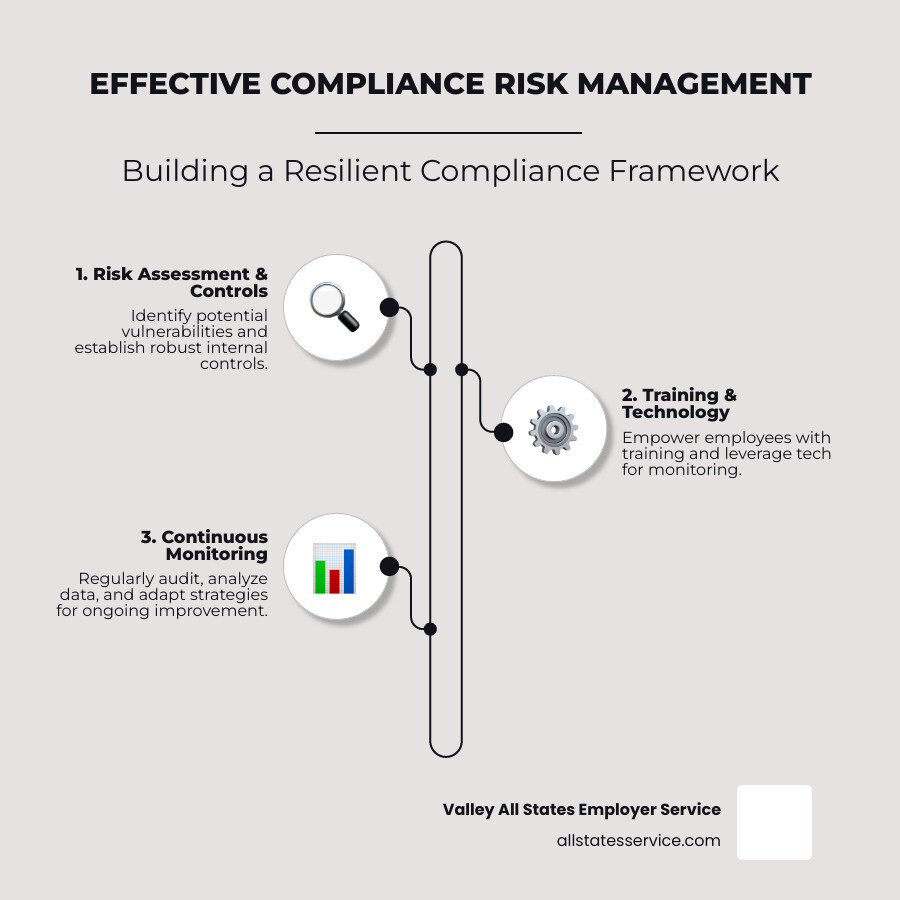
What would a single missed requirement cost your business? To minimize compliance risk, you need a repeatable system, not last-minute scrambling. The most effective programs combine clear policies, practical training, and ongoing checks that spot issues early.
Quick steps to minimize compliance risk:
- Run a compliance risk assessment to find your highest-exposure areas
- Put internal controls in place with documented policies and approval workflows
- Train employees regularly on rules, red flags, and reporting
- Use technology like GRC tools and automated monitoring where it fits
- Audit on a schedule so gaps are found internally first
- Track simple metrics like issue frequency and time-to-fix
The stakes are real. Non-compliance now costs businesses an average of $14.82 million, a 45% increase from 2011, according to the Ponemon Institute. That includes more than fines. It also includes business interruption, operational delays, and reputational damage.
Here’s what many companies overlook: the most common driver of non-compliance is weak internal controls. Not bad intent, just missing guardrails.
The good news? You can manage this. With a solid framework, you move from reactive firefighting to proactive prevention.
Minimize compliance risk terms to remember:
Understanding the High Stakes of Non-Compliance
Compliance risk is the financial, legal, and reputational damage that can hit when a business fails to follow laws, regulations, industry standards, or its own policies. If you want to minimize compliance risk, it helps to be clear about what’s really on the line.
Financial Penalties
Fines are often the first impact you feel. U.S. regulators such as the Department of Labor, the IRS, and state agencies can issue penalties for violations. In employment compliance, I-9 and E-Verify mistakes can add up quickly.
The broader cost is even higher. The average cost of non-compliance is $14.82 million, a 45% increase from 2011, according to the Ponemon Institute. This number reflects the full business impact, not just a ticket from a regulator.
Reputational Damage
Trust can disappear faster than revenue. After a public compliance issue, companies have seen major drops in market value tied to reputational damage. That can show up as lost customers, tougher recruiting, and partners that keep their distance.
Operational Disruptions
When regulators get involved, normal work slows down. Audits, investigations, and corrective action plans pull leaders and teams away from day-to-day operations.
A 2023 litigation trends survey found that 48% of companies faced a regulatory proceeding, and 41% listed regulatory proceedings among their most concerning litigation risks. Strong workforce processes and consistent HR compliance reduce the odds that your team gets stuck in that cycle.
Legal Action and Litigation Costs
Non-compliance can trigger lawsuits from employees, customers, or other parties. Even when you’re trying to do the right thing, legal defense costs time and money.
Loss of Consumer Trust
Customers expect businesses to handle data and people responsibly. With data privacy rules expanding fast, confidence matters. By 2024, 75% of the world’s population is expected to have personal data covered by modern privacy regulations, up from 20% in 2020. That trend raises expectations for how you collect, store, and protect information.
These consequences are why prevention is worth the effort, and why building a real program to minimize compliance risk pays off.
How to Conduct a Thorough Compliance Risk Assessment
A compliance risk assessment is the foundation of any plan to minimize compliance risk. It is a structured way to identify where you are exposed, measure how serious each issue could be, and decide what to fix first.
Assemble a cross-functional team
Do not leave this to one department. Bring together legal, HR, finance, operations, IT, and leaders who own key workflows. Each group sees different risks, and that mix prevents blind spots.
Identify risks and map regulations
Start by listing the activities that create exposure, then map them to the rules that apply. For U.S. employers, that can include federal requirements (employment eligibility, wage and hour, data privacy), state rules (including Maryland requirements if you operate there), and industry regulations (HIPAA for healthcare or SOX for public companies).
Helpful prompts:
- What regulations apply to our hiring, payroll, and data handling?
- What changed in the last 12 months?
- Where do our policies and real-world habits differ?
- Which steps rely on memory instead of a documented process?
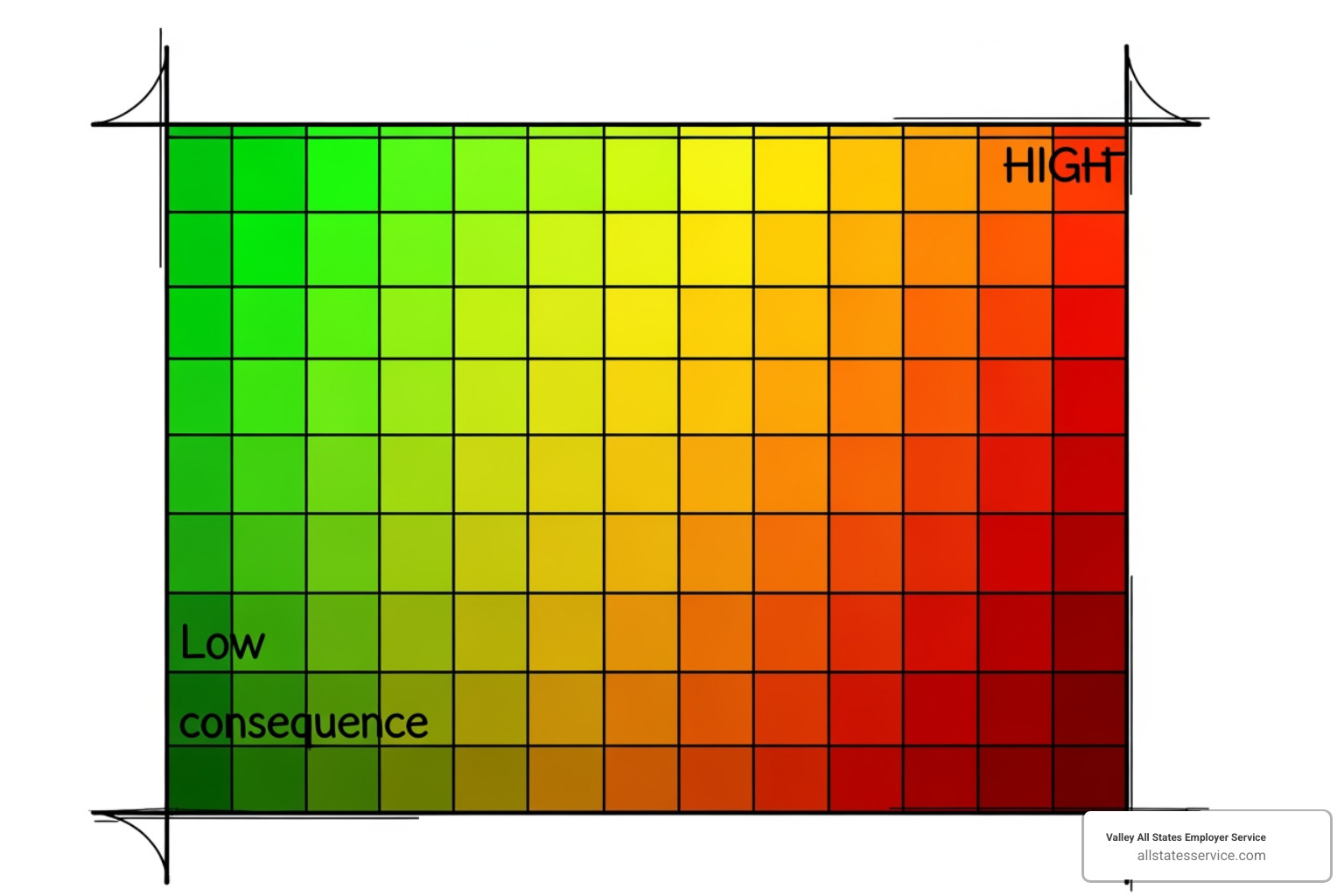
Analyze impact and likelihood
For each risk, rate:
- Impact: What happens if it occurs, including financial loss, downtime, legal exposure, and reputational harm?
- Likelihood: How often could it happen based on your processes, history, and controls?
Use a simple high, medium, low scale if that is easiest to maintain.
Prioritize what you fix first
Resources are limited, so focus on the biggest threats. High impact plus high likelihood items go to the top. Assign an owner, target date, and the control you will implement.
Compliance risk management vs. broader risk management
Compliance risk management is part of enterprise risk management (ERM), but it has a tighter focus on rules and policies.
| Feature | Compliance Risk Management | Broader Risk Management (ERM) |
|---|---|---|
| Primary Focus | Adherence to external laws, regulations, and internal policies. | All risks that could affect organizational objectives, including financial, operational, strategic, reputational, and compliance risks. |
| Scope | A subset of ERM focused on regulatory adherence. | A holistic view across the organization. |
| Objective | Avoid penalties, sanctions, and reputational damage from non-compliance. | Protect and improve organizational value by managing uncertainty and supporting strategic goals. |
| Key Activities | Regulatory mapping, policy development, training, internal controls, audits. | Risk identification, mitigation, and monitoring across all categories, integrated with planning and decisions. |
| Perspective | Driven by external requirements and legal obligations. | Driven by business objectives, with compliance as one component. |
Regular HR compliance audits make this practical. They help you test what is working, find gaps, and keep your plan to minimize compliance risk current.
Essential Internal Controls to Minimize Compliance Risk
Here’s the uncomfortable truth: a lack of internal controls is the number one reason for non-compliance. This isn’t about bad intentions. It’s about systemic gaps that let errors or misconduct slip through. Building robust internal controls is one of the most effective ways to minimize compliance risk. These controls act as safeguards, keeping your operations aligned with regulatory requirements and internal policies.
Comprehensive Policy Documentation
Clear, concise, and accessible policies are the foundation of strong internal controls. These documents should outline your commitment to compliance, detail specific procedures for various tasks, and clarify expectations for employee conduct.
Policies need regular reviews and updates to reflect changes in regulations, business processes, or organizational structure. Simply having policies isn’t enough. They must be communicated effectively, understood by all employees, and easy to find when needed.
Employee Training and Education
Even the best policies fall flat if employees aren’t aware of them or don’t understand how to apply them. Regular, comprehensive training is critical, and it’s not a one-time event.
Training should cover relevant laws, internal policies, ethical conduct, and the specific compliance responsibilities of each role. Interactive sessions, clear examples, and easy-to-understand materials help make sure compliance knowledge actually sticks. Keeping your team updated on regulatory changes is just as important as the initial training.
Accountability Frameworks
To truly embed compliance, you need clear accountability. That means defining roles and responsibilities for compliance tasks at every level, from senior leadership to frontline employees.
An accountability framework makes sure individuals understand their obligations and are held responsible for upholding them. This might include performance reviews tied to compliance metrics, disciplinary actions for violations, and recognition for exemplary adherence.
Transparent Reporting Channels
Building a culture where employees feel safe reporting potential compliance issues is a powerful internal control. Setting up multiple, accessible, and confidential reporting channels, such as a whistleblower hotline or an anonymous reporting system, lets you identify problems early before they escalate.
Employees are often the first to spot red flags, and their willingness to speak up is invaluable. Prompt investigation and resolution of reported concerns shows your commitment to doing things right.
Executive Oversight and Buy-in
Compliance starts at the top. Strong executive oversight and visible leadership commitment are non-negotiable. When senior management actively champions compliance, it sends a clear message throughout the organization.
This involves regular review of compliance reports, allocation of adequate resources, and a willingness to enforce policies consistently. Leadership’s active involvement helps embed a culture of compliance, making it part of your business identity rather than an afterthought.
By putting these essential internal controls in place, you not only protect your business from the consequences of non-compliance but also build a more ethical and resilient organization. A robust compliance management system helps centralize these efforts.
Using Technology to Minimize Compliance Risk
In a fast-changing regulatory environment, technology can help you minimize compliance risk by reducing manual work and catching issues sooner. The goal isn’t to buy tools for the sake of tools. It’s to improve consistency and visibility.
GRC Software
Governance, Risk, and Compliance (GRC) platforms centralize key tasks, including:
- Regulatory mapping: Track applicable laws and updates
- Policy management: Store and distribute current policies
- Risk assessments: Record risks, scores, and owners
- Control tracking: Document controls and test results
- Audit management: Plan audits and track findings
- Reporting: Provide clear dashboards for leadership
AI Monitoring and Automation
AI tools can scan large data sets to flag anomalies that might signal a violation. Automation can also handle repetitive tasks like approvals, reminders, and routine reporting.
For workforce processes, tools like electronic I-9 solutions can reduce errors by standardizing steps and improving documentation.
Data Analytics
Analytics helps you spot trends and measure progress. Common compliance KPIs include training completion rates, repeat issue areas, and average time to resolve findings.
Blockchain Security
Blockchain can create tamper-resistant records and stronger audit trails in specific use cases, especially where data integrity is essential.
Real-Time Alerts
Real-time alerts shrink the time between a problem and a response. Instead of finding issues during an annual review, you can correct them while the details are still fresh.
Used well, technology supports a more consistent program and helps you minimize compliance risk without adding unnecessary overhead.
Leveraging Audits to Minimize Compliance Risk
Regular audits are one of the most practical tools you have to minimize compliance risk. Think of them as health checks for your compliance program. They give you an objective look at how well you’re following regulations and whether your internal controls are actually working. Audits help you find weaknesses, fix problems, and show regulators you’re taking this seriously.
The Power of Self-Audits
Internal, or self-audits, are a proactive way to assess your own compliance posture. These audits involve your internal teams systematically reviewing processes, policies, and records against regulatory requirements. The benefits are significant:
- Early detection: Catching potential issues before external auditors or regulators do.
- Cost-effectiveness: Addressing problems internally is often less expensive than dealing with external penalties.
- Process improvement: Identifying inefficiencies or gaps in your compliance framework.
For example, conducting an I-9 self-audit can help you make sure all employment eligibility verification forms are correctly completed, stored, and updated. This regular self-assessment builds a habit of continuous improvement.
Corrective Actions and Continuous Improvement
The true value of an audit isn’t just in identifying problems. It’s in what you do next. When an audit uncovers a non-compliance issue or a weakness in a control, you need to act promptly. That includes:
- Root cause analysis: Understanding why the issue occurred, not just what happened.
- Remediation: Fixing the immediate problem.
- Preventive measures: Making changes to prevent similar issues from reoccurring.
- Monitoring: Tracking the effectiveness of the corrective actions over time.
This cycle of audit, correct, and improve is what keeps a compliance program strong.
Meeting Regulatory Expectations
Regulators expect businesses to have effective compliance programs and to actively monitor their adherence. Regular audits show your commitment and your proactive approach to risk management. When regulators see that you’re diligently auditing your operations and addressing findings, it reflects positively on your overall compliance standing. Failing to manage compliance risks effectively can lead to serious consequences, including I-9 compliance penalties that hit your bottom line.
Independent Evaluations
While self-audits are valuable, independent evaluations by third-party experts provide an unbiased perspective. External auditors bring specialized knowledge and experience, often identifying issues that internal teams might overlook. Their findings carry significant weight and can provide greater assurance to stakeholders, including investors, customers, and regulatory bodies.
Documentation Trails
Every step of the audit process, from planning to findings to corrective actions, must be carefully documented. This documentation serves as a critical trail, proving your compliance efforts to regulators and providing a clear record for internal review. A solid documentation system supports transparency, accountability, and defensibility if an inquiry or investigation comes your way.
Gap Analysis
Audits naturally involve a gap analysis, comparing your current state against a desired standard like a specific regulation or best practice. This process helps you pinpoint where your compliance program falls short. By systematically identifying these gaps, you can develop targeted strategies to close them and strengthen your overall compliance posture.
By making audits a regular part of your operations, you not only reduce immediate risks but also continuously refine your compliance framework to keep it effective as challenges evolve.
Industry-Specific Challenges and Workforce Eligibility
Compliance isn’t a one-size-fits-all endeavor. Different industries face unique regulatory landscapes, and that creates distinct challenges when you’re working to minimize compliance risk. While general principles apply, understanding these specific problems is crucial. For businesses in the United States, and particularly those operating in Maryland, specific federal and state laws dictate many compliance requirements.
Healthcare: Navigating HIPAA and HITECH
The healthcare industry operates under some of the strictest data privacy and security laws in the U.S. HIPAA sets national standards to protect sensitive patient health information, and violations can lead to massive fines and severe reputational damage.
The HITECH Act further strengthened privacy and security rules, particularly around electronic health records. Healthcare providers must implement robust cybersecurity measures, conduct regular privacy audits, and make sure all staff are thoroughly trained on data handling protocols.
Finance: A Labyrinth of Regulations
The financial sector in the U.S. is heavily regulated to prevent fraud, ensure market stability, and protect consumers. Businesses must comply with a complex web of regulations, including:
- Dodd-Frank Act: Enacted to promote financial stability and protect consumers.
- Sarbanes-Oxley Act (SOX): For public companies, ensuring accuracy and reliability of financial reporting.
- Anti-Money Laundering (AML) directives: To combat illicit financial activities.
- Consumer protection regulations: Such as Regulation E (Electronic Fund Transfers), Regulation Z (Truth in Lending), Regulation V (Fair Credit Reporting), and Regulation X (Real Estate Settlement Procedures Act).
Maintaining robust data management, ensuring transparency in reporting, and conducting regular audits are all essential for financial institutions.
Data Privacy: A Global and Local Concern
While the EU’s GDPR often grabs headlines, data privacy is a growing concern in the U.S. too, with states like Maryland enacting their own stringent regulations. Maryland’s MODPA (Maryland Online Data Privacy Act) signifies a new standard for data privacy, impacting how businesses collect, use, and store personal information. Organizations must navigate these evolving laws while ensuring robust cybersecurity measures and transparent data handling practices.
Workforce Eligibility: A Universal HR Challenge
Regardless of industry, every employer in the U.S. faces the critical compliance challenge of workforce eligibility verification. This involves making sure all employees are legally authorized to work in the country. The I-9 form process and, for many, the E-Verify system are central to this.
Errors in completing, storing, or updating I-9 forms, or missteps in the E-Verify process, can lead to significant fines and legal repercussions. This is where specialized services become invaluable. We help businesses navigate the complexities of employment compliance, ensuring accurate and efficient verification processes to minimize compliance risk related to hiring.
Consumer Complaints as Compliance Indicators
Often overlooked, consumer complaints are powerful indicators of potential compliance risks. A single complaint can point to underlying violations that, if ignored, can escalate into regulatory scrutiny. Regulators expect financial institutions to manage consumer complaints effectively.
Complaints about issues like unexpected fees, discrimination claims, or payment processing can signal systemic problems or weaknesses in internal controls. By analyzing consumer feedback, you can detect problematic patterns, prevent consumer harm, and turn a potential threat into an opportunity for improvement.
By understanding these industry-specific nuances and staying current with the latest regulatory requirements, you can tailor your compliance strategies to effectively minimize compliance risk in your unique operating environment.
Frequently Asked Questions about Compliance Risk
Let’s tackle some common questions that come up when businesses consider how to minimize compliance risk.
What is the primary cause of non-compliance in most businesses?
The primary cause isn’t intentional wrongdoing. It’s a lack of effective internal controls. The Association of Certified Fraud Examiners (ACFE) highlights that inadequate systems, processes, and oversight create vulnerabilities that allow errors, oversights, or even fraudulent activities to occur.
This can show up as unclear policies, insufficient training, or a failure to monitor adherence to established guidelines. Without robust internal controls, businesses are essentially operating without a safety net, making them highly susceptible to compliance breaches.
How often should a company update its compliance risk assessment?
A compliance risk assessment should not be a one-time event. It’s an ongoing process that requires regular review and updates. Best practice says you should update your comprehensive compliance risk assessment at least annually. Certain triggers call for an immediate review, though:
- Significant changes in regulations (federal, state, or local)
- Introduction of new products, services, or business lines
- Expansion into new markets or geographies (even within the U.S., like expanding from Maryland to another state)
- Major organizational changes, such as mergers, acquisitions, or restructuring
- Identification of new or emerging risks (e.g., cybersecurity threats)
- Following a compliance incident or audit finding
Regular updates keep the assessment relevant and effective in identifying current and future risks.
Can consumer complaints really help identify systemic compliance issues?
Absolutely. Consumer complaints are incredibly valuable indicators of compliance risk. They provide direct, real-world feedback on where your processes or policies might be failing.
A single complaint might seem isolated, but when multiple complaints point to the same issue, such as unexpected fees, delays in service, or perceived unfair practices, it signals a systemic problem.
Financial institutions, for example, are expected by regulators to carefully manage and analyze consumer complaints. By categorizing complaints, identifying root causes, and tracking trends, you can uncover weaknesses in internal controls, spot potential violations before they become widespread, and prevent broader consumer harm. This proactive approach to complaint management is a powerful way to minimize compliance risk and demonstrate your commitment to regulatory adherence. For more on handling regulatory compliance, check out our guide on HR regulatory compliance.
Taking the Next Step for Your Business
Keeping up with compliance requirements can feel like a second job. When the rules change or your team grows quickly, it’s easy for key steps to slip. That’s exactly when problems show up, and why many employers look for practical ways to minimize compliance risk without overloading HR.
Valley All States Employer Service helps employers with a high-impact part of employment compliance: outsourced E-Verify workforce eligibility verification. Our focus is simple. We make the process accurate, consistent, and easier to manage.
Here’s what you get with us:
- Expertise: We stay current on E-Verify and I-9 requirements so your team doesn’t have to chase updates.
- Impartial processing: A consistent, unbiased workflow helps reduce mistakes and uneven handling.
- Efficiency: We streamline verification steps and documentation, cutting admin time and lowering error risk.
Ready to simplify compliance and reduce risk in your hiring process?
Access your E-Verify employer login and see how much smoother verification can be with the right partner. Contact our team today to get started.