
Why E-Verify Matters for Subcontractors
E verify for subcontractors is a critical compliance requirement that flows down from federal prime contractors when specific conditions are met. If you’re a subcontractor working on federal projects, understanding when and how to use E-Verify can mean the difference between maintaining profitable contracts and facing serious penalties.
When Subcontractors Must Use E-Verify:
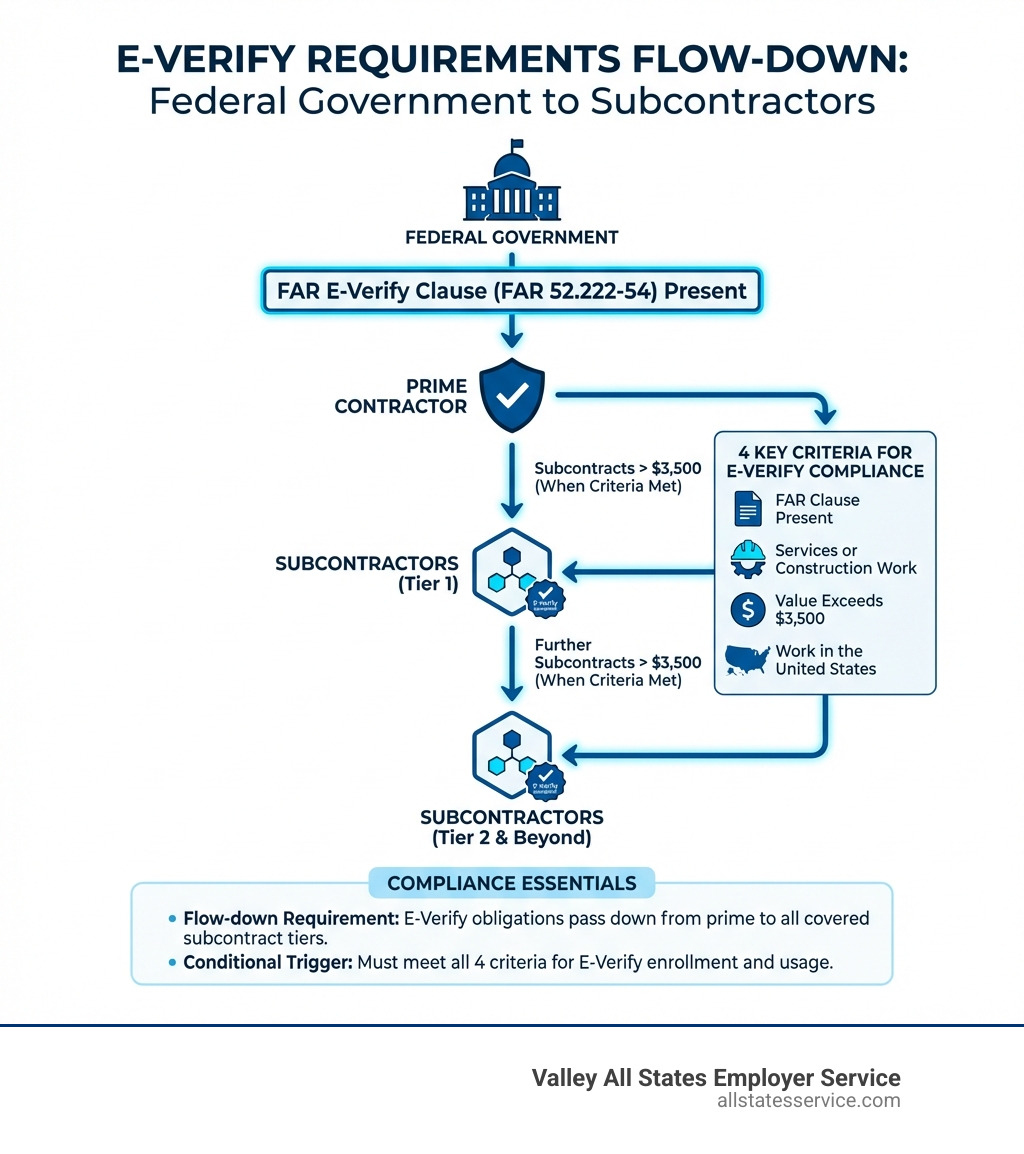
- The prime contract includes the Federal Acquisition Regulation (FAR) E-Verify clause (FAR 52.222-54)
- Your subcontract is for commercial or noncommercial services or construction (not just supplies)
- The subcontract value exceeds $3,500
- Work is performed in the United States
The federal government has made it clear: it only does business with organizations that maintain a legal workforce. When a prime contractor wins a federal contract containing the FAR E-Verify clause, that requirement doesn’t stop at their door. It flows down to every covered subcontractor at every tier.
Many subcontractors find this requirement only after winning their first federal subcontract. They suddenly face questions about enrollment timelines, which employees to verify, and what happens if they make a mistake. The stakes are high. Prime contractors can face fines and penalties if they knowingly continue working with non-compliant subcontractors. That means your compliance directly affects your business relationships and future opportunities.
The good news? Once you understand the four key triggers and the step-by-step process, E-Verify compliance becomes manageable. Whether you’re a small specialty contractor or a larger firm managing multiple federal subcontracts, the rules are clear and the process is straightforward.
This guide will walk you through everything you need to know, from determining if the rule applies to your specific situation to enrolling in the system and verifying your employees correctly.
Related content about e verify for subcontractors:
- federal acquisition regulation far e verify clause
- do federal contractors have specific guidelines for e-verify
- E-Verify for contractors
Understanding the E-Verify Federal Contractor Rule
The E-Verify federal contractor rule is a cornerstone of the government’s commitment to ensuring a legal workforce. At its heart, this rule mandates that certain federal contractors and, by extension, their subcontractors, use the E-Verify system to confirm the employment eligibility of their employees. It’s not just a suggestion; it’s a contractual obligation embedded within federal contracts.
So, who does this rule apply to? Primarily, it applies to federal contractors who have been awarded a new contract on or after September 8, 2009, that includes the Federal Acquisition Regulation (FAR) E-Verify clause (specifically, FAR 52.222-54). This clause is the key trigger. If a prime contractor’s federal contract contains this clause, they are then responsible for flowing down the E-Verify requirement to their subcontractors under specific conditions.
For us, as subcontractors, this means we need to be vigilant. The prime contractor has a direct responsibility to ensure our compliance. They must incorporate the FAR E-Verify clause into all covered subcontracts at every tier. This creates a chain of accountability, all aimed at verifying that everyone working on a federal project in the United States is legally authorized to do so. It’s about maintaining integrity in the federal supply chain.

The Four Key Triggers for Subcontractors
Navigating e verify for subcontractors can feel like deciphering a secret code, but it boils down to four clear criteria. If your subcontract meets all of these conditions, then, congratulations (or perhaps, buckle up!), you’re required to use E-Verify.
Here are the specific criteria that trigger the E-Verify requirement for subcontractors:
- The Prime Contract Includes the FAR E-Verify Clause: This is the foundational requirement. If the original federal contract between the government and the prime contractor doesn’t include the FAR E-Verify clause (FAR 52.222-54), then the requirement won’t flow down to you. Always check the prime contract to confirm this.
- Your Subcontract is for Commercial or Noncommercial Services or Construction: This is a crucial distinction. The rule applies to work involving actual labor or building. If your subcontract is only for supplies, you likely have an exemption (we’ll dive into that more shortly!).
- The Subcontract Value Exceeds $3,500: There’s a financial threshold. Subcontracts with a value of more than $3,500 are subject to the E-Verify federal contractor rule. Smaller subcontracts fall outside this specific mandate.
- Work is Performed in the United States: This seems straightforward, but it’s important. The E-Verify system is designed to verify employment eligibility within the U.S. workforce. If the work is performed entirely outside the United States, the E-Verify requirement does not apply.
If your subcontract ticks all four of these boxes, then you, as the subcontractor, are obligated to enroll in E-Verify and use it for your employees assigned to that federal work.
The Nitty-Gritty: Thresholds, Exemptions, and Special Cases
Now that we understand the core triggers, let’s explore the nuances, including the minimum subcontract value and important exemptions that might apply to your business. It’s all about knowing when to act and when you might be off the hook!
Minimum Subcontract Value
As we just discussed, the minimum subcontract value that requires E-Verify compliance is clear: the subcontract must have a value of more than $3,500. This threshold helps focus the compliance burden on more substantial engagements, but it’s still a relatively low bar, so many subcontracts will fall into this category.
Contract Exemptions
While the FAR E-Verify clause is broad, there are some important exemptions. For federal contractors, including us as subcontractors, some contracts or portions of contracts may be exempt. These typically include:
- Contracts lasting fewer than 120 days or valued at $150,000 or less: These are general federal contract exemptions, though the E-Verify subcontract threshold specifically notes $3,500 for services/construction. It’s crucial to differentiate these general contract exemptions from the specific E-Verify flow-down requirements for subcontractors.
- Contracts involving only off-the-shelf products and services (COTS): If your subcontract is purely for standard, commercially available items with no significant service component, it might be exempt.
- Employees with valid security clearances or HSPD-12 credentials: In some cases, employees already vetted through other federal security processes may be excluded from the E-Verify requirement.
It’s always best to consult the official guidance on Exemptions and Special Rules to ensure your specific situation qualifies for an exemption.
Independent Contractors vs. Employees of Subcontractors
This is a common area of confusion, and get it right. The E-Verify rule, like Form I-9 requirements, hinges on the distinction between an employee and an independent contractor based on the common-law definition of an employer-employee relationship.
- Employees of Subcontractors: If you, as a subcontractor, hire individuals as your employees to work on a federal project covered by the FAR E-Verify clause, you must use E-Verify to verify their employment eligibility. This applies to all new hires and, in some cases, existing employees assigned to the covered federal contract. Our responsibility is to verify our own employees.
- Independent Contractors (as Subcontractors): If you are an independent contractor, you are generally not required to complete a Form I-9 for yourself, and thus, not required to use E-Verify for yourself. However, if you are a subcontractor under a federal contract covered by the FAR E-Verify clause, and you have employees, then the E-Verify requirement flows down to you, and you must use E-Verify to verify your own employees. The prime contractor cannot use E-Verify for your employees; that’s your job.
Confused yet? Let’s simplify: employers are not required to complete Forms I-9 and use E-Verify for their independent contractors. But if an independent contractor is a subcontractor under a federal contract covered by the FAR E-Verify clause, and they have employees, then they must use E-Verify for their employees. The key is identifying who is the “employer” in the relationship. We can help you steer this with our I-9 Compliance Management services.
For more detailed information, the E-Verify website offers specific guidance on Subcontractors, Independent Contractors, and Affiliates.
What if We Only Provide Supplies?
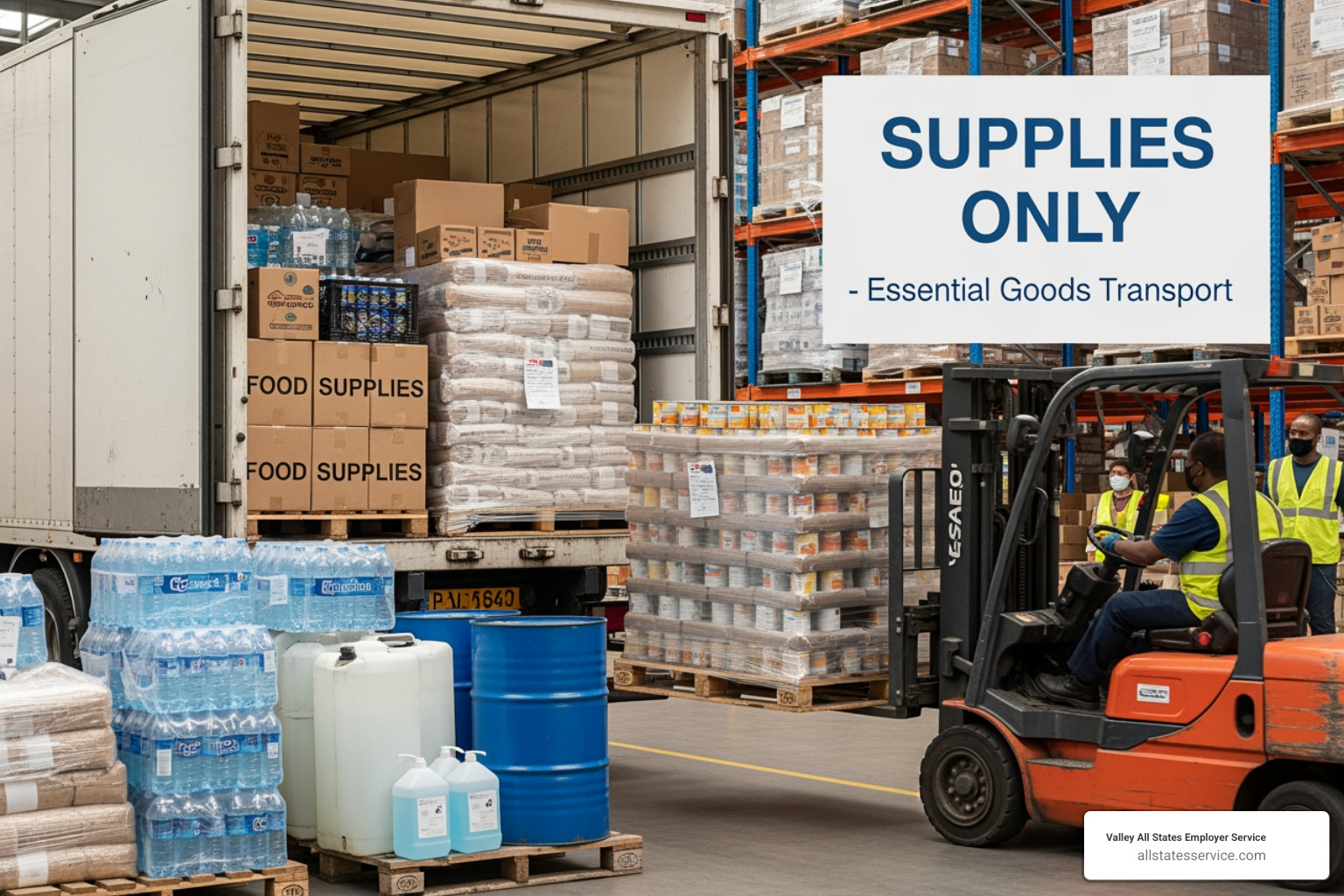
Good news if you’re primarily a supplier! Subcontractors who do not provide any services and only provide supplies under their subcontract are generally not subject to the E-Verify federal contractor rule.
The rule specifically targets subcontracts for “commercial or noncommercial services or construction.” This means if your business simply manufactures or delivers goods, and there’s no significant labor or construction component to your subcontract on the federal project, you are likely exempt from the E-Verify requirement.
This distinction is crucial for many businesses. It means that a subcontractor providing office furniture to a federal building project, for instance, would probably not need to use E-Verify, whereas a subcontractor installing that furniture would. Always double-check your subcontract’s scope of work to confirm whether it involves services or construction.
Your Step-by-Step Guide to E-Verify for Subcontractors
Alright, let’s get practical. If you’ve determined that the e verify for subcontractors rule applies to your business, what’s next? Don’t fret! We’ve broken down the compliance process into actionable steps.
Step 1: Determine if the Rule Applies to Your Subcontract
Before you do anything else, confirm that the E-Verify requirement actually applies to your specific subcontract. This means reviewing your contract documents carefully.
- Check for the FAR E-Verify Clause: Look for the Federal Acquisition Regulation (FAR) clause 52.222-54 in your subcontract. This is the primary indicator. If it’s there, the requirement is likely flowing down to you.
- Assess the Scope of Work: Is your subcontract for commercial or noncommercial services or construction? If it’s purely for supplies, you’re usually exempt.
- Verify the Value: Does the subcontract value exceed $3,500?
- Confirm Work Location: Is the work performed in the United States?
If you answer “yes” to all these questions, then it’s time to move to Step 2.
Step 2: Enroll in E-Verify
Once you’ve confirmed your obligation, enrollment is the next logical step.
- Enrollment Timeline: You must enroll in E-Verify within 30 calendar days of the date of the federal contract award or the date the FAR E-Verify clause is included, whichever comes first. Don’t delay!
- The Process: Visit the official E-Verify website to begin the enrollment process. During enrollment, you’ll need to designate your company as a “Federal Contractor with the FAR E-Verify clause.” This is a crucial step to ensure you’re operating under the correct program guidelines.
- Consider an Employer Agent: For businesses in Maryland or across the United States, managing E-Verify can add to your administrative burden. We, Valley All States Employer Service, offer an E-Verify Employer Agent Service that can handle the entire verification process for you, streamlining compliance and reducing your workload.
Step 3: Using E-Verify for New and Existing Employees
Once enrolled, you’ll need to know which employees to verify and when.
- New Hires: For employees hired after the date your federal contract containing the FAR E-Verify clause is awarded, you must create an E-Verify case within three business days after their first day of employment. This is standard E-Verify procedure.
- Existing Employees: This is where federal contractor rules differ from general E-Verify use. You must also verify existing employees who are assigned to work on the covered federal contract and whose employment began after November 6, 1986. You are generally not required to verify existing employees who are not assigned to the federal contract, or those whose employment started before November 7, 1986.
- Form I-9 is Key: E-Verify is a supplement to, not a replacement for, the Form I-9. You must still complete a Form I-9 for every new hire, and the information from the I-9 is what you’ll enter into E-Verify. Our Form I-9 Ultimate Guide can walk you through the process.
- Tentative Nonconfirmation (TNC): If an E-Verify case results in a Tentative Nonconfirmation (TNC), you must follow the specific procedures outlined by USCIS, including notifying the employee and allowing them to contest the mismatch. It’s critical not to take adverse action against an employee based solely on a TNC.
The Prime Contractor’s Role and Potential Consequences
Understanding your prime contractor’s obligations isn’t just good etiquette; it’s vital for your own business’s health. Their compliance directly impacts your ability to secure and maintain federal subcontracting work.
Understanding Your Prime Contractor’s Obligation
The prime contractor awarded a federal contract with the FAR E-Verify clause has significant responsibilities. They are not only required to use E-Verify themselves but also to ensure that their covered subcontractors do the same. This includes:
- Flow-down of the Clause: Ensuring the FAR E-Verify clause (FAR 52.222-54) is incorporated into all applicable subcontracts at every tier.
- General Oversight: Providing general oversight to subcontractors to ensure they meet the E-Verify requirement. This doesn’t mean they verify your employees, but they must confirm that you are enrolled and compliant.
- Risk Mitigation: By ensuring your compliance, the prime contractor is mitigating their own risk.
Prime contractors can face serious repercussions if they fall short. A prime contractor may be subject to fines and penalties if it knowingly continues to work with a subcontractor who is in violation of the E-Verify requirement. This makes your compliance a critical component of their success, and yours. Having a robust Compliance Management System in place can give prime contractors confidence in partnering with you.
Consequences of Non-Compliance for a Subcontractor
What happens if you, as a subcontractor, fail to comply with the e verify for subcontractors rule when it applies? The consequences can be severe and far-reaching:
- Damaged Business Relationships: If your non-compliance puts the prime contractor at risk, it will undoubtedly sour your relationship and likely lead to the termination of your current subcontract.
- Loss of Future Contracts: Federal contracting is a tight-knit community. A reputation for non-compliance can quickly spread, making it difficult to secure any future federal work, either as a prime or a subcontractor.
- Legal and Financial Penalties: While direct penalties for subcontractors from the federal government might be less common than for prime contractors, you could still face legal repercussions and significant fines if found to be knowingly employing unauthorized workers. You could also face breach of contract claims from the prime contractor.
Simply put, compliance isn’t just a bureaucratic hurdle; it’s essential for protecting your business’s reputation, financial stability, and eligibility for lucrative federal projects.
Frequently Asked Questions about E-Verify for Subcontractors
Even with the best intentions, questions can arise. Let’s tackle some common concerns related to e verify for subcontractors.
What happens if the E-Verify system is down?
Government shutdowns or system maintenance can temporarily halt E-Verify operations, which can be stressful, especially if you have new hires. However, the government anticipates these situations.
- Form I-9 Compliance Continues: Even if E-Verify is down, your obligation to complete and maintain Form I-9s remains. You must still ensure employees complete Section 1 on or before their first day and Section 2 within three business days. Form I-9 compliance is foundational.
- USCIS Guidance: USCIS typically provides specific guidance during outages, including extensions for creating E-Verify cases once the system is back online. Employers are usually given a grace period to submit cases for employees hired during the downtime.
- Document Everything: Always document the dates of the outage, the employees hired during that period, and any communications or actions you took. This demonstrates good-faith compliance. For more details on navigating these situations, articles like this one from SHRM about E-Verify outages can be very helpful.
Do state E-Verify laws affect my federal subcontracting work?
This is an excellent question! For federal contracts that include the FAR E-Verify clause, the federal E-Verify requirements take precedence and dictate your obligations. The federal rule is supreme in this context.
However, state E-Verify laws can still affect your business, particularly for your non-federal work. While there isn’t a statewide E-Verify mandate in Maryland for all employers, some states do have their own requirements. If you operate in multiple states or engage in non-federal projects, you’ll need to be aware of those specific state laws. Always consult a E-Verify State Requirements Guide 2025 for any other jurisdictions you operate in. But for your federal subcontracting work in Maryland or anywhere in the U.S., the federal rule is what you follow.
Where can I find official guidance on the e verify for subcontractors rule?
The best place to find accurate and up-to-date information is directly from the source!
- USCIS E-Verify Website: The official E-Verify website is your go-to resource. Specifically, check out their Federal Contractors page, which has dedicated sections for subcontractors.
- E-Verify Supplemental Guide for Federal Contractors: This comprehensive guide provides in-depth explanations and examples. We also have an internal resource, our E-Verify Supplemental Guide for Federal Contractors, that can help you steer this complex document.
These resources provide the definitive answers to your E-Verify questions and are essential for maintaining compliance.
Conclusion: Stay Compliant and Protect Your Business
Navigating the complexities of e verify for subcontractors might seem daunting at first, but with a clear understanding of the rules and a proactive approach, it becomes a manageable part of doing business with the federal government. Our goal is to empower you with the knowledge to stay compliant, protect your business relationships, and ensure a smooth path to securing future contracts.
Remember these key takeaways:
- Always scrutinize your subcontracts for the FAR E-Verify clause and the four triggering criteria.
- Enroll in E-Verify promptly if required and designate yourself as a federal contractor.
- Diligently verify your new hires and applicable existing employees.
- Understand the critical distinction between independent contractors and employees.
- Keep meticulous records and be prepared for potential system outages.
By adhering to these guidelines, you’re not just avoiding penalties; you’re demonstrating your commitment to a legal workforce, which strengthens your reputation and opens doors to more opportunities in federal contracting.
We, Valley All States Employer Service, are here to simplify your compliance journey. Our expert team provides outsourced E-Verify workforce eligibility verification, reducing your administrative burden and minimizing errors. Let us help you streamline your processes so you can focus on what you do best: delivering exceptional service on federal projects.
Ready to simplify compliance and ensure your business is always in good standing? Learn more about E-Verify for contractors and find how we can be your trusted partner.