
Document verification service: Secure Trust 2025
The Modern Business Need for Digital Identity Verification
A document verification service is a digital solution that authenticates government-issued IDs and confirms the person presenting them is who they claim to be. By combining document scanning, data analysis, and biometric verification, these services replace slow, in-person identity checks. Key features include automated data extraction, liveness detection to confirm a real person is present, and real-time results accessible from any mobile device.
Remember proving your identity for a new bank account or job? Traditional methods often meant scheduling appointments, mailing documents, or waiting days for security codes. Today’s digital world demands faster solutions.
The Canada Revenue Agency, for example, introduced document verification to give citizens immediate access to their tax accounts, eliminating long wait times. Financial institutions use these services to onboard customers remotely, and employers rely on them to verify new hires without in-person visits.
For HR managers juggling complex compliance, a document verification service is a lifeline. It reduces the administrative burden of employee verification while maintaining the security and legal standards your business needs.
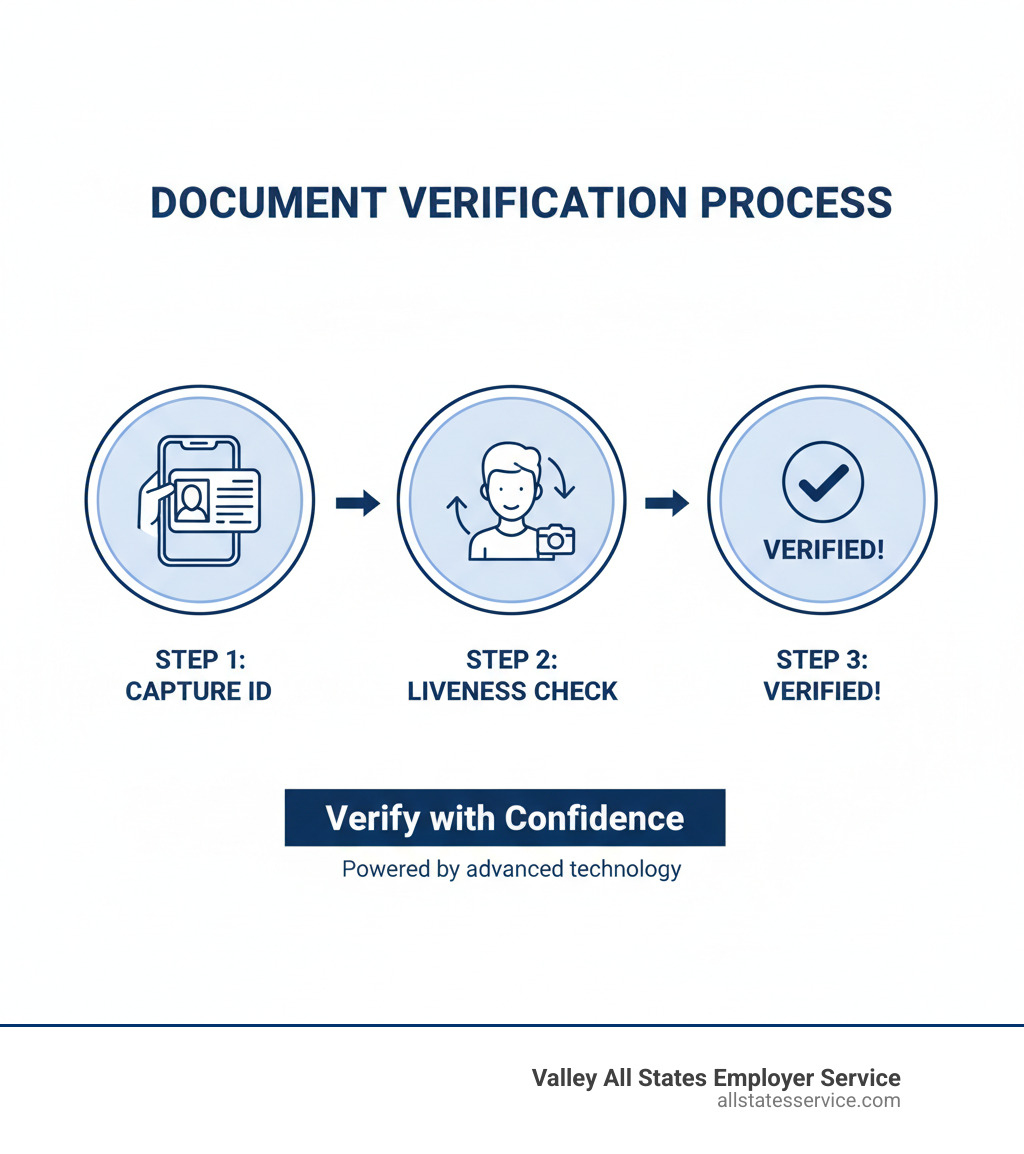
How Document Verification Services Work: A Step-by-Step Guide
This section breaks down the technology that powers modern identity confirmation, making remote verification possible from anywhere.
The Core Verification Process
Imagine proving your identity from your couch instead of driving across town. That’s the convenience of a modern document verification service.
The process starts when you receive a secure link or QR code. Tapping or scanning it with your mobile device connects you to the verification platform, which provides clear instructions. You’ll choose your ID type, like a passport or driver’s license, and use your phone’s camera to capture images of the front and back.
As you do this, data extraction algorithms instantly scan your ID, pulling key information in seconds. Simultaneously, the system conducts real-time analysis, checking security features and for signs of tampering much faster than a human could.
The final step in your user journey is a liveness check, which involves taking a selfie to confirm you’re a real person. Within minutes, your identity is verified. For employers, this transforms hiring compliance from a paperwork nightmare into a smooth digital experience. You can learn more about E-Verify Services and how they integrate with these technologies.
The Power of Liveness Checks and Biometrics
The liveness check is more than a simple selfie. It’s a sophisticated step that separates legitimate users from fraudsters using photos, videos, or masks.
When you take a motion selfie, artificial intelligence creates a 3D face map of your features. It analyzes depth, contours, and natural movements like blinking to prove you are physically present. This biometrics technology can even detect subtle skin texture and micro-expressions.
This advanced spoofing prevention stops fraudsters from using printed photos or videos. The system’s fraud detection capabilities spot these tricks instantly, protecting both you and the organization. While complex behind the scenes, the user experience remains simple.
Accepted Documents and User Requirements
Document verification services are flexible, accepting several ID types. Passports are universally accepted and often provide the smoothest experience. Driver’s licenses from all Canadian provinces and provincial ID cards are also excellent options.
Most services require users to be at least 16 years old. You’ll need a smartphone or tablet with a working camera, as desktop computers cannot perform the required steps.
Crucially, you must use the original, physical, unexpired document. Screenshots, photocopies, or digital images are not accepted. The entire process typically takes just a few minutes. For employers, understanding these requirements is similar to knowing which documents satisfy I-9 rules, which you can explore in our guide on What is an I-9?
The Key Benefits: Why Your Business Needs a Document verification service
Adopting a digital solution offers more than just convenience; it’s a strategic move to improve security, efficiency, and compliance across your operations.
Enhancing Security and Preventing Fraud
With fraud and identity theft on the rise, a robust document verification service is essential for protecting your business and customers. Even trained staff can miss sophisticated fake IDs, but digital services use advanced algorithms to spot counterfeit documents by analyzing security features invisible to the naked eye, like watermarks and holograms.
The service also verifies the person holding the ID. Through biometric matching and liveness checks, it ensures the presenter is the legitimate owner, making identity theft much harder. For businesses in regulated industries, this technology is a game-changer for AML compliance, providing the thorough identity confirmation regulators expect.
Automated verification catches fraud that humans might miss and dramatically reduces the risk of accepting fake documents. This level of security is crucial for Work Authorization Verification and avoiding costly I-9 Compliance Penalties.
Streamlining Operations and Improving User Experience
Lengthy approval processes involving mailed documents are becoming history. A document verification service transforms clunky, time-consuming tasks into smooth, instant experiences.
Here’s how digital verification compares to traditional methods:
| Feature | Digital Verification | Traditional In-Person Verification |
|---|---|---|
| Speed | Seconds to minutes | Hours to days (or weeks for mail) |
| Cost | Reduced operational costs, less staff time | High labor costs, physical infrastructure |
| Security | Advanced fraud detection, biometric checks | Relies on human judgment, easier to spoof |
| User Convenience | Remote, 24/7 access, immediate results | Requires travel, appointments, limited hours |
The impact on customer onboarding is significant. Instead of losing customers to long delays, you can welcome them immediately. Data entry automation also frees your staff from tedious transcription, reducing errors and allowing them to focus on customer relationships instead of paperwork.
With 24/7 availability, your business can verify customers anytime, anywhere. For organizations looking to modernize, our Outsourced Employee Verification Complete Guide provides comprehensive implementation strategies.
Ensuring Regulatory Compliance with a Document verification service
A document verification service makes compliance feel less like a burden and more like a competitive advantage.
KYC regulations require businesses to establish genuine identity with confidence. Digital verification provides the thorough documentation regulators expect, with timestamps and secure records. For AML laws, these services help you proactively prevent illegal activities by accurately identifying individuals.
Modern verification platforms can adapt to unique regulatory standards, whether for age verification or employment eligibility. They also create comprehensive audit trails, logging every verification attempt with detailed records. This makes regulatory inspections straightforward and demonstrates your commitment to compliance.
The peace of mind from knowing your processes meet regulations is invaluable. For businesses dealing with employment compliance, our HR Compliance Assistance and I-9 E-Verify Compliance Guide offer specialized support.
Who Uses Document Verification? Key Industries and Applications
From banks to government agencies, organizations of all types rely on these services to build trust in a digital world.
Financial Services and FinTech
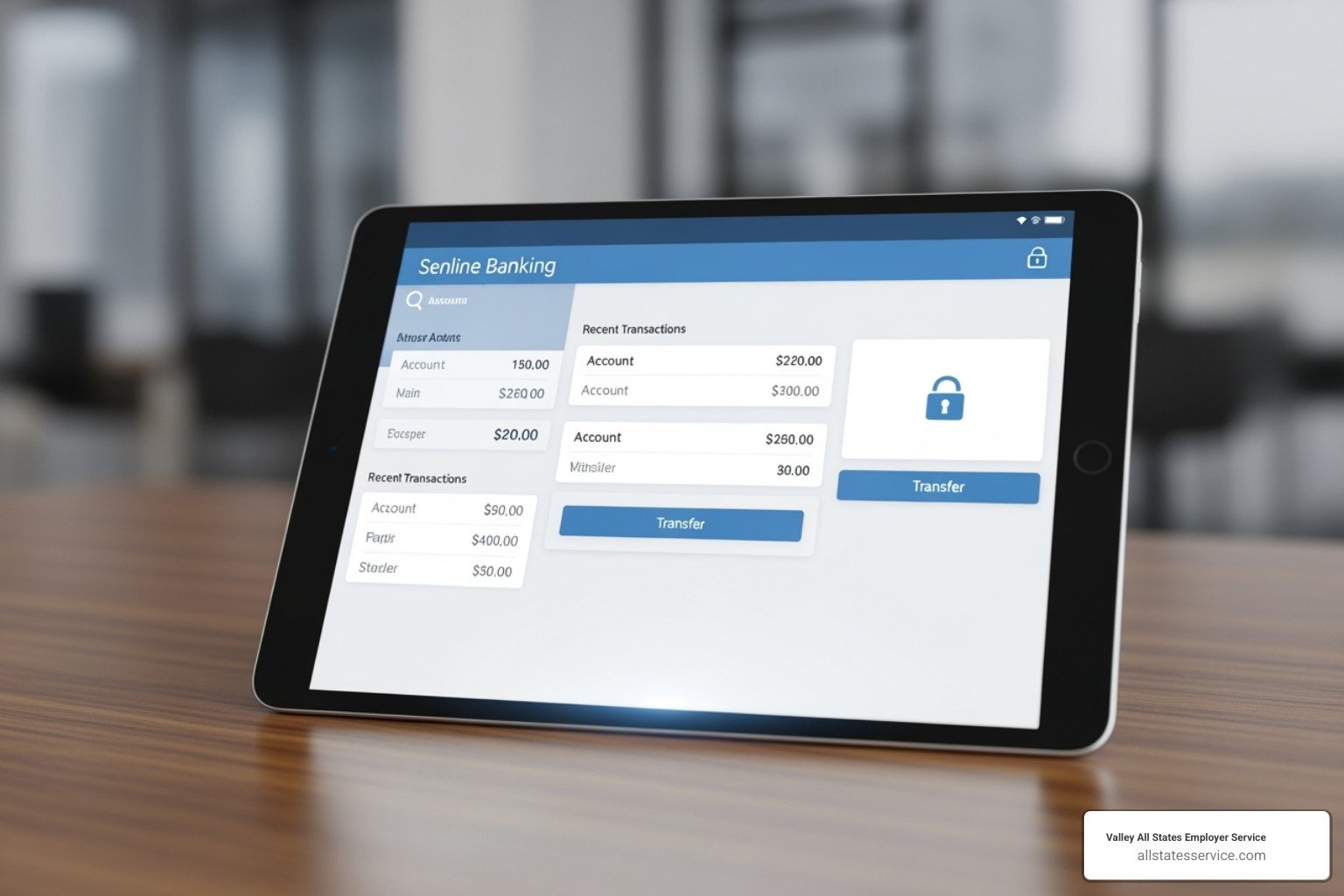
The days of taking a half-day off work to open a bank account are fading. Today’s banking customers can open accounts from home in minutes by scanning an ID and taking a selfie. This is especially true for account opening and loan applications, where digital verification has streamlined what used to be a paperwork nightmare.
Lenders can now quickly confirm identity while reducing fraud risks. Payment processors and online marketplaces also use this technology to onboard merchants and maintain secure transaction environments. Interac, Canada’s payment network, demonstrates this with its InteracVerified solutions, showing how deeply embedded these methods have become in our financial ecosystem.
Government and Public Sector
Government agencies are using document verification services to dramatically improve citizen experiences. This shift has accelerated as citizens now expect digital convenience from public services.
For example, the Canada Revenue Agency’s CRA My Account system uses document verification to grant immediate access. Instead of waiting up to 10 business days for a mailed security code, the 20.5 million Canadians using CRA’s digital services can now confirm their identity instantly.
Other government services, like unemployment benefits and social assistance programs, use this approach to ensure benefits reach eligible individuals while preventing fraud. It allows citizens to access services on their own schedule, not the government’s. In the U.S., systems like E-Verify: Home show how this extends to employment. Understanding What is E-Verify? helps illustrate these connections.
Employment and Human Resources
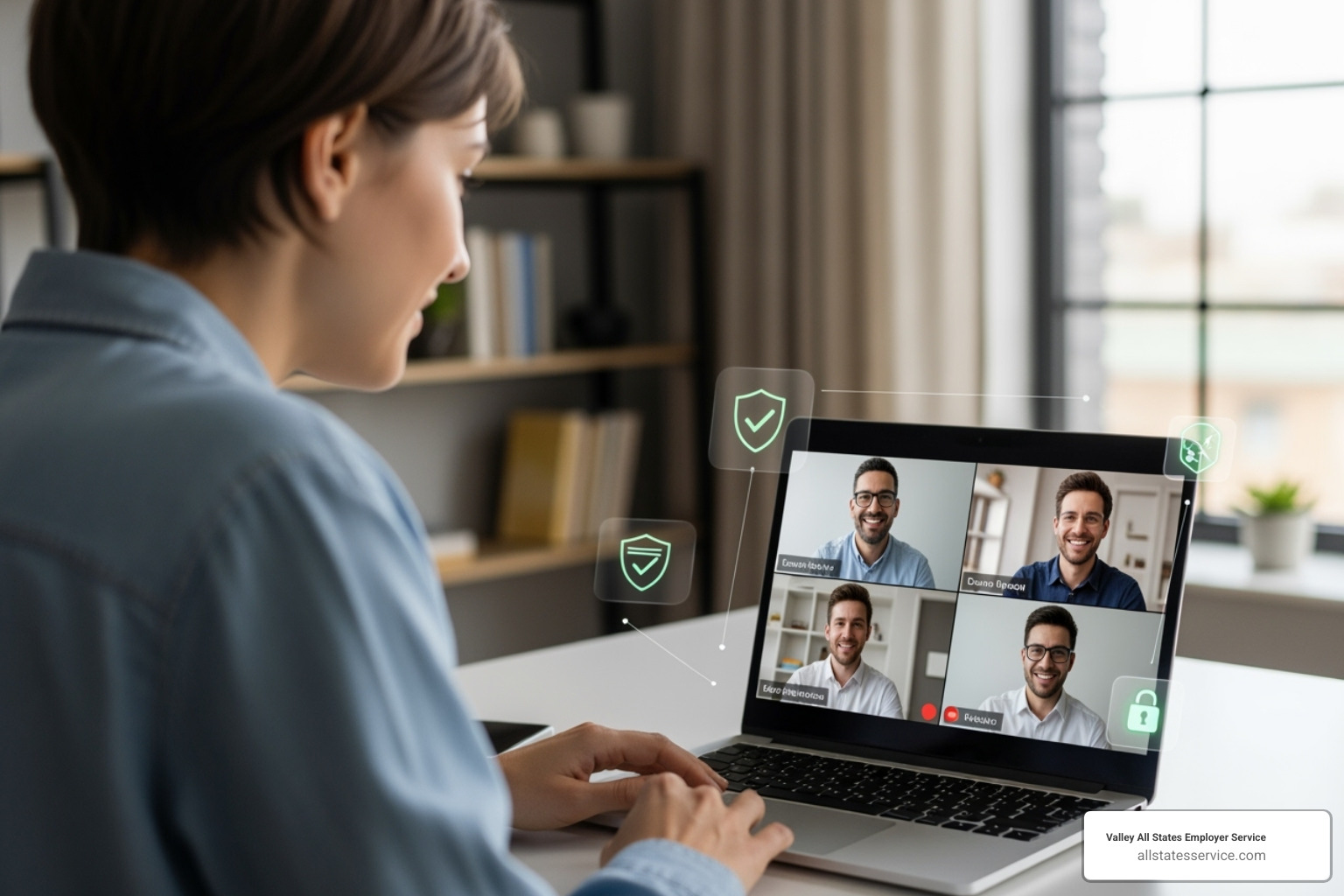
Remote hiring and the need for efficient onboarding have revolutionized HR. A document verification service has become the backbone of modern recruitment.
If your ideal candidate lives across the country, you need to verify their work authorization for I-9 compliance. Digital verification lets you authenticate their documents remotely, maintaining full legal compliance without delays. This is essential for companies hiring remote workers.
Background checks also rely on identity verification as a crucial first step. You must confirm a person’s identity before checking their criminal or employment history. It’s also powerful for verifying professional qualifications, authenticating licenses and certifications directly with issuing bodies. For employers managing remote workforces, our Remote I-9 Verification Guide and guide to E-Verify Employer Responsibilities ensure you stay on the right side of employment law.
Navigating Challenges and Ensuring Data Security
While powerful, it’s important to understand the limitations of these services and the security measures that keep user data safe.
Common Challenges and Limitations
Even the best document verification service has limitations. These systems can face real-world challenges that affect users.
Image quality issues are the most common culprit. Glare, shadows, or a blurry photo can all cause verification to fail, as algorithms need clear images to work properly. Expired documents are another frequent reason for rejection.
Technological hiccups, like a slow internet connection or camera malfunction, can also be frustrating, though they are rare. The digital divide is a more serious challenge, as not everyone has a smartphone or reliable internet. This requires organizations to maintain alternative verification methods.
User error, such as not following instructions, and the wide document variety can also cause issues, sometimes requiring human intervention.
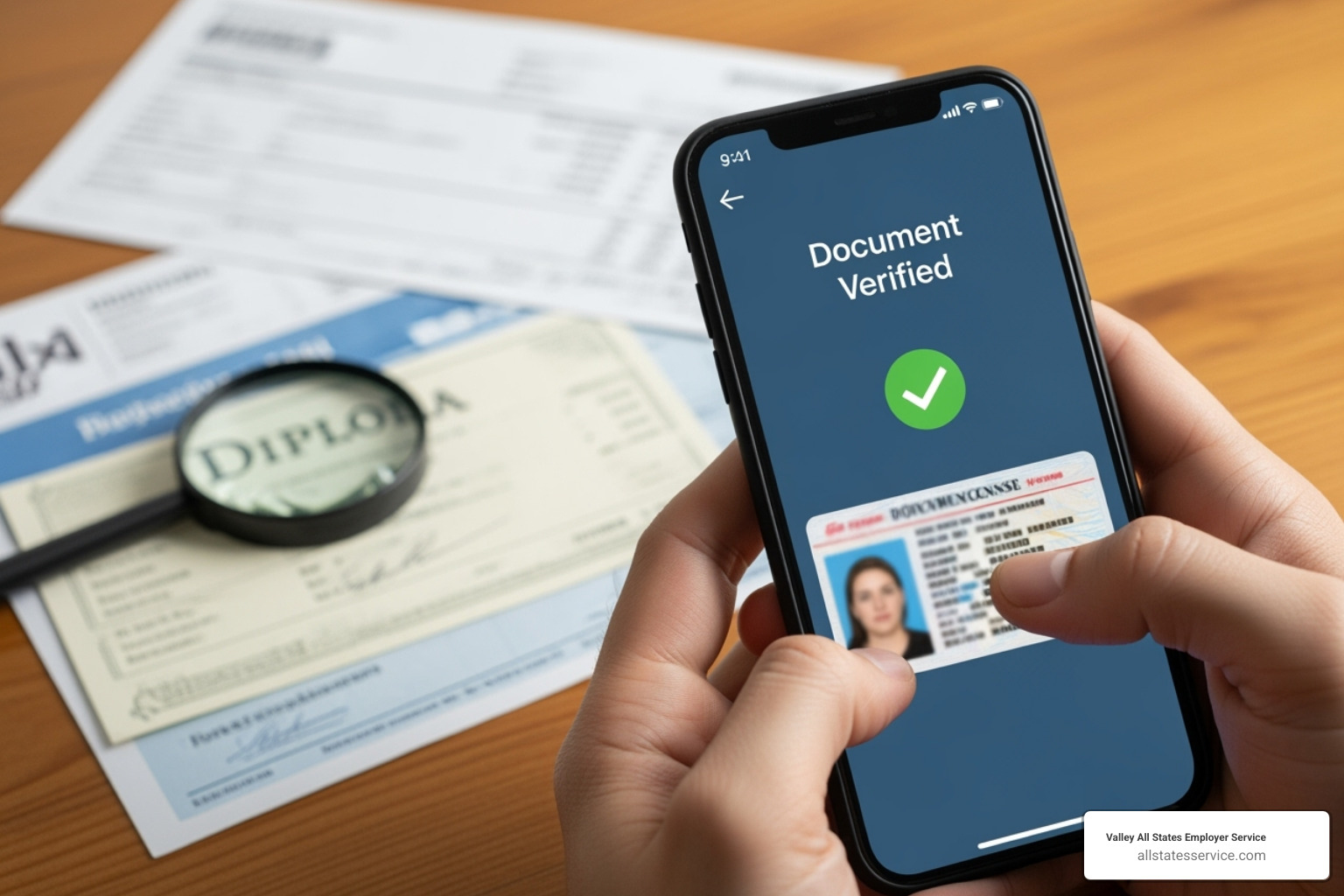
Protecting Your Data: Security in a Document verification service
Sharing personal ID and biometric data requires top-tier security. Reputable document verification service providers implement multiple layers of protection.
Data encryption is the foundation. All information, from ID photos to biometrics, is scrambled with powerful encryption during transmission. Transparent privacy policies are also crucial. Quality providers clearly explain how they collect, use, and store your data. For example, you can review the details in Interac’s document verification service Privacy Notice.
Secure storage means your data lives in highly protected online portals with restricted access and regular security audits. For biometric data protection, many services convert your facial features into encrypted mathematical templates instead of storing raw images. These templates cannot be reverse-engineered, and some providers even use one-time biometrics, where the data is deleted after verification.
Compliance with regulations like GDPR adds another protective layer, ensuring your information stays safe. For businesses, understanding these measures is crucial for managing sensitive employee data, a best practice detailed in our Internal I-9 Audit Complete Guide.
Frequently Asked Questions about Document Verification
How long does document verification usually take?
A document verification service is incredibly fast. The entire process, from snapping an ID photo to getting final results, typically takes seconds to minutes. This speed comes from sophisticated algorithms that analyze your document and selfie almost instantly. While timing can vary based on photo quality, it’s dramatically faster than traditional manual verification, which can take days.
Is online document verification legally accepted?
Yes, it is legally accepted and often preferred by regulators for many compliance frameworks. For Know Your Customer (KYC) and Anti-Money Laundering (AML) rules, financial institutions rely on these digital solutions to meet strict standards. In employment, digital verification integrates with systems like Form I-9 processing to confirm work authorization. The key is choosing a reputable service that meets industry standards for security and accuracy.
What happens if my document verification fails?
If your verification fails, don’t worry. It’s a common issue, and there’s usually a simple fix. Most services will tell you what went wrong, such as poor lighting or a blurry photo, and let you try again. You’ll typically get several chances. If you continue to have problems, the organization may offer a manual review or direct you to an alternative verification method. This ensures everyone can complete the process, regardless of technical challenges.
Building Trust in a Digital-First World
In today’s digital landscape, the ability to quickly and securely verify an identity online is essential for business. A document verification service meets the demands of customers who expect instant access, remote employees, and strict regulators. It creates the foundation of trust that modern business requires.
For businesses, these services deliver a trifecta of benefits: smoother onboarding, stronger fraud prevention, and better compliance. This protects your bottom line and reputation while reducing the stress of audits.
For employers, navigating hiring regulations like I-9 and E-Verify can be overwhelming. Specialized partners like Valley All States Employer Service take the guesswork out of workforce verification, preventing costly mistakes. When you work with experts who understand the technology and the regulations, every new hire is verified with confidence and efficiency. You’re not just checking a box; you’re building a solid foundation for your workforce management.
The digital world moves fast, but trust doesn’t have to be slow. With the right verification partner, you can accept digital speed while maintaining the security your business demands.
Ready to streamline your verification process? Explore our Employment Verification Services Complete Guide to learn more.