
Streamline HR processes: Master 5 Key Steps
Why Streamlining HR Processes Is Critical for Modern Organizations
To streamline HR processes is essential for any business aiming to stay competitive. It reduces administrative burden, cuts costs, and frees up your HR team to focus on strategic initiatives that drive growth. In practice, this means automating repetitive tasks, replacing paper workflows with digital systems, integrating platforms for seamless data flow, and enabling employee self-service.
Busy HR departments are constantly pulled between employee needs, leadership demands, and complex regulations. Too often, teams spend their days on manual paperwork and answering routine questions instead of focusing on high-value work.
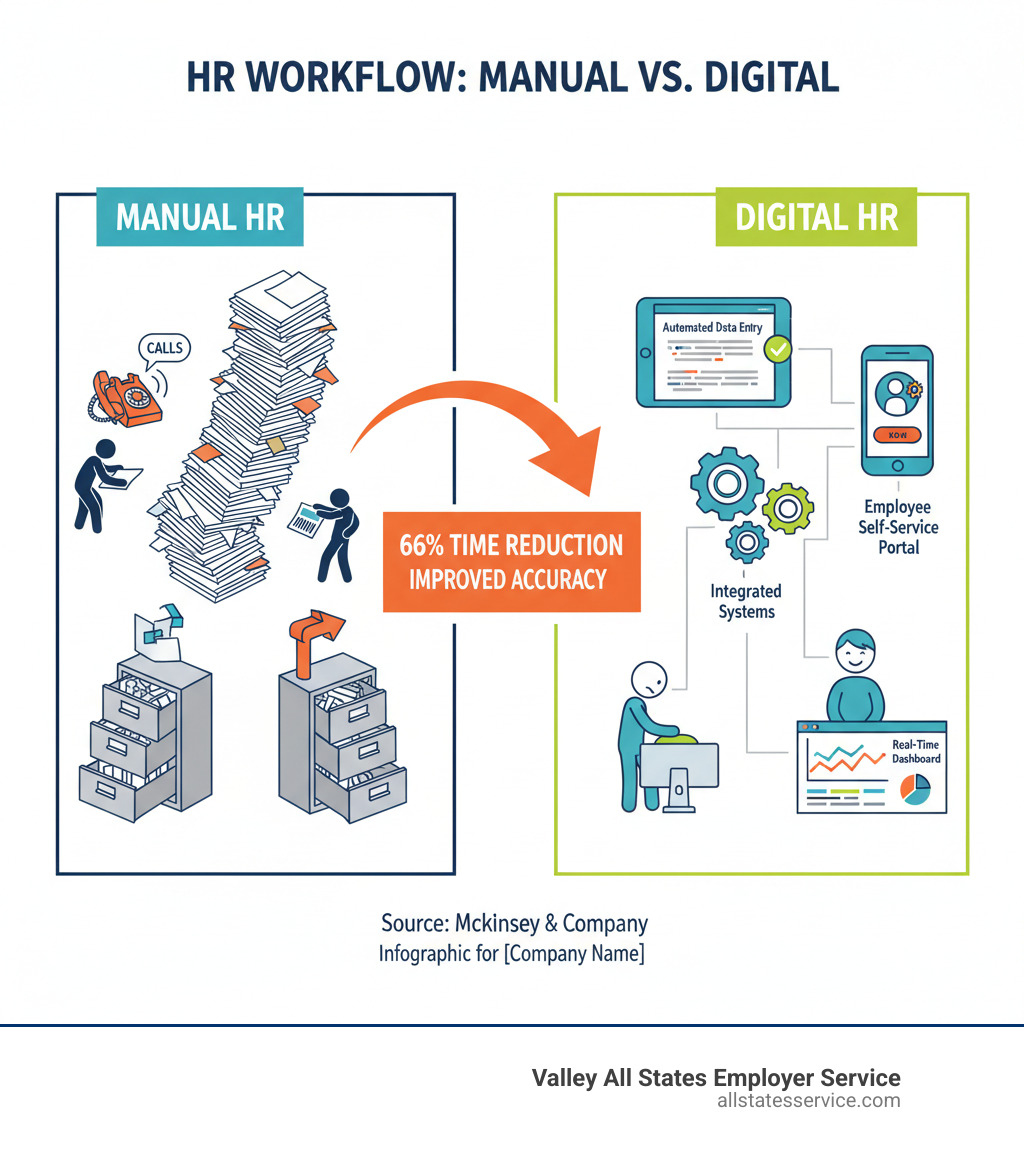
The numbers tell a compelling story. McKinsey research found that more than half (56 percent) of traditional HR activities can be automated. One company that automated key processes achieved a 66 percent reduction in processing time, improved compliance, and freed up four full-time employees for strategic work.
Beyond efficiency, streamlined HR processes directly impact your bottom line and employee satisfaction. Automation reduces costly errors, ensures compliance, and creates a better experience for your workforce. When employees can handle routine tasks themselves, everyone wins. This shift from manual to digital transforms HR from a reactive function into a proactive, strategic partner.
Why Streamlining HR Matters: The Core Benefits
When you streamline HR processes, you set off a chain reaction of improvements that benefit your budget, your culture, and your employees’ daily experience.
Increased productivity is often the first noticeable benefit. When your HR team isn’t buried in paperwork, they can focus on high-impact work like talent development, employee engagement, and strategic workforce planning. These are the initiatives that build a stronger organization.
Significant cost savings emerge as you move away from manual processes. Beyond saving on paper and printing, automation reduces expensive errors and the time spent fixing them. One organization automated key HR processes and realized a 66 percent reduction in processing time, redirecting massive savings toward strategic priorities.
Reduced administrative errors are crucial for maintaining employee trust. Human error is inevitable with manual data entry, but automated systems catch mistakes before they become payroll or benefits problems, which also helps avoid compliance headaches.
An improved employee experience is another key outcome. Clunky, slow HR processes are frustrating. By providing self-service options and digital workflows, you show employees you value their time, giving them the seamless experience they expect. This directly impacts engagement and retention.
Improved regulatory compliance is critical in today’s complex environment. Paper-based systems make it difficult to maintain audit trails and stay current. Automated systems with built-in compliance features provide the security and accuracy needed for I-9 verification, payroll taxes, and more.
Finally, streamlining enables strategic business alignment. When HR isn’t bogged down by administrative tasks, the team can step into its role as a strategic partner, using data to contribute directly to business goals. This lifts HR from a cost center to a driver of organizational success.

Spotting the Bottlenecks: Identifying Common HR Inefficiencies
You can’t fix what you can’t see. Before you can streamline HR processes, you must identify where things are getting stuck. Many outdated practices persist simply because “that’s how we’ve always done it,” draining resources and frustrating your team.
Common bottlenecks include:
- Manual data entry: When staff re-enter the same employee information into HRIS, payroll, and benefits systems, it wastes time and invites errors.
- Paper-based workflows: Stacks of resumes, leave requests, and performance reviews slow down every process they touch and make remote work nearly impossible.
- Siloed systems: When your recruitment, payroll, and benefits platforms don’t communicate, you end up with disconnected data, conflicting information, and an incomplete picture of your workforce.
- Inconsistent processes: A lack of standardized workflows for reviews or onboarding creates confusion, erodes trust, and opens the door to serious compliance risks.
- Lack of reporting: Without the ability to quickly pull data on key metrics like time-to-hire or turnover, you’re forced to make decisions in the dark and can’t prove the value of improvements.
To identify these issues, start with a workflow analysis to map your current processes and find friction points. Use employee and manager surveys to gather direct feedback on their daily frustrations. Finally, conduct regular process audits to spot compliance gaps before they become major problems.

How to Streamline HR Processes with Technology and Automation
Once you’ve identified the bottlenecks, it’s time to bring in technology and automation. These tools fundamentally change how HR operates, shifting the focus from reactive paperwork to proactive strategy.
A modern HRIS (Human Resources Information System) acts as a digital command center, creating a single source of truth for all employee data. Paired with automation tools, it handles the repetitive tasks that consume workdays. With HR automations rising by 599% in two years, this is no longer a trend but a revolution.
Artificial Intelligence (AI) takes this further, with 80% of HR leaders using AI weekly. AI analyzes patterns, predicts outcomes, and assists with decision-making. One of the most impactful changes is the employee self-service portal, which saves HR staff over seven hours per week by allowing employees to manage their own information. Tying it all together is system integration, which ensures data flows seamlessly between tools, eliminating duplicate entry and errors.
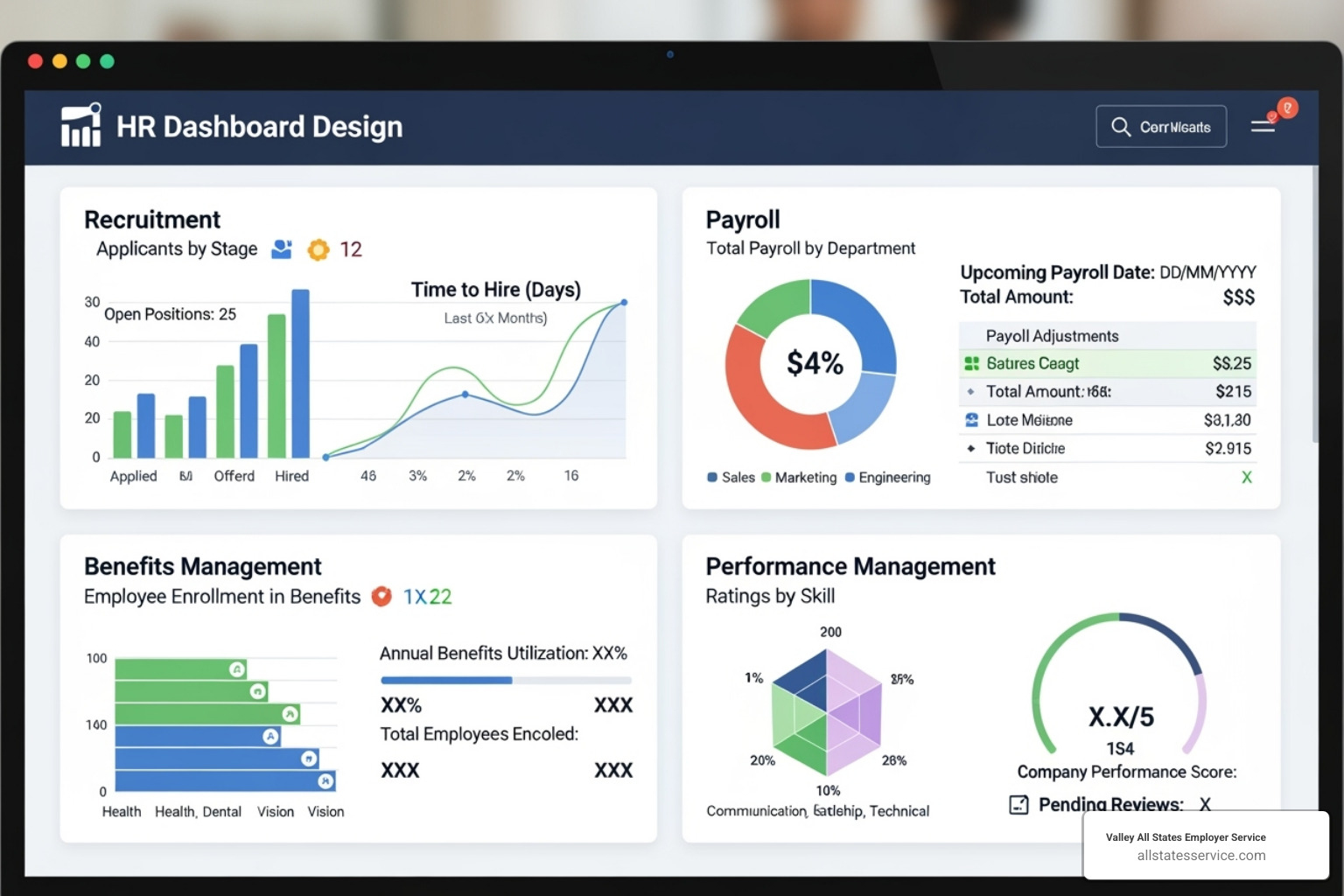
Let’s look at how these technologies transform specific HR functions.
Revolutionizing Recruitment and Onboarding
A clunky onboarding process creates a poor first impression. An Applicant Tracking System (ATS) automates the hiring workflow, from posting jobs to screening resumes and scheduling interviews. Automated candidate communication, often powered by AI, keeps applicants engaged with status updates and answers to common questions.
For compliance, digital I-9 forms are a game changer. They guide employees through the form, flag errors in real time, and store documents securely. To learn how to make the switch, see our guide on how to Streamline Your Onboarding with Electronic I-9 Solutions.
E-Verify integration is essential for organizations that need to verify employment eligibility. When E-Verify connects to your onboarding system, verification is automatic and accurate. Valley All States Employer Service specializes in expert, impartial E-Verify processing that removes the burden from your team and minimizes risk. Learn more in The Ultimate Guide to E-Verify and I-9 Compliance.
Optimizing Performance Management and Development
Technology can transform performance management from a yearly chore into a continuous, objective process. Automated review cycles handle scheduling and reminders, while AI-driven feedback analysis can identify patterns in reviews and suggest actionable plans. AI can also assist with data-driven goal setting and create personalized learning paths to address skills gaps, helping employees build the agility needed for success, as noted in LinkedIn’s Workplace Learning Report. As consultant Flor Farsadi notes, “AI tools help monitor and evaluate employee performance… This ensures timely reviews and minimizes human bias.“
How to Streamline HR Processes for Payroll and Administration
Payroll and administration are prime candidates for automation. Integrated payroll systems connect with time, benefits, and HRIS data, eliminating manual transfers and reducing errors. Automated time and attendance lets employees clock in digitally, with data flowing directly to payroll. Employee self-service for data updates and a centralized document management system further reduce HR’s administrative workload, freeing the team for more strategic work. If you’d rather offload this complexity, our Payroll Outsourcing Solutions to Save Time and Money can help.
Implementation and Best Practices: Making the Change Stick
Buying new HR software is the easy part; getting your team to accept it is the real challenge. Successful implementation requires thoughtful change management, treating it as a people project, not just a technology project.
Organizations that successfully streamline HR processes secure leadership buy-in, involve employees in the design, and invest in comprehensive training. They also accept continuous improvement, building in feedback loops to refine processes based on real-world experience. This isn’t a “set it and forget it” initiative.

Balancing Automation with the Human Touch
Does automation make HR cold and impersonal? Quite the opposite. Automation amplifies the human element by handling repetitive tasks, freeing your team for work that requires empathy and strategic thinking. As HR consultant Marie Richter says, “AI and automation aren’t replacing HR, they are empowering it. By embracing these technologies… HR professionals can focus on what truly matters: strategy, employee experience, and driving organizational success.“
This is about enhancing human capabilities, not replacing them. Let technology screen resumes so HR can focus on cultural fit. Let AI track metrics so humans can provide meaningful coaching. As SHRM notes, automate HR while keeping the human touch.
A Step-by-Step Guide to Streamline HR Processes
Ready to get started? Follow these steps for a successful transition.
- Start small. Don’t try to do everything at once. Pick one high-impact, painful process, fix it, and use that success to build momentum.
- Secure leadership buy-in. Show executives the business case: hours saved, costs reduced, and risks mitigated. Their support is crucial.
- Involve employees in the design. The people using the systems have the best insights. Involving them creates ownership and ensures you’re solving real problems.
- Provide comprehensive training. Offer ongoing support through live sessions, videos, and guides to help everyone feel confident with the new tools.
- Gather feedback for iteration. Actively seek input after rollout to refine the process. The best systems evolve based on user experience.
Measuring Your Success
You can’t improve what you don’t measure. Track these key metrics to prove the value of your efforts:
- Time-to-hire: A clear indicator of recruitment efficiency.
- Employee satisfaction (eNPS): Shows if employees appreciate the changes.
- Process completion time: Measures the direct impact of automation on specific tasks.
- Cost per hire: Captures the financial savings of a more efficient process.
- Turnover rates: Reflects the overall health of the employee experience.
- HR time saved: Quantifies how much time your team can now dedicate to strategic work.
Build in regular feedback loops to gather qualitative insights. This ongoing dialogue ensures you’re always adapting and improving. For specialized areas like employment eligibility, partnering with experts like Valley All States Employer Service ensures your streamlined processes remain fully compliant.
Frequently Asked Questions about Streamlining HR
We talk with organizations every day about their HR challenges. Here are answers to some of the most common questions about how to streamline HR processes.
What are the first steps to automating HR processes?
Start by auditing your current workflows to identify the most repetitive, time-consuming tasks. Don’t try to fix everything at once. Pick one high-impact area, like employee onboarding or time-off requests, to tackle first. A small, early win builds momentum and helps your team learn without feeling overwhelmed.
Will automation replace HR jobs?
No, automation doesn’t replace HR professionals; it lifts their role. By handling tedious administrative work, technology frees up your HR team to focus on strategic initiatives that require a human touch, like talent development, employee engagement, and culture building. As Tracy Avin, Founder of TroopHR, said, “HR leaders who accept AI and automation will lead the next wave of the function’s evolution.” Automation is a tool that lets HR become the strategic partner every business needs.
How do you ensure compliance when automating HR processes?
Good technology makes compliance easier, not harder. Choose reputable software with built-in compliance features, audit trails, and automatic updates for changing regulations.
For critical processes like employment eligibility verification, where mistakes lead to significant fines, integrate with official systems like E-Verify and consider expert support. This is where Valley All States Employer Service specializes. Our impartial E-Verify processing ensures accuracy and removes the administrative burden from your team. For an extra layer of security, our Outsourced Compliance Solutions for Your Business provide the expertise you need.
Opening up Your HR Team’s Full Potential
Streamlining HR is about a fundamental shift: moving your HR function from a reactive administrative center to a proactive, strategic powerhouse. By embracing automation, you empower your team to focus on what truly matters: your people.
When HR professionals aren’t buried in paperwork, they can focus on boosting engagement, developing talent, and shaping your company’s future. This shift delivers tangible benefits, from boosted efficiency and reduced costs to a more engaged, productive, and satisfied workforce.
Of course, streamlining has challenges, especially where it meets critical compliance. E-Verify and I-9 compliance require precision and expertise, not just automation.
That’s where partnering with an expert like Valley All States Employer Service makes sense. We specialize in outsourced E-Verify processing, ensuring your streamlined onboarding workflows are both efficient and fully compliant. We handle the complexities so your HR team can stay focused on strategic priorities.
Ready to streamline your compliance processes? Explore our Outsourced HR Compliance: The Ultimate Guide to see how we can support your HR change.