New employee onboarding: Year-Long Brilliance
Why First Impressions Matter More Than You Think
New employee onboarding is the process of integrating a new hire into your company, equipping them with the tools and knowledge to become productive team members. Here’s what you need to know:
Quick Answer: What Makes Great Onboarding?
- Duration: 90 days to one full year (not just a one-day orientation)
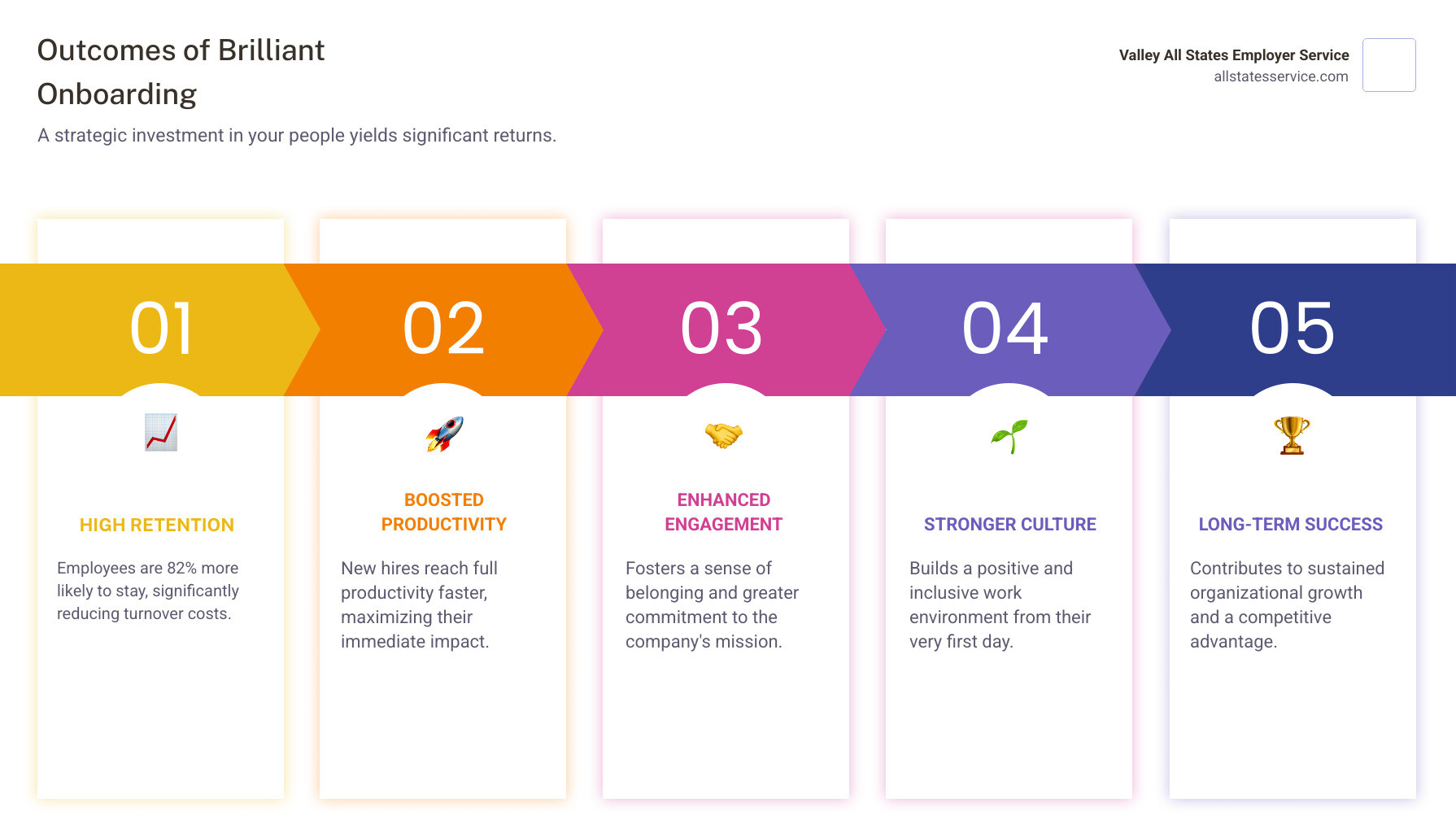
- Key Benefits: 82% better retention, 2.8x more likely employees feel they have the “best job”
- Essential Phases: Pre-boarding, first week orientation, 90-day integration, first-year development
- Critical Components: Clear expectations, regular feedback, mentor assignment, compliance completion
- Technology Role: Automated paperwork, digital training, streamlined I-9 verification
The numbers tell a sobering story. Only 29% of new hires feel set up for success, and nearly 90% decide whether to stay or go within their first six months. Since replacing an employee costs roughly 33% of their base salary, the stakes are high.
Too many companies hand new hires a pile of forms and expect them to figure things out. That’s not onboarding. Real onboarding is a strategic process that transforms nervous new hires into confident, engaged team members who stick around, accelerate productivity, and build loyalty.
For busy HR managers, balancing compliance with a positive employee experience is a real challenge. You need to handle critical tasks like I-9 verification while making new hires feel valued. This guide breaks down how to build an onboarding program that works, covering the timeline, key roles, checklists, and technology that can make the process smoother for everyone.
The What and Why: Understanding the Power of a Great Start
New employee onboarding is the structured process of welcoming and integrating new hires, equipping them with the knowledge, skills, and connections to thrive. Many companies confuse orientation with onboarding. Orientation is a one-day event for paperwork and tours. Onboarding is the entire journey, lasting from 90 days to a full year, that truly integrates someone into the team.
Why invest in a stellar onboarding process? The benefits impact employee retention, productivity, and your bottom line.
A strong onboarding process can improve employee retention by 82%. When new hires feel supported and clear about their role, they stick around. After great onboarding, employees are 2.8 times more likely to say they have the “best job.” A study by Gallup confirms this, which is critical since many employees decide whether to stay or go within their first six months.
Good onboarding also reduces a new hire’s time to productivity, helping them contribute meaningfully sooner. This directly impacts the financial reality: replacing an employee costs roughly 33% of their base salary. Investing in robust onboarding isn’t just nice to have; it’s smart business.
Finally, a thoughtful journey boosts employee engagement. When new hires understand the company and its culture and feel they belong, they become more engaged and committed. For small businesses, compliance is another critical piece. Correctly handling I-9 forms and E-Verify requirements protects your business from penalties. Our guide on HR Compliance for Small Business can help you stay on track.
Great onboarding transforms nervous new hires into confident, productive team members who want to grow with your company.
The Onboarding Timeline: Structuring Success from Day Zero to Day 365
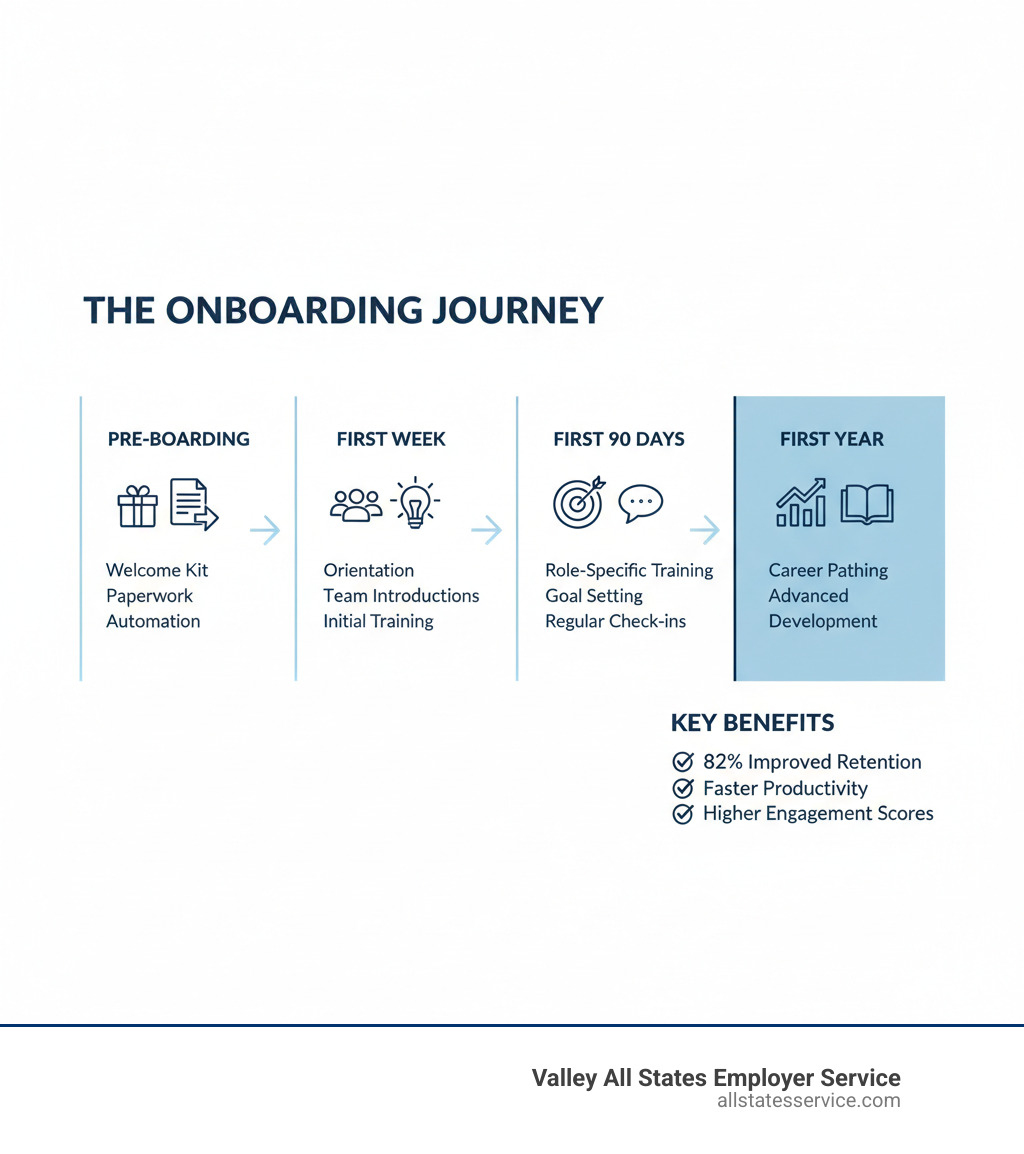
Effective new employee onboarding is a journey, not a one-day event, often spanning 90 days to a full year. A phased approach is the best way to help new hires become fully integrated team members.
Pre-Boarding: The Welcome Before Day One
Pre-boarding starts when a candidate accepts your offer. It eliminates first-day anxiety. Send a welcome email with key details (start time, dress code) and consider a welcome kit with company swag. Use technology to automate paperwork like W-4s and I-9 forms before they arrive. For guidance, see our guide on New Hire Paperwork I-9. Finally, share a first-day schedule and ensure their workspace and logins are ready.
The First Week: Orientation and Immersion
The first week makes a lasting impression, and three-fourths of new hires say training during this week is most important. Start with a warm welcome and team introductions. Schedule a one-on-one with their manager to set expectations. Share your company’s mission and values to provide context. Provide initial training on essential tools, but avoid information overload. Most importantly, assign a buddy or mentor for informal questions and cultural navigation.
The First 90 Days: Integration and Performance
This period is about real integration, where new hires begin contributing meaningfully. The 30, 60, and 90-day rule helps structure this phase.
Focus on role-specific training and collaborate on clear goal setting. Managers should conduct regular check-ins to offer support and provide continuous performance feedback. Research shows 69% of people work harder with regular feedback. The mentorship relationship also deepens, providing ongoing support, which 56% of employees find very important.
The First Year: Continued Growth and Development
Onboarding support should continue throughout the first year, as it can take that long for an employee to become fully productive. Discuss career pathing and offer advanced training to show you’re invested in their future. Conduct formal performance reviews to assess progress. By year’s end, the goal is full integration, with the employee feeling like a confident member of the team. As you grow, look for ways to Improve HR Efficiency to keep your program effective.
Building Your Blueprint: A Step-by-Step Guide to Effective New Employee Onboarding
Now let’s get practical. Building a great new employee onboarding program means creating a blueprint that fits your company, team, and new hires.

Defining Key Roles in the New Employee Onboarding Process
Onboarding fails without clear ownership. Here’s who does what:
- HR Department: Manages the foundation, including contracts, benefits enrollment, and legal documentation like I-9 forms and background checks. They provide the company overview and communicate policies.
- Direct Manager: Arguably the most important role. They set performance expectations, provide role-specific training, and offer regular feedback. Their engagement is critical for a new hire’s success.
- Buddy or Mentor: A peer who helps new hires steer informal company culture and answers “silly” questions. High-performing organizations are far more likely to assign mentors.
- The Team: Everyone plays a part in making new hires feel welcome through introductions, lunch invitations, and offering help.
Crafting Your New Employee Onboarding Checklist
A checklist ensures consistency and that nothing falls through the cracks. You can grab one of our free onboarding checklists to customize.
- Before Day One: Send a welcome email with first-day details. Complete paperwork like W-4s and I-9 Form Completion electronically. Order equipment, set up their workspace, and ensure logins work. Announce the new hire to the team and assign their buddy.
- On Day One: Give a warm welcome and introduce them to the team. The manager should hold a one-on-one to set expectations. Provide an office tour and have HR cover policies and benefits.
- During the First Week: Begin role-specific training. Set up regular check-ins with their manager and buddy. Share the company’s mission and values. Create social connection opportunities like a team lunch.
- By Day 30: The manager should establish clear 30-day goals. Continue training and provide regular, specific feedback. Ensure they are participating in team meetings and projects.
Getting legal requirements right from the start is non-negotiable. Our Employee Onboarding Compliance resources can walk you through every step.
Integrating Best Practices for Maximum Impact
A checklist is a start, but best practices make your program excel.
Mix up training methods to suit different learning styles, using a blend of one-on-one coaching, blended learning, job shadowing, and microlearning.
Create a continuous feedback loop. Since 69 percent of people work harder with regular feedback, this helps new hires adjust quickly. Also, ask for their feedback on the onboarding process itself.
Immerse them in your culture by sharing stories and demonstrating your values in action. Culture is experienced, not taught in a session. Finally, set crystal-clear expectations about their duties, performance metrics, and how their role fits into the bigger picture. Clarity creates confidence.
Overcoming Problems and Embracing Technology
Even with great planning, new employee onboarding can have challenges. The good news is that most common problems have straightforward solutions, especially when you use the right technology.

Common Onboarding Challenges and How to Solve Them
- Lack of preparation: A new hire arriving to an unprepared workspace sends a terrible message. The fix is a detailed pre-boarding checklist with clear ownership and automated reminders.
- Unclear expectations: When new hires don’t know what success looks like, they struggle. Managers must clearly define job duties, performance metrics, and goals early and often.
- Cultural disconnect: New hires can feel like outsiders if they don’t understand your company’s unwritten rules. A buddy or mentor program is invaluable for navigating the informal side of your company and its culture.
- Information overload: Dumping too much information on someone in their first week is counterproductive. Space out training and focus on what they need to know right now.
- Overcoming remote barriers: For remote hires in Maryland or elsewhere, you must be more intentional. Ship equipment early, schedule virtual introductions, and overcommunicate. Remote compliance also has unique rules; our guide on Remote I-9 Compliance explains how to handle verification from a distance.
Leveraging Technology for a Seamless Experience
Technology can make new employee onboarding smoother, more consistent, and more human.
Onboarding software is now essential. It integrates with HR systems to create a central hub for all employee data. The real magic is automation, which handles repetitive tasks like sending paperwork or scheduling reminders. This frees you to focus on the human side of onboarding. For businesses looking to Streamline HR Processes, automation is transformative.
Digital paperwork with e-signatures allows new hires to complete documents like W-4s from anywhere, which is especially useful for remote hires. For critical documents, Electronic I-9 Solutions make the process cleaner and more accurate.
Artificial intelligence (AI) is also changing the game by personalizing checklists, sending automated messages, and powering chatbots that can answer common questions 24/7. It’s about using smart tech to make human interactions more meaningful.
For compliance tasks like E-Verify and I-9 forms, accuracy is critical. Partnering with specialists who handle these processes with precision provides peace of mind and prevents costly mistakes.
Frequently Asked Questions about Employee Onboarding
Here are answers to common questions about new employee onboarding.
What are the “5 Cs” of onboarding?
The “5 Cs” provide a simple framework for a complete program:
- Compliance: Covers all necessary legal and policy requirements, like I-9 verification. Getting this right protects your business. Our Employment Compliance Ultimate Guide can help.
- Clarification: Ensures new hires understand their job, responsibilities, and what success looks like.
- Culture: Helps new team members understand your company’s values, mission, and informal norms.
- Connection: Focuses on building relationships with colleagues, managers, and mentors through introductions and team activities.
- Check-back: Involves regular check-ins to provide feedback, offer support, and ensure new hires are adjusting well.
How is onboarding different for remote employees?
The core goals of new employee onboarding are the same for remote hires, but the logistics change. You must be more intentional.
- Equipment Shipping: Hardware must be configured and shipped to arrive before their start date.
- Virtual Introductions: Schedule video calls for team introductions and informal coffee chats to build relationships.
- Digital Culture Building: Reinforce culture through internal platforms and virtual events.
- Proactive Communication: Managers and buddies need to overcommunicate, as remote hires can’t just ask a neighbor for help.
Remote work also has specific compliance rules, especially for I-9 verification. Our I-9 Verification Remote Complete Guide explains everything you need to know.
What is the most critical part of the onboarding process?
While every part is important, manager involvement is arguably the most critical factor. A manager who sets clear expectations, provides consistent feedback, and actively supports a new hire makes all the difference. A disengaged manager can undermine the entire process.
Other vital elements include effective first-week training, setting clear goals for the first 30-90 days, and fostering social integration. Helping new hires build genuine connections creates a sense of belonging that improves job satisfaction and retention. If you have to prioritize, start by ensuring your managers are equipped and engaged to guide their new team members.
Conclusion
Treating new employee onboarding as a strategic investment transforms nervous new hires into confident, long-term team members. Getting it right leads to 82% better retention, faster productivity, and a stronger workplace culture, helping you avoid the high cost of turnover.
However, juggling a great onboarding experience with complex compliance requirements can be overwhelming. For businesses in Maryland and across the U.S., tasks like E-Verify and I-9 forms can steal focus from the human connections that matter most.
This is where an expert partner helps. At Valley All States Employer Service, we handle the technical compliance pieces for you. Our outsourced E-Verify workforce eligibility verification service minimizes errors and lifts the administrative burden from your shoulders. With compliance handled, you can focus on welcoming your new hire and building relationships.
Your onboarding program can start simple and improve over time. The key is to be intentional and invested in each new person. Ready to ensure your onboarding is both compliant and exceptional? Learn more about Maryland employment law compliance and see how we can help you streamline HR compliance.