
Compliance for employers: Stay Legal 2025
Understanding Your Core Compliance Responsibilities
Feeling lost in the maze of employment laws? You’re not alone. Compliance for employers is more than just avoiding fines; it’s about building a fair, safe, and thriving workplace. It involves adhering to labor laws, protecting employees, and fostering a positive company culture.
This guide breaks down the essential pillars of compliance, with practical steps to help your business stay legal and smart.
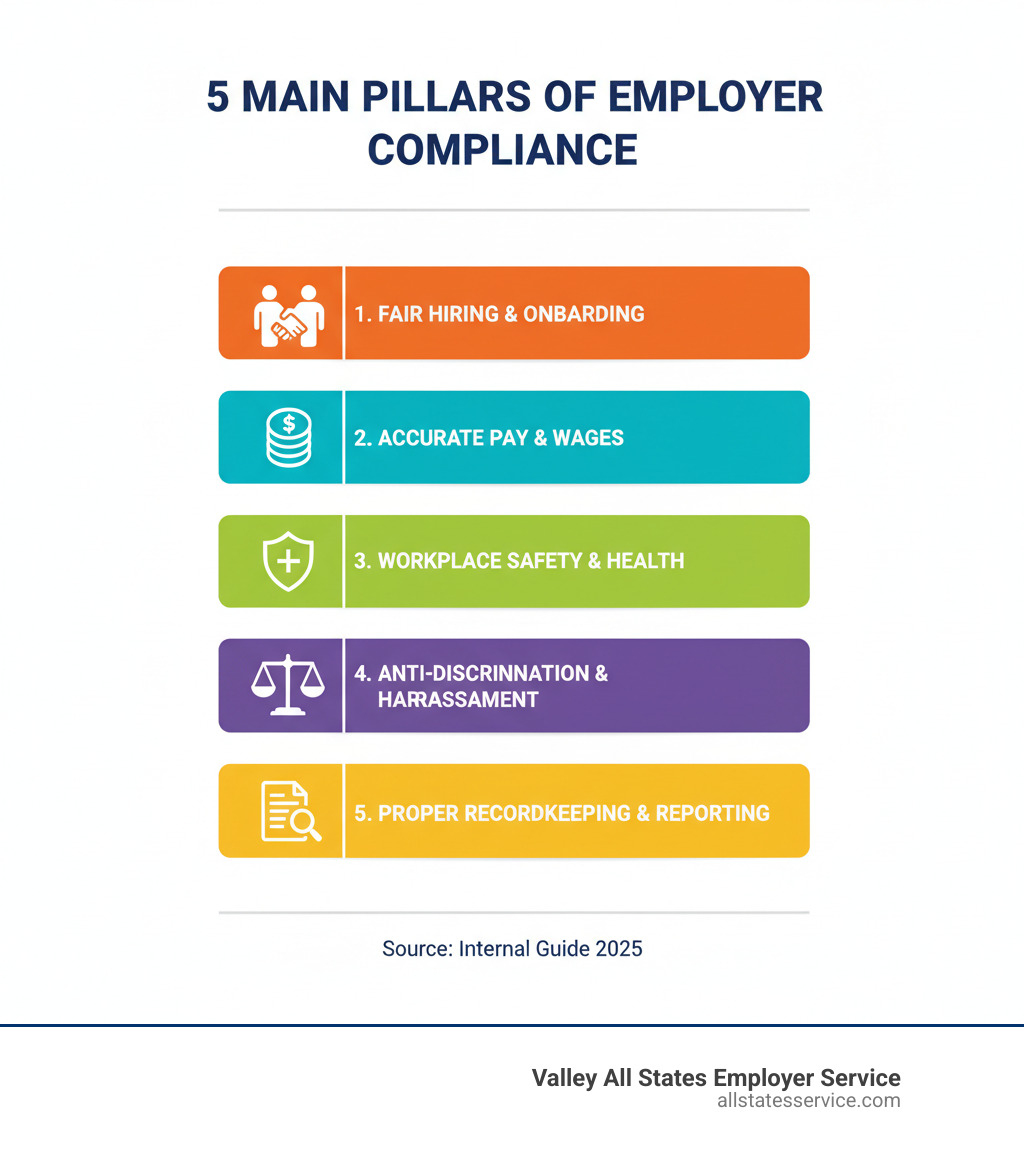
At its core, employer compliance means following the federal, state, and local laws that govern the employer-employee relationship. It’s about taking proactive measures to meet legal obligations, from hiring and wages to safety and termination. Your HR team is pivotal in this, creating a culture of integrity through clear communication, education, and fair policy enforcement. This approach protects your business and fosters a productive environment.
The High Cost of Non-Compliance
Ignoring compliance is incredibly costly. Non-compliance can trigger a cascade of negative consequences:
- Lawsuits and Penalties: The U.S. Department of Labor (DOL) and state agencies actively enforce labor laws. Violations can lead to significant fines, back pay, and damages.
- Reputational Damage: News of compliance failures spreads quickly, making it harder to attract talent and retain customers.
- Decreased Morale: Unfair treatment or unsafe conditions cause morale to plummet, leading to lower productivity and higher turnover.
Prioritizing compliance for employers safeguards your business’s future and creates a workplace where everyone feels valued.

Staying Current in an Ever-Changing Landscape
The world of employment law is constantly evolving. Staying updated on these regulations is a continuous challenge, but it’s crucial for maintaining your legal standing.
Here are a few ways to stay current:
- Follow the Department of Labor (DOL): The DOL’s Wage and Hour Division (WHD) is a primary source for federal labor law information, offering compliance materials and fact sheets.
- Use Industry Resources: Subscribing to industry publications, attending webinars, and networking with other HR professionals helps you learn about emerging trends and legislative changes.
- Consult with Experts: For complex legal areas, consulting with employment attorneys or specialized compliance firms can provide custom guidance.
- Monitor State and Local Changes: Many states, like Maryland, and localities introduce new laws. Monitor updates from state labor departments, as these regulations often add complexity beyond federal mandates.
For more resources, visit our Compliance Resources for Employers page.
Navigating the Employee Lifecycle: From Hiring to Termination
Think of the employee journey as an adventure, from the first job posting to the final paycheck. Compliance for employers is your map, guiding you through every turn. Managing each step carefully protects your business and helps build a positive environment for your team.
Hiring, Onboarding, and Verifying Eligibility
Your compliance journey begins the moment you decide to hire. The hiring process is your first chance to ensure everything is above board.
Start with your job ads. Make sure postings are welcoming and avoid discriminatory language. Focus on the skills needed for the role, not on characteristics that might exclude qualified applicants.
Be aware of “Ban the Box” or “Fair Chance” laws, which many states and counties have. These rules dictate when you can ask about an applicant’s criminal history, often not until after a conditional job offer. Also, if you run background checks, you must follow the Fair Credit Reporting Act (FCRA). This requires getting consent from applicants, providing clear disclosures, and following specific steps if a check leads to a hiring denial.
Once you hire someone, you must complete a Form I-9, Employment Eligibility Verification, to confirm they are authorized to work in the U.S. This must be done within three days of their start date. You also need to report new hires to state agencies. Our Employee Onboarding Compliance guide and Employment Eligibility Verification Guide can help.
Employee vs. Independent Contractor: Getting Classification Right
One tricky area for compliance for employers is classifying workers as employees or independent contractors. Misclassification can lead to back taxes, unpaid benefits, and hefty fines.
The IRS and Department of Labor (DOL) have tests to help. The DOL’s “economic reality test” determines if a worker is economically dependent on your company. It considers factors like your control over the worker, their opportunity for profit or loss, and how essential their work is to your business.
Many states, including Maryland, have their own, often stricter, classification rules. Always review these factors carefully to ensure you classify workers correctly.
Handling Terminations and Final Pay
Even when an employment relationship ends, compliance for employers remains crucial. Careless terminations can lead to costly wrongful termination lawsuits.
Most U.S. employment is “at-will,” meaning either party can end the relationship for any non-discriminatory reason. However, exceptions exist, such as implied contracts or violations of public policy. If you’re letting an employee go for performance issues, thorough documentation is your best friend. Keep clear records of warnings and performance reviews to show you acted fairly.
States, including Maryland, have specific laws about when a final paycheck must be issued, including all earned wages and accrued benefits. Missing these deadlines can result in penalties. For mass layoffs, the federal Worker Adjustment and Retraining Notification (WARN) Act may require 60 days’ advance notice to affected employees. The Department of Labor offers a WARN Act Advisor to guide you.
Key Federal Laws and Workplace Requirements for Employers
A handful of federal laws set the baseline for compliance for employers nationwide. These laws cover pay, safety, discrimination, and leave, forming the bedrock of your responsibilities. While federal laws apply everywhere, including Maryland, state and local regulations often add further requirements.
Wage, Hour, and Pay Compliance for Employers
Paying employees correctly and on time is fundamental. The Fair Labor Standards Act (FLSA) is the cornerstone of federal wage law, governing minimum wage, overtime pay, and recordkeeping.
Under the FLSA, non-exempt employees must receive overtime pay at 1.5 times their regular rate for hours worked over 40 in a workweek. Classifying employees correctly as exempt or non-exempt is a critical compliance task. This classification depends on their job duties and salary level. Proposed rule changes could raise the minimum salary for exempt status, making more employees eligible for overtime, so stay informed.
Beyond base pay, pay equity is a major focus. Regular pay audits help ensure you are compensating employees fairly for similar work. Additionally, pay transparency laws are growing at the state and local levels. Many now require employers to disclose salary ranges in job postings, changing how businesses recruit. Be sure to monitor these developments in your area, including Maryland.
Ensuring Workplace Safety and Health
Providing a safe workplace is a legal requirement enforced by the Occupational Safety and Health Administration (OSHA). The Occupational Safety and Health Act requires employers to provide a workplace free from recognized hazards that could cause serious harm or death. This is known as the General Duty Clause.
OSHA also has specific standards for various hazards. You must have effective hazard communication programs, including Safety Data Sheets (SDS) for chemicals, and clear emergency preparedness plans. OSHA also requires employers to record and report certain work-related injuries and illnesses, which helps identify safety patterns. Serious incidents must be reported to OSHA within specific timeframes.
OSHA offers resources like its Small Business Safety and Health Handbook. Our Workplace Compliance Solutions can also assist.

Managing Leave and Accommodations
Employee leave and accommodations are critical aspects of compliance for employers. The Family and Medical Leave Act (FMLA) requires covered employers to provide eligible employees with up to 12 weeks of unpaid, job-protected leave for specific family and medical reasons. Accurate recordkeeping for FMLA leave is mandatory. The DOL’s elaws Advisors for FMLA are excellent tools for understanding these rules.
The Americans with Disabilities Act (ADA) requires employers to provide reasonable accommodations to qualified individuals with disabilities, unless it causes undue hardship. This could include modifying job duties or work schedules. While federal law doesn’t mandate paid sick leave, many states and localities do. Federal law also requires lactation accommodations for nursing mothers.
Preventing Discrimination and Harassment
Creating a workplace free from discrimination and harassment is legally mandated. Title VII of the Civil Rights Act prohibits employment discrimination based on race, color, religion, sex, and national origin. Other laws protect against discrimination based on age and disability.
Harassment is a form of discrimination that creates a hostile work environment. It is illegal if it is severe or pervasive. A clear and accessible complaint procedure is essential for compliance for employers. Employees must know how to report issues without fear of retaliation. All complaints must be investigated promptly and thoroughly.
The Equal Employment Opportunity Commission (EEOC) enforces these laws and provides guidance. Many states, like Maryland, have their own robust anti-discrimination laws that may offer even stronger protections. For an example of state-level rules, see New York’s New Workplace Discrimination and Harassment Protections. Staying current on both federal and state requirements is essential.
Building a Robust Program for Compliance for Employers
Compliance for employers isn’t about memorizing laws. It’s about building a smart, reliable system. A strong compliance program combines clear policies, technology, and regular check-ups to manage risk, support your team, and stay ahead of potential issues.
Best Practices for HR Recordkeeping
Accurate and organized recordkeeping is the foundation of your compliance efforts. These records provide proof that you’re following the rules and can defend your business if questions arise.
Keep your I-9 Forms in order. For a former employee, you must keep their I-9 for either three years from their hire date or one year after their employment ends, whichever is longer. Our I-9 Record Keeping guide can help.
Federal law requires you to keep Payroll Records (wages, hours) and FMLA Documentation for at least three years. Your Personnel Files should contain job applications, performance reviews, and termination documents. Remember to keep medical information and I-9 forms in separate, confidential files, and use strong Data Security to protect all sensitive employee information.
Here’s a quick look at common record retention periods:
| Record Type | Retention Period (Federal Guidance) |
|---|---|
| I-9 Forms | 3 years from hire date or 1 year from termination (whichever is later) |
| Payroll Records | 3 years |
| FMLA Records | 3 years |
Leveraging Technology for HR Compliance
Managing compliance manually is slow and prone to mistakes. Technology can be a game-changer, automating tasks and reducing risks.
- Human Resources Information System (HRIS) Software centralizes employee data, tracks certifications, and automates compliance tasks.
- Automated Payroll Systems ensure accurate wage calculations, tax withholdings, and timely payments, helping you meet wage and hour obligations.
- Learning Management Systems (LMS) track mandatory employee training, like sexual harassment prevention, providing a documented record.
Investing in HR technology helps you manage your workforce smoothly and tackle compliance with confidence. For instance, our Electronic I-9 Solutions can simplify verification. Exploring ways to Improve HR Efficiency often leads to better compliance outcomes.
Conducting Regular Compliance Audits
Regular check-ups are essential. Compliance audits are like a health check for your business, helping you spot gaps before they become expensive problems. This proactive approach is a cornerstone of smart compliance for employers.
Use Self-Audit Checklists to review your policies and procedures against current laws. For an impartial assessment, consider Third-Party Audits from an external expert. Given the strict rules, I-9 Self-Audits are also highly recommended to correct errors before an official audit.
After an audit, create and implement Corrective Action Plans to address any shortcomings. Performing regular internal audits creates a documented paper trail that can be invaluable if an investigation or lawsuit ever occurs. For more guidance, see our HR Compliance Audit Guide 2025 and our Internal I-9 Audit Complete Guide.
Your Partner in Navigating Compliance
Compliance for employers is a journey, not a one-time task. The legal landscape constantly changes, but with a proactive mindset and the right systems, you can protect your business and build a workplace based on trust and fairness.
For complex areas like workforce eligibility verification, you don’t have to go it alone. Valley All States Employer Service specializes in helping employers steer the intricate world of E-Verify processing. We know Form I-9 compliance can feel overwhelming. Our team brings expertise and efficiency to the verification process, helping you minimize errors and reduce the administrative burden on your HR department.
Partnering with us means gaining an ally who understands the stakes. Small I-9 mistakes can lead to significant penalties, and your time is better spent growing your business. We help you get it right.
Making compliance for employers a priority invests in your organization’s long-term health. You build trust with employees, protect your reputation, and create a workplace where people feel safe and valued. The path to compliance doesn’t have to be stressful. With the right partner, it becomes manageable. We’re here to help you simplify the complex and focus on what you do best: running your business.
Ready to simplify compliance? Explore our Compliance Outsourcing Solutions or contact our team today.