
Why Pre-Employment Work History Verification Matters More Than Ever
Pre employment work history verification is the process of confirming a candidate’s previous employment details, including job titles, dates of employment, and reasons for leaving. This critical hiring step helps employers validate resume claims and identify potential red flags before making job offers.
Quick Overview:
- Purpose: Verify candidate employment claims and detect resume fraud
- Timeline: 2-3 business days for most checks
- Key Data: Job titles, employment dates, eligibility for rehire
- Legal Requirement: Written candidate consent required
- Success Rate: 10% of verifications reveal serious discrepancies
The numbers tell a sobering story. Research shows that 7 in 10 people lie on their resume at least once, with 52% specifically inflating their work experience. Even more alarming? Two out of every three resumes contain fabricated information.
With 33 million Americans quitting their jobs since spring 2021 during the “Great Resignation,” the job market has become increasingly competitive. This pressure pushes some candidates to embellish their backgrounds, making verification more crucial than ever.
For busy HR managers juggling multiple priorities, work history verification serves as your first line of defense against costly hiring mistakes. It protects your company from unqualified hires, potential safety risks, and compliance violations that could damage your reputation and bottom line.
The verification process doesn’t have to be overwhelming. Modern tools and databases can streamline most checks, turning what used to be weeks of phone calls into automated processes that deliver results in days or even hours.
Pre Employment Work History Verification Explained
Pre employment work history verification is essentially a fact-checking process for resumes. Think of it as due diligence for your hiring decisions. We’re not just taking candidates at their word anymore, and for good reason.
The verification process involves contacting previous employers or accessing employment databases to confirm the details candidates provide about their work history. This includes verifying job titles, employment dates, salary information (where legally permitted), and reasons for leaving.
Here’s what makes this process so critical: 10% of employment history verifications contain at least one serious flag that employers need to know about. These aren’t minor discrepancies like getting a start date wrong by a few days. We’re talking about significant issues that could impact your hiring decision.
The most common types of employment fraud we encounter include:
Omitted Positions: Candidates leave out short-term jobs or positions that ended poorly. This creates unexplained gaps in their employment timeline.
Job Stretching: Applicants extend their employment dates to cover periods of unemployment or make brief positions appear longer than they actually were.
Fictitious Employers: Some candidates create fake companies or inflate their roles and responsibilities at legitimate employers.
Title Inflation: A team member becomes a “manager,” or an assistant becomes a “coordinator.” While these might seem minor, they can significantly misrepresent a candidate’s actual experience level.
The U.S. Bureau of Labor Statistics data on job market shows we’re in an unprecedented hiring environment. With 1.6 job openings for every unemployed person, the competition is fierce. This pressure creates incentives for candidates to embellish their qualifications.
Key Reasons Employers Verify
Quality Hires: The most obvious reason is ensuring you’re getting what you pay for. If someone claims five years of management experience but actually has two years in a non-supervisory role, that’s a significant difference that affects their ability to perform the job.
Safety Considerations: In industries like construction, healthcare, or transportation, unverified experience claims can create serious safety risks. You need to know that your new forklift operator actually has the experience they claim, not just a weekend certification.
Compliance Mandates: Many industries have regulatory requirements for employee qualifications. Financial services, healthcare, and aviation all have strict guidelines about employee backgrounds. Failing to verify employment history could result in compliance violations and hefty fines.
Brand Protection: Hiring unqualified employees can damage your company’s reputation. Poor performance, workplace incidents, or compliance failures all reflect back on your organization. Proper verification helps protect your brand and maintain customer trust.
Step-by-Step Verification Process
The verification process has evolved significantly from the days of playing phone tag with former employers. Today’s approach combines traditional methods with modern technology to deliver faster, more accurate results.
Here’s how the process typically unfolds:
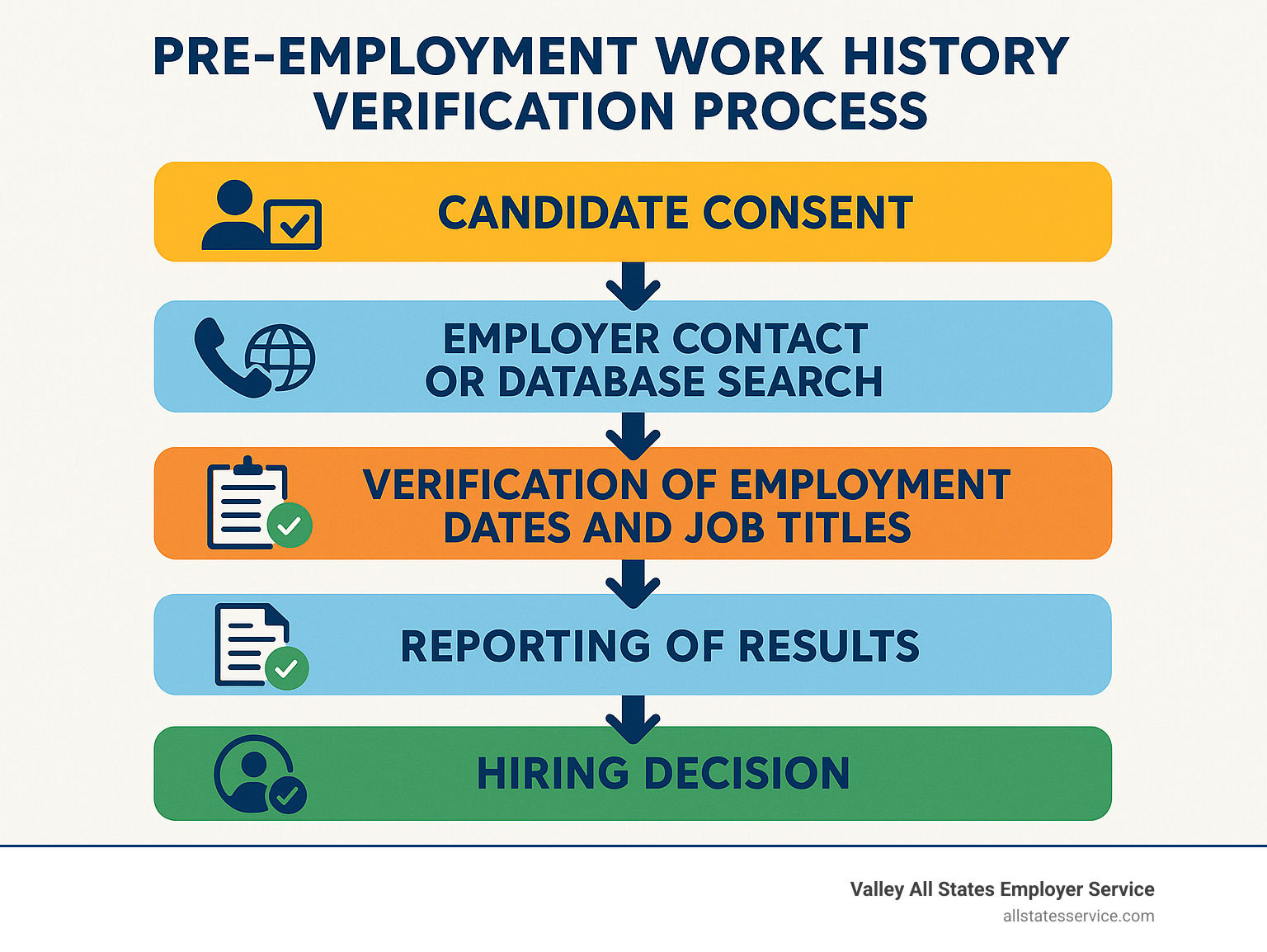
Step 1: Candidate Consent
Before any verification begins, candidates must provide written consent. This isn’t just a best practice, it’s a legal requirement. The consent form should clearly explain what information will be verified and how it will be used.
Step 2: Information Gathering
Candidates provide detailed employment history including company names, addresses, phone numbers, supervisor names, job titles, employment dates, and reasons for leaving. The more complete this information, the smoother the verification process.
Step 3: Database Search
Modern verification often starts with database searches. Services like The Work Number maintain employment records for over 2.5 million employers, updated each pay period. This can provide instant verification for many positions.
Step 4: Direct Employer Contact
When database information isn’t available, verifiers contact previous employers directly. This might involve calling HR departments, payroll companies, or former supervisors to confirm employment details.
Step 5: Documentation and Reporting
All verification attempts are documented, whether successful or not. The final report includes confirmed information, any discrepancies found, and details about unsuccessful verification attempts.
The timeline varies significantly based on the verification method used:
| Method | Typical Timeline | Accuracy | Cost |
|---|---|---|---|
| Database Search | 15 minutes – 2 hours | High | Low |
| Direct Employer Contact | 2-10 business days | Very High | Medium |
| Third-Party Service | 2-3 business days | High | Medium-High |
| In-House Manual | 1-2 weeks | Variable | High (staff time) |
Pre Employment Work History Verification Methods
Direct Employer Contact
This traditional method involves calling or emailing previous employers directly. While time-consuming, it often provides the most comprehensive information. Many companies have dedicated verification departments that can quickly confirm employment details.
Payroll Database Services
The Work Number overview shows how automated systems can instantly verify employment and income information. These services partner with employers to maintain real-time employment data, making verification as simple as a database query.
Consumer Reporting Agency (CRA) Services
Professional background screening companies combine multiple verification methods. They have established relationships with employers, access to various databases, and the expertise to steer complex verification challenges.
Hybrid Approaches
Many organizations use a combination of methods. They might start with database searches for speed, then fall back to direct contact for positions not covered by automated systems.
Pre Employment Work History Verification Timelines
Understanding timelines helps set realistic expectations for your hiring process. Here’s what you can typically expect:
Criminal Background Checks: 15 minutes or less for most searches
Employment Verification: 2-3 business days on average
Education Verification: 2-3 business days
Reference Checks: 2-3 business days
Several factors can affect these timelines:
Database Availability: If the previous employer participates in verification databases, results come back almost instantly. If not, manual verification takes longer.
Employer Responsiveness: Some companies respond to verification requests within hours. Others may take days or weeks, especially smaller businesses without dedicated HR departments.
Complexity of Employment History: Candidates with multiple short-term positions, international experience, or employment at companies that have closed or merged require more time to verify.
Verification Requirements: Basic employment confirmation happens faster than detailed reference checks that explore performance and reasons for leaving.
For more details about timing expectations, check out More info about pre-employment screening times.
Laws, Privacy, and Consent
Employment verification operates within a complex legal framework that varies by jurisdiction. Understanding these requirements protects both employers and candidates while ensuring compliant hiring practices.
Canadian Privacy Requirements
In Canada, the Personal Information Protection and Electronic Documents Act (PIPEDA) governs how private sector organizations collect, use, and disclose personal information. Employment verification falls under these regulations, requiring explicit consent before accessing employment records.
Provincial privacy laws add another layer of complexity. Each province may have specific requirements for employment verification, particularly for government positions or regulated industries.
U.S. Federal Requirements
The Fair Credit Reporting Act (FCRA) regulates employment verification when conducted by third-party consumer reporting agencies. This requires written consent before conducting checks and specific procedures if adverse action is taken based on the results.
Salary History Restrictions
Many jurisdictions have implemented salary history bans to promote pay equity. These laws limit what employment information can be requested or disclosed during the verification process. Employers must understand local regulations to avoid compliance violations.
Criminal Record Checks
In Canada, criminal record checks through the Canadian Police Information Centre (CPIC) require specific procedures. The Royal Canadian Mounted Police provides guidelines for requesting and using criminal record information in employment decisions.
Written Consent Requirements
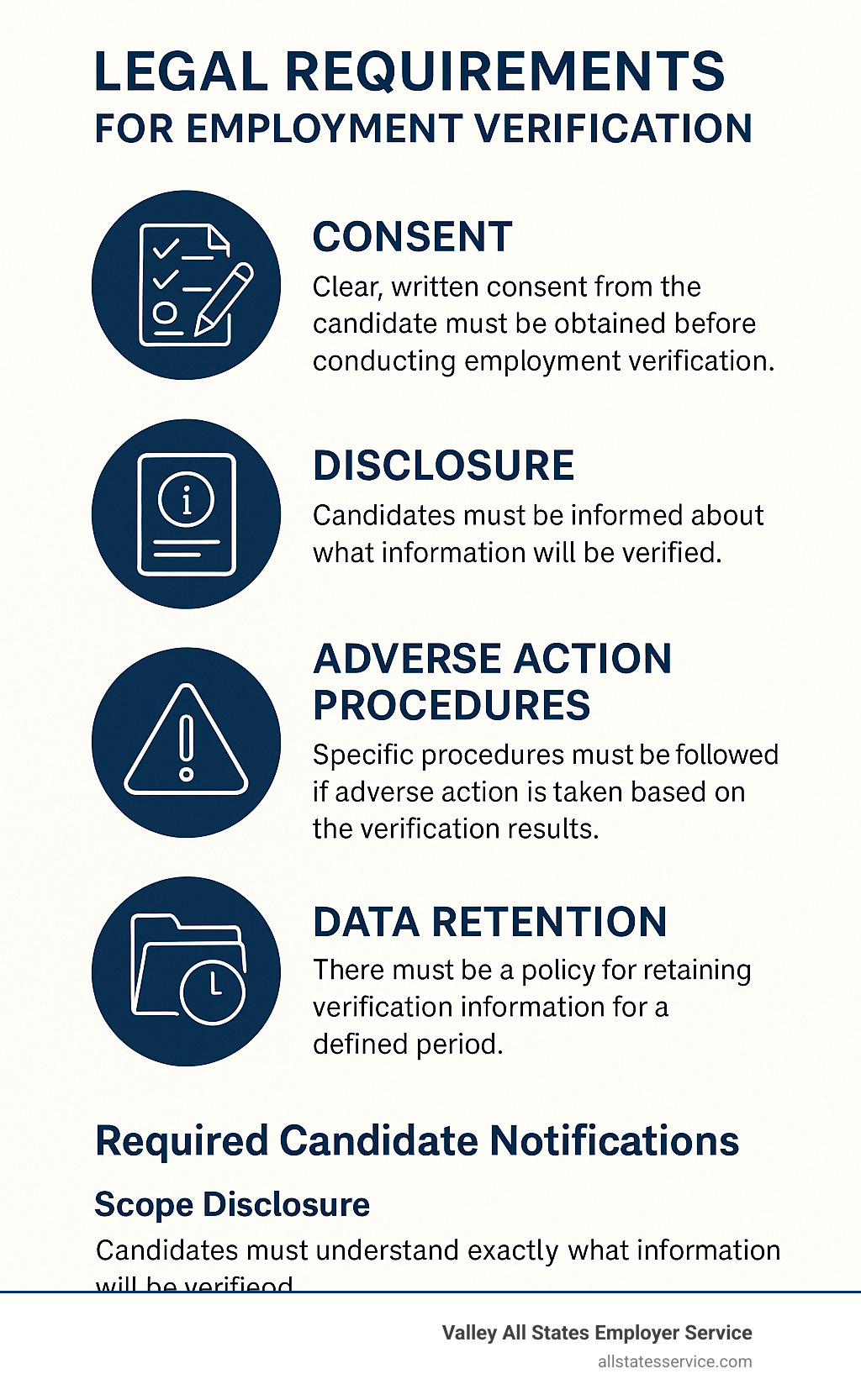
All employment verification must begin with clear, written consent from the candidate. This consent should specify:
- What information will be verified
- How the information will be used
- Who will have access to the results
- How long the information will be retained
For organizations handling E-Verify processes, following E-Verify Best Practices ensures compliance with federal employment eligibility requirements.
Required Candidate Notifications
Scope Disclosure
Candidates must understand exactly what information will be verified. This includes which employers will be contacted, what databases will be searched, and what specific details will be confirmed.
Adverse Action Rights
If verification results lead to adverse hiring decisions, candidates have specific rights. They must be notified of the decision, provided with a copy of the verification report, and given an opportunity to dispute any inaccuracies.
Data Retention Policies
Organizations must clearly communicate how long verification information will be retained and how it will be destroyed when no longer needed. This transparency builds trust and ensures compliance with privacy regulations.
Handling Discrepancies, Candidate Prep, and FAQs
When verification reveals discrepancies, the key is handling them professionally and fairly. Not every discrepancy is a deal-breaker, but all should be addressed.
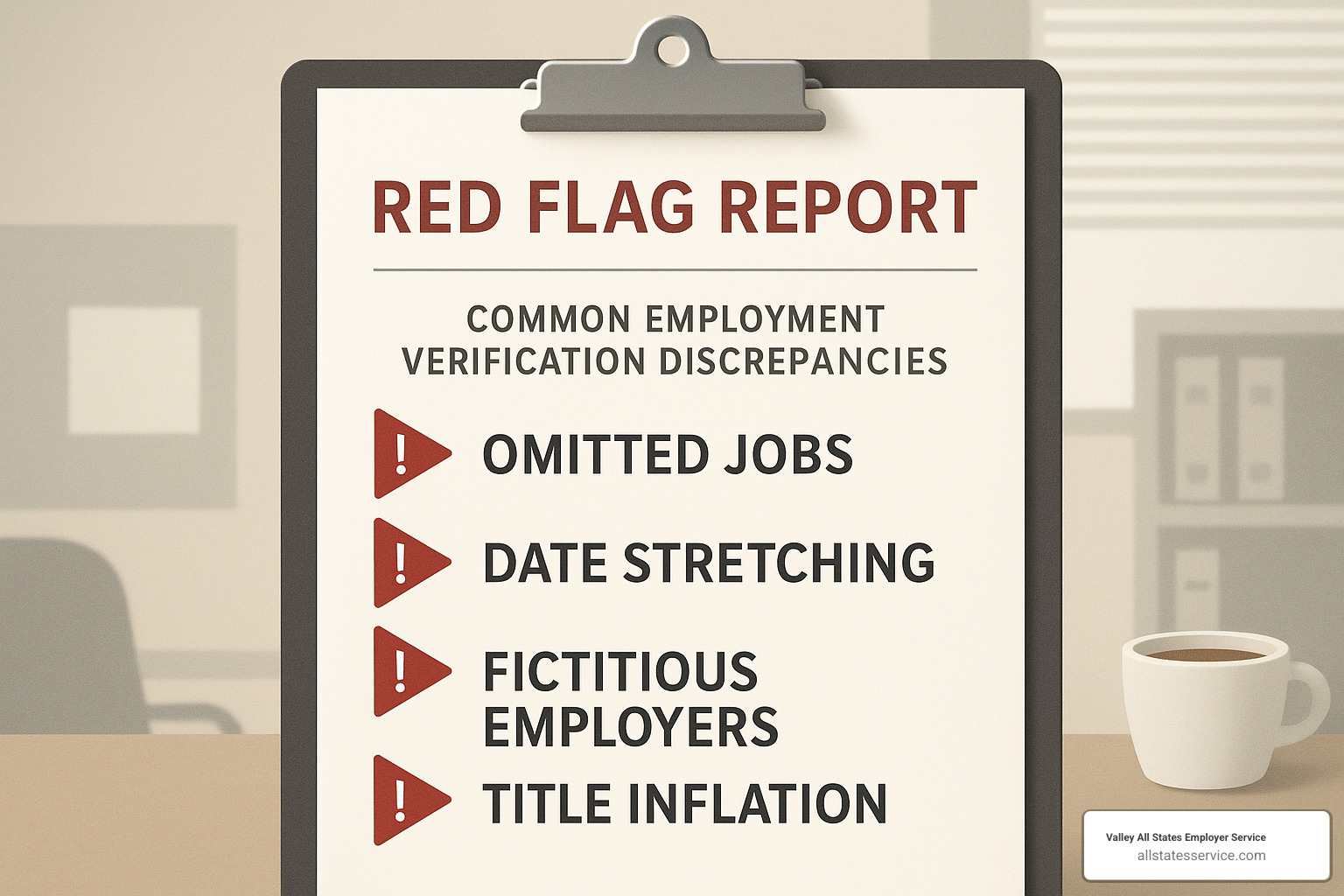
Common Discrepancy Types:
Omitted Jobs: Candidates sometimes leave out short-term positions or jobs that ended poorly. While understandable, these omissions can create concerning gaps in employment history.
Date Stretching: Extending employment dates to cover periods of unemployment is common. A few days or weeks might be honest mistakes, but months of extension suggest intentional misrepresentation.
Fictitious Employers: Creating fake companies or dramatically inflating roles represents serious fraud. This type of discrepancy typically results in immediate disqualification.
Title Inflation: Exaggerating job titles or responsibilities is widespread. The severity depends on how much the inflation affects the candidate’s apparent qualifications for your position.
When discrepancies arise, we recommend:
- Document Everything: Keep detailed records of what was found and how it differs from the candidate’s claims.
- Allow Explanations: Give candidates a chance to explain discrepancies before making final decisions.
- Consider Context: Evaluate whether the discrepancy actually affects the candidate’s ability to perform the job.
- Seek Legal Guidance: For significant discrepancies, consult with employment law attorneys to ensure proper procedures.
Candidates can prepare for verification by conducting their own audit. The employees.theworknumber.com self-check allows individuals to see what employment information is available in major databases.
Top Candidate Prep Tips
Keep Detailed Records: Maintain copies of offer letters, pay stubs, performance reviews, and termination letters. These documents can speed up verification and resolve any discrepancies.
Request Personal Employment Data Reports: Candidates can access their own employment records through services like The Work Number to see what information employers will find during verification.
Provide Documentation for Self-Employment: Self-employed candidates should prepare tax returns, client contracts, or business registration documents to verify their work history.
Be Honest About Gaps: Unemployment periods, family leave, or education breaks are normal. Explaining these gaps upfront prevents them from appearing as discrepancies during verification.
Update LinkedIn and Other Profiles: Ensure all professional profiles match the information provided on job applications. Inconsistencies across platforms can raise red flags.
Frequently Asked Questions about Work History Checks
How far back do verifications go?
Most employment verifications cover the past 7-10 years of work history, though this varies by industry and position level. Executive positions might require more extensive history, while entry-level roles might only verify the most recent 3-5 years.
The key is relevance. Verifications should focus on experience that directly relates to the position being filled. A 20-year career in retail isn’t necessarily relevant for a recent career change into technology.
How long does the process take?
Timeline depends on the verification method used. Database searches through services like The Work Number can provide results in minutes. Manual verification through direct employer contact typically takes 2-10 business days.
Factors affecting timeline include:
- Previous employer responsiveness
- Complexity of employment history
- Number of positions being verified
- Availability of automated verification options
What happens if a red flag appears?
When verification reveals concerning information, the process should be:
- Verify Accuracy: Confirm the information is correct and not the result of database errors or mistaken identity.
- Allow Candidate Response: Give candidates an opportunity to explain discrepancies or provide additional context.
- Evaluate Relevance: Consider whether the issue actually affects the candidate’s ability to perform the job.
- Document Decisions: Keep detailed records of how discrepancies were handled and what factors influenced the final decision.
Not every red flag should result in disqualification. The key is making informed decisions based on job-relevant information while following consistent, fair procedures for all candidates.
Conclusion
Employment verification has evolved from a nice-to-have process to an essential component of responsible hiring. With resume fraud affecting the majority of job applications, verification protects your organization from costly hiring mistakes while ensuring fair treatment of honest candidates.
The process doesn’t have to be burdensome. Modern tools and databases have streamlined verification, turning what used to be weeks of phone calls into automated processes that deliver results in days or hours. The key is choosing the right approach for your organization’s needs and ensuring compliance with applicable laws.
At Valley All States Employer Service, we understand the complexities of employment verification and compliance. Our expertise in E-Verify processing and workforce eligibility verification helps businesses steer these requirements efficiently and accurately.
The investment in proper verification pays dividends through better hiring decisions, reduced turnover, and protection from compliance violations. In today’s competitive job market, you can’t afford to skip this critical step.
Ready to simplify compliance? Get expert E-Verify help with our Automated Eligibility Verification System. Our team provides the expertise and efficiency you need to make confident hiring decisions while minimizing administrative burden.
Good hiring starts with good information. Employment verification ensures you have the facts you need to build a strong, qualified workforce that drives your business forward.