
Why Electronic Employment Verification Matters for Your Business
Electronic employment verification is the process employers use to confirm that newly hired employees are legally authorized to work in the United States. The primary system for this is E-Verify, a free, web-based tool operated by the U.S. Department of Homeland Security (DHS) and the Social Security Administration (SSA).
Here’s what you need to know:
- E-Verify electronically matches information from an employee’s Form I-9 against government records.
- Results are usually provided within 3 to 5 seconds.
- The system is free and available nationwide.
- Mandatory for federal contractors and some state employers (like Florida’s 25+ employee businesses).
- Voluntary for most other employers, but increasingly adopted for compliance peace of mind.
- Employees have rights and tools to track cases and resolve mismatches through myE-Verify.
As an HR manager, you know the stakes of compliance are high. With rising ICE audits and steep penalties for non-compliance, the pressure is on. The good news is that electronic employment verification doesn’t have to be overwhelming.
The system is designed to streamline hiring, reduce human error, and give you confidence that your workforce is authorized. Whether you’re required to use E-Verify or considering it voluntarily, understanding how it works is the first step toward a smoother, more compliant onboarding process.
E-Verify builds on the foundation of Form I-9, the federal document required for all new hires. It takes the process digital by cross-referencing the information you collect against official government databases.
The result? Faster verification, fewer errors, and a clear audit trail.
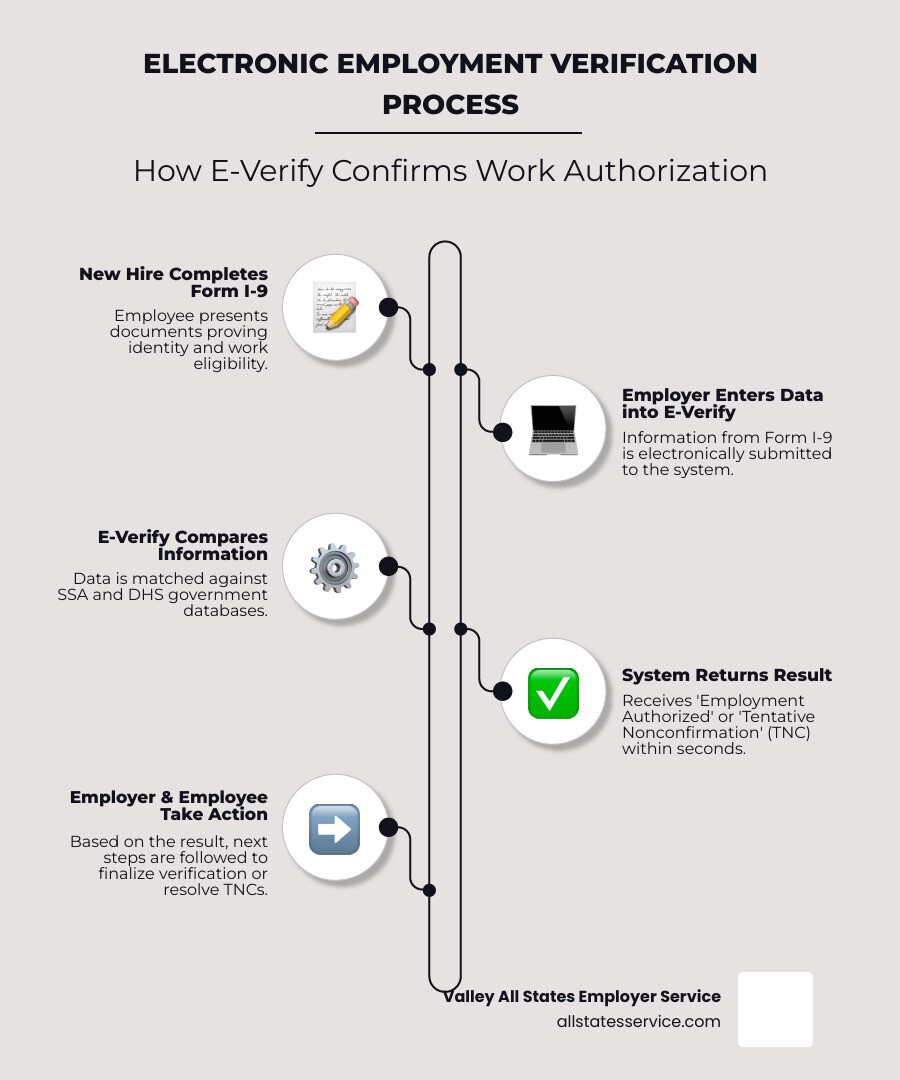
Electronic employment verification terms to know:
Understanding E-Verify: The Heart of Electronic Employment Verification
Understanding what E-Verify is and how it integrates with the essential Form I-9 is crucial for any employer. This system is a cornerstone of modern workforce compliance, helping businesses ensure their employees are legally authorized to work in the United States. Let’s dig into its mechanics.
What is E-Verify?
E-Verify is a web-based system that allows enrolled employers to confirm the eligibility of their employees to work in the United States. It’s a free service, available to participants in all 50 states, the District of Columbia, and U.S. territories. The system is currently considered the best means available to electronically confirm employment eligibility.
Administered by the U.S. Citizenship and Immigration Services (USCIS) in partnership with the Social Security Administration (SSA), E-Verify’s goal is to improve the integrity of the verification process. It provides a quick, reliable method to check an employee’s work authorization.
The system itself is straightforward. Employers input information from a new hire’s Form I-9, and E-Verify electronically compares this data against millions of government records. This cross-referencing happens almost instantly, usually providing a response within seconds. This rapid feedback helps employers prevent hiring unauthorized workers and ensures compliance with federal law. You can learn more at the official What is E-Verify page.
How E-Verify and Form I-9 Work Together
The relationship between E-Verify and Form I-9 is symbiotic. Form I-9 is the mandatory first step for all U.S. employers to verify the identity and employment authorization of new hires. E-Verify then acts as a digital companion, checking the information from that form against federal databases.
Here’s how the process unfolds:
- Form I-9 Completion: The employee completes Section 1, and the employer reviews the employee’s documents and completes Section 2.
- E-Verify Case Creation: Using information from the completed Form I-9, the employer creates a case in E-Verify within three business days of the employee’s first day of work.
- Data Matching: E-Verify sends the employee’s data (name, date of birth, SSN) to SSA and DHS databases. Employees must provide their SSN if their employer uses E-Verify.
- Instant Results: The system typically returns a response in seconds. Most cases result in “Employment Authorized.” If there’s a discrepancy, it may return a “Tentative Nonconfirmation” (TNC).
- Record Keeping: Employers must still retain the completed Form I-9 for each new hire, as it serves as the primary verification document.
This integrated approach helps employers meet their legal obligations while leveraging technology for more accurate electronic employment verification. For comprehensive guidance on Form I-9, we recommend visiting Visit I-9 Central.
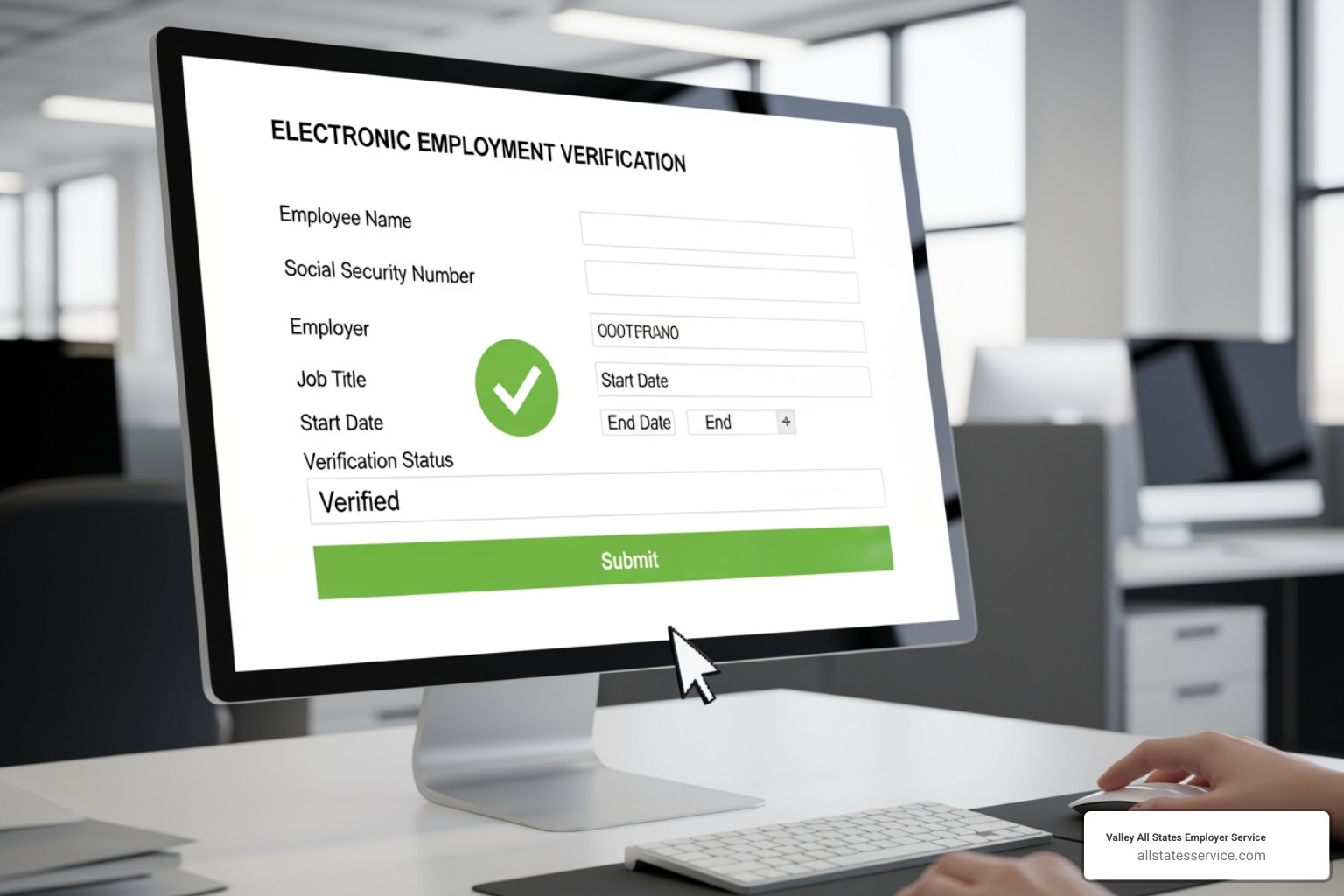
Who Uses E-Verify? Mandatory vs. Voluntary Participation
The question of who must use E-Verify, and who can choose to, is a common one. While the system is available to all employers, its use isn’t universally mandated. However, certain federal and state laws make it a requirement for many businesses.
Mandatory E-Verify States and Employers
While E-Verify is a federal program, states can mandate its use for employers within their borders. These state-level mandates vary, often depending on the number of employees or whether a business holds public contracts.
For example, as of July 1, 2023, Florida requires public agencies and private employers with 25 or more employees to use the E-Verify system for all new hires. These employers must verify each new employee’s eligibility within three business days of their start date and certify their use of E-Verify annually.
Beyond Florida, other states like Arizona, Mississippi, Georgia, and Utah have also implemented various levels of mandatory E-Verify usage. These mandates can apply to all employers, public employers, or state contractors. Keeping up with these varied state laws can be a challenge, so it’s crucial to stay informed about the requirements in the states where you operate.
Federal Contractors and the FAR Clause
One of the most significant mandates for E-Verify comes from the federal government itself. Federal contractors with a contract containing the Federal Acquisition Regulation (FAR) E-Verify clause are required to use the system. This requirement often extends beyond new hires to existing employees assigned to work on the federal contract.
These contractors must follow special rules when completing Form I-9, ensuring all employees on covered contracts are verified through E-Verify. This underscores the federal government’s commitment to a legal workforce among its contractors. For more details, federal contractors can refer to the E-Verify Supplemental Guide for Federal Contractors.
Voluntary Participation and Its Benefits
For employers not mandated to use E-Verify, participation is voluntary. However, many businesses choose to enroll due to the significant advantages it offers, which extend beyond simple legal compliance.
Choosing voluntary participation provides:
- Compliance Peace of Mind: Electronically confirming new hires against federal databases reduces the risk of inadvertently hiring unauthorized workers.
- Legal Workforce Assurance: E-Verify helps maintain a legal workforce, which is crucial for upholding ethical business practices.
- Reduced Audit Risk: Proactively using E-Verify demonstrates a commitment to compliance, which can be beneficial during an ICE audit.
- Brand Reputation: A commitment to legal hiring practices improves a company’s reputation.
- Employee Identity Protection: E-Verify offers tools like Self-Lock, which allows employees to protect their Social Security Numbers from unauthorized use.
The E-Verify Process: A Step-by-Step Guide for Employers and Employees
Navigating the E-Verify system becomes a streamlined part of the hiring process once you understand the steps. Both employers and employees have specific roles to ensure a smooth and compliant electronic employment verification.
The Employer’s Guide to the Electronic Employment Verification Process
As an employer, your journey with E-Verify begins after a job offer is accepted and the new employee’s Form I-9 is completed. Here’s a breakdown of your responsibilities:
- Complete Form I-9 First: Ensure the employee fills out Section 1 and you complete Section 2 within three business days of their start date.
- Create an E-Verify Case: Using the Form I-9 information, create a case in E-Verify within three business days of the employee’s first day of employment for pay.
- Understand Case Results: E-Verify provides a result, usually in seconds. “Employment Authorized” means no further action is needed. Other results like “Tentative Nonconfirmation” (TNC) require additional steps.
- Post Required Notices: Employers must display the “Notice of E-Verify Participation” and the “Right to Work” posters where applicants and employees can see them.
- Record Keeping: You must retain the completed Form I-9 for the required period, as it remains the official record.
It’s equally important to understand what you cannot do with E-Verify. You cannot use it to prescreen applicants, selectively verify certain employees, or take adverse action against an employee based solely on a TNC.
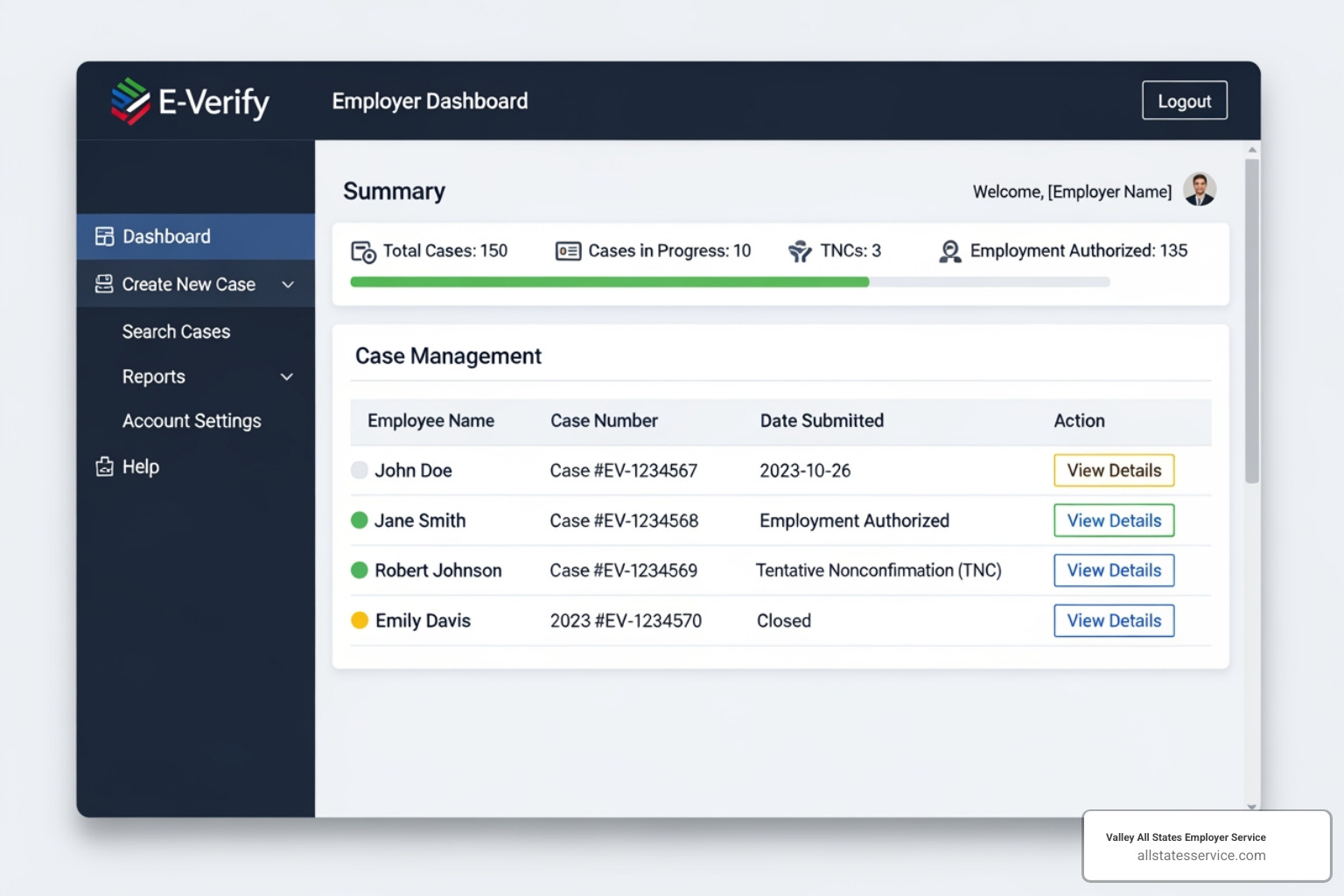
Handling a Tentative Nonconfirmation (TNC)
A Tentative Nonconfirmation (TNC) does not mean an individual is unauthorized to work. It simply means the information entered did not immediately match government records. The process for resolving a TNC is clearly defined to protect employee rights.
Here are the steps for resolving a TNC:
- Notify the Employee: Promptly and privately inform the employee of the TNC by providing the official “Further Action Notice” from E-Verify.
- Employee’s Decision: The employee chooses whether to contest the TNC. They have eight federal government workdays to decide and inform you.
- Employer’s Actions (if contested): If the employee contests, you must print the “Referral Date Confirmation” and give it to them. This document explains how to contact the appropriate agency (DHS or SSA).
- Employee Contacts Agency: The employee must contact the specified agency within the eight-day timeframe to resolve the discrepancy.
- No Adverse Action: During this resolution process, you cannot terminate employment, reduce pay, or take any other adverse action against the employee. This is a critical protection.
- Final Result: The case status will update to “Employment Authorized” if resolved, or “Final Nonconfirmation” (FNC) if it cannot be. Only after an FNC can an employer consider taking adverse action.
This structured process ensures fairness and allows employees to correct errors in government records. For more details, employees can review the E-Verify Overview page.
Employee Tools: myE-Verify, Self Check, and Self-Lock
USCIS provides several valuable tools for employees through myE-Verify to interact with the system and protect their identity.
- Case Tracking: Employees can track the status of their E-Verify case and see their case history.
- Self Check: This feature allows individuals to check their own employment eligibility records before applying for a job, helping to proactively identify and correct any mismatches.
- Identity Protection (Self-Lock): This powerful feature lets you “lock” your Social Security Number (SSN) to prevent its unauthorized use in E-Verify, offering protection against identity theft related to employment.
These free tools promote transparency and put control into the hands of employees, aligning with the goal of fair electronic employment verification.
Navigating E-Verify Compliance, Challenges, and Resources
Maintaining compliance with electronic employment verification is an ongoing responsibility. Employers must be aware of the risks of non-compliance, know how to handle system disruptions, and know where to turn for reliable support.
Risks and Consequences of Non-Compliance
Ignoring E-Verify requirements can lead to severe consequences. The U.S. government, through agencies like Immigration and Customs Enforcement (ICE), actively enforces these laws.
The risks include:
- ICE Audits: These audits involve a thorough review of all Forms I-9 for errors and compliance.
- Fines and Penalties: Non-compliant employers can face significant civil fines, with penalties increasing for repeat violations.
- Debarment from Government Contracts: Federal contractors can be barred from receiving future government contracts for non-compliance.
- Business License Revocation: In states with mandatory E-Verify laws, repeated non-compliance can lead to the loss of business licenses.
- Legal Liability: Employers could face criminal charges for knowingly hiring unauthorized workers or lawsuits for discriminatory practices.
When E-Verify is Unavailable: Shutdowns and Alternative Procedures
Even government systems face disruptions. When events like government shutdowns or technical issues make E-Verify unavailable, employers must know how to proceed.
If the E-Verify system is temporarily down:
- Continue Form I-9 Completion: You must still complete a Form I-9 for each new hire within the standard three business days.
- Document Delays: Note the dates of the system unavailability as the reason for the delay in creating an E-Verify case.
- Use the Grace Period: Once E-Verify is back online, USCIS typically provides a grace period to create cases for employees hired during the outage.
As of August 1, 2023, DHS also allows for alternative procedures for examining Form I-9 documentation. This means eligible employers enrolled in E-Verify can remotely examine employees’ Form I-9 documents instead of requiring physical inspection, a significant benefit for remote workforces. You can find more information on the official E-Verify.gov website.
For guidance during emergencies, USCIS provides specific instructions, which can be found at Guidance for Emergencies.
Official Training and Support Resources
Feeling overwhelmed by the nuances of electronic employment verification is understandable, but you don’t have to go it alone. USCIS provides a wealth of free, official resources.
Here’s where you can find support:
- Free Webinars: USCIS hosts regular sessions. The E-Verify Overview webinar is great for new users, while E-Verify in 30 offers a quick refresher. For help with documentation, the Form I-9 Document Training is invaluable.
- User Manuals and Support: The E-Verify website has comprehensive user manuals, and customer support is available by phone or email for specific questions.
- I-9 Central: This dedicated USCIS portal is the go-to resource for all things Form I-9, including current forms, instructions, and FAQs.
The Future of Employment Verification
The landscape of electronic employment verification is not static. E-Verify is continually evolving, driven by technological advancements and the need for greater efficiency and security. Looking ahead, we can anticipate further improvements that will streamline processes for employers and employees.
System Evolution and Future Improvements
USCIS is committed to improving the E-Verify system, with several key developments on the horizon:
- E-Verify+: This new service is designed to streamline the verification process by bringing innovation, convenience, and efficiency.
- Improved Security with Login.gov: E-Verify is integrating with Login.gov to add an extra layer of protection for user accounts, safeguarding sensitive data.
- New Reporting Tools: E-Verify is introducing new reports, such as a “Status Change report,” to help users identify cases affected by events like EAD revocations.
- Mobile-Friendly Access: The system is expected to become even more accessible via mobile devices, ensuring employers can manage verification processes from anywhere.
These improvements reflect a commitment to making electronic employment verification more seamless and secure.
Simplifying Your Compliance Strategy
Staying compliant with electronic employment verification can feel complex, but it doesn’t have to be a burden. The various mandates, the intricacies of Form I-9, and the evolving nature of E-Verify can be a lot to manage. However, partnering with an expert ensures your process is efficient, accurate, and always up-to-date with changing regulations.
For businesses looking to streamline their hiring process and minimize risk, Valley All States Employer Service offers dedicated support. We specialize in outsourced E-Verify workforce eligibility verification, providing expert, impartial, and efficient processing. Our goal is to minimize errors and administrative burden for our clients, allowing you to focus on what you do best: running your business. We understand the importance of meticulous compliance and work to ensure your electronic employment verification practices are beyond reproach.
Ready to simplify your I-9 and E-Verify compliance? Explore our electronic I-9 solutions and let us help you steer the digital gatekeeper with confidence.