
HR compliance for businesses: Bulletproof 2025
Why HR Compliance for Businesses is Your First Line of Defense
HR compliance for businesses is the process of aligning your company’s HR policies and practices with all federal, state, and local employment laws. It’s not optional, it’s essential for building a business that works.
Quick Answer: HR Compliance Defined
HR compliance for businesses means:
- Following all employment laws
- Protecting employee rights with fair policies
- Maintaining accurate records for wages, hours, and leave
- Creating a safe workplace free from discrimination
- Staying current with changing regulations
Getting HR compliance right protects your company from costly lawsuits and fines. It creates a workplace where employees feel safe and treated fairly, building trust that helps you attract and keep talented people. It also helps you avoid the chaos of reactive, crisis-driven management.
The risks of getting it wrong are significant. The U.S. Equal Employment Opportunity Commission filed 110 lawsuits for unlawful employment discrimination in a single fiscal year. Non-compliance can lead to fines, penalties, and reputational damage that makes it harder to hire.
The compliance landscape is always changing, with new laws on pay transparency, AI in hiring, and data privacy. The more regions you operate in, the more requirements you must track.
The good news is you don’t have to manage this alone. With the right knowledge and partners, HR compliance becomes straightforward.
The High Stakes: Risks of Neglecting HR Compliance
Ignoring HR compliance for businesses is a high-stakes gamble. The consequences of non-compliance are not minor inconveniences, they are business-threatening events that can damage your finances and reputation.
Legal penalties and government fines can be substantial. Violating labor laws, safety standards, or payroll regulations can lead to compliance orders, employee compensation, and heavy fines. For example, the EEOC filed 110 lawsuits for unlawful discrimination in just one fiscal year. Each audit and investigation drains time and money from your business.
Employee lawsuits and tribunals are another major risk. When workers file claims, the legal fees and potential settlements can be expensive. These battles also pull your leadership team away from running the company and create stress throughout the organization, as highlighted in this Forbes report on workplace class action settlements.
Reputational damage may be the costliest consequence. News of compliance scandals spreads quickly online, tarnishing your employer brand and making it difficult to attract customers. Rebuilding that trust can take years.
This damage makes attracting and retaining talent much harder. Top performers research employers and avoid companies with a history of lawsuits or violations. Your current employees may also start looking for other opportunities.
Finally, operational disruptions from compliance failures create chaos. Audits interrupt workflows, investigations distract managers, and employee morale plummets, stalling productivity and strategic planning.
Understanding these risks is your first line of defense. Recognizing what’s at stake helps you take compliance seriously and act before problems arise. Our HR Compliance Audit Guide 2025 can help you assess where you stand.

Core Pillars of HR Compliance for Businesses
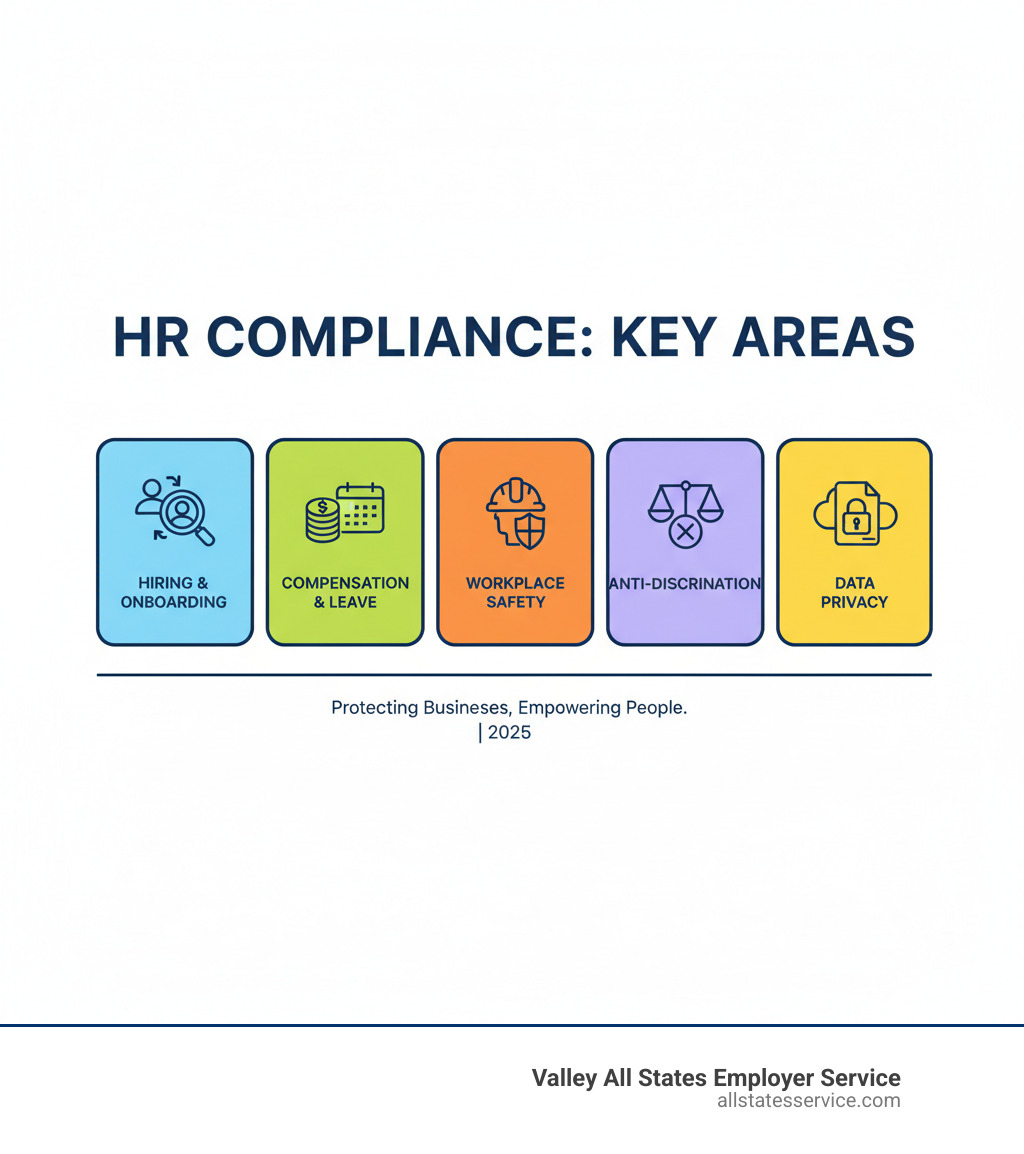
Think of HR compliance for businesses as the foundation of your house. If the foundation cracks, everything else comes tumbling down. This section walks you through the fundamental areas every business must manage to stay compliant.
Hiring, Onboarding, and Classification
Your compliance journey starts with the job posting.
Writing non-discriminatory job ads is crucial. Phrases like “recent college graduates” could be seen as age discrimination. Stick to requirements directly related to the job.
Lawful interview questions focus on skills and experience, not protected characteristics like age, religion, or disability. You cannot use a candidate’s request for a reasonable accommodation against them.
A common pitfall is worker classification. The distinction between an employee and an independent contractor is legal, not just paperwork. Misclassifying a worker can lead to penalties, back pay, and tax issues.
For every new hire in the U.S., Form I-9 completion is mandatory. You must verify their identity and employment eligibility within three business days of their start date. Our Workforce Eligibility Verification services can help you get this right every time.
When running background checks, you must follow the Fair Credit Reporting Act (FCRA). This includes getting proper consent and following specific procedures if you decide not to hire based on the results. AI tools generating “algorithmic scores” may fall under FCRA requirements.
Also, be aware of local “ban-the-box” laws that restrict when you can ask about criminal history.
Compensation, Hours, and Employee Leave
How you pay your employees is a major area of compliance scrutiny.
The Fair Labor Standards Act (FLSA) sets federal minimum wage, overtime pay, and recordkeeping standards. However, many states and cities have higher minimum wage rates, and you must always pay the highest applicable rate.
Overtime pay rules require you to pay non-exempt employees 1.5 times their regular rate for hours over 40 in a workweek. Correctly classifying employees as exempt or non-exempt is critical to avoid owing back pay.
Pay equity means providing equal compensation for work of equal value, regardless of gender or other protected characteristics. Regular pay audits can help identify and fix disparities before they lead to lawsuits. Some jurisdictions, like federal employers in Canada under the Pay Equity Act, have specific requirements.
A growing trend is pay transparency laws. Many states now require salary ranges in job postings. If you hire in multiple states, you must track these different requirements.
The Family and Medical Leave Act (FMLA) provides eligible employees at companies with 50 or more workers up to 12 weeks of unpaid, job-protected leave. Many states also have their own leave laws that may offer more generous benefits.
Our Employment Compliance Guide 2025 can help you steer these complex regulations.
Workplace Safety, Health, and Anti-Harassment
A safe and respectful workplace is a legal requirement.
OSHA standards mandate a workplace free from recognized hazards. This involves identifying risks, providing safety equipment, and training employees. For example, failing to provide hard hats on a construction site is a clear violation.
Workplace hazard assessments should be conducted regularly to identify and control physical, ergonomic, and chemical dangers. This proactive approach helps prevent accidents.
Employees have safety rights, including the right to know about hazards, participate in safety programs, and refuse work they believe is dangerous. Posting required safety materials is essential.
Harassment prevention policies must be clear, comprehensive, and enforced. Your policy should explicitly prohibit all forms of harassment and be supported by effective reporting procedures, prompt investigations, and regular training.
Violence prevention training is also increasingly important for creating a secure environment.
Our Workplace Compliance Solutions can guide you through the process.

Anti-Discrimination, Equity, and Data Privacy
This area reflects your commitment to fairness and respect.
The EEOC enforces federal laws prohibiting discrimination based on race, color, religion, sex, national origin, age, disability, and genetic information. These protections apply to the entire employment lifecycle.
The Americans with Disabilities Act (ADA) requires employers to provide reasonable accommodations for qualified individuals with disabilities, unless it causes undue hardship. This could involve modifying schedules, duties, or the workspace.
Employee data security is a critical compliance area. You handle sensitive information like Social Security numbers and health records. Laws like HIPAA and state regulations like the CCPA set strict rules for how you collect, store, and use employee data. Storing this data on an unsecured server is a major violation.
Record-keeping best practices are the backbone of HR compliance. Personnel files, payroll records, and I-9 forms must be accurate, secure, and retained for the legally required period. Access should be limited to authorized personnel.
Our Employment Compliance Ultimate Guide offers detailed guidance on these evolving areas.
Building a Bulletproof Compliance Strategy
A proactive strategy is your best defense. Here’s how to build one.
Develop an HR Compliance Checklist and Document Policies
An HR compliance checklist is a structured system that ensures nothing slips through the cracks. It should cover the entire employee lifecycle, from recruitment and onboarding to compensation, safety, data privacy, and termination.
Creating an employee handbook is a smart investment. This document acts as a single source of truth for policies, codes of conduct, and leave entitlements. Keep it current and get acknowledgment from every employee.
For disciplinary procedures and terminations, consistency is key. Clear, documented, and standardized processes ensure fairness, create a paper trail, and can help you avoid wrongful termination lawsuits.
Our HR Compliance for Small Business guide offers practical advice for developing these resources.
Stay Current and Foster a Culture of Compliance
Employment law is constantly changing, so staying informed is essential.
Regular audits of your HR policies and records act as an early warning system, helping you catch issues before they become costly problems.
Training is a critical investment. Effective training on anti-harassment, safety, and legal updates educates everyone on their rights and responsibilities. When your team understands the “why” behind compliance, they become partners in maintaining it.
A safe reporting culture is also vital. Employees will only speak up about issues if they trust they won’t face retaliation. Provide clear, confidential reporting channels and follow through on concerns.
Subscribing to legal updates from resources like HR Dive’s Compliance newsletter helps you stay ahead of new regulations.
If you need help building this culture, our HR Compliance Consulting services can guide you.
Leverage Technology and Outsourcing for HR compliance for businesses
Managing HR compliance for businesses manually is difficult and risky. Technology and outsourcing offer practical solutions.
HRIS software (Human Resources Information System) centralizes employee data, automates tasks, and tracks training. Many systems include compliance modules to help you stay aligned with current laws.
Automation of tasks like payroll and time tracking reduces human error, a common source of compliance issues.
If you lack in-house HR expertise, outsourcing is a game-changer. Partnering with an HR service provider gives you access to professionals who stay current on legal changes and can guide you through complex situations.
For small businesses with limited resources, user-friendly HR software or Compliance Outsourcing Solutions can bridge the gap. Our Outsourced HR Services are designed to help companies like yours manage these complexities with confidence.
Frequently Asked Questions about HR Compliance
Here are answers to common questions about HR compliance for businesses.
What are the most common HR compliance mistakes?
The most frequent and costly mistakes include:
- Misclassifying employees as independent contractors, which can lead to significant back taxes and penalties.
- Failing to keep accurate records, especially for Form I-9s and payroll. Incomplete I-9s can result in large fines, and poor payroll records make it hard to defend against wage claims.
- Inconsistent application of policies, which can lead to discrimination claims and erode employee trust.
- Neglecting mandatory training for harassment and safety, exposing the company to liability and putting employees at risk.
How can a small business with no HR department manage compliance?
Even without a dedicated HR department, small businesses can manage compliance effectively.
- Create a solid employee handbook to set clear expectations and outline policies.
- Use a compliance checklist to track tasks throughout the employee lifecycle.
- Leverage user-friendly HR software to automate payroll, track time, and store documents securely.
- Partner with an outsourced HR provider for expert guidance. This gives you access to professionals for specialized tasks like E-Verify and I-9 compliance without the cost of a full-time HR department.
What is the difference between federal and state employment laws?
Understanding this distinction is crucial for HR compliance for businesses.
Federal laws like the FLSA, ADA, and FMLA create a national baseline for all employers. They establish minimum requirements for things like wages, disability accommodations, and leave.
State and local laws often build on this foundation, providing greater benefits or stricter protections. For example, many states have higher minimum wages or their own family leave programs.
The critical rule is: you must always follow the law that is most favorable to the employee. If a state law offers more protection than federal law, the state law applies. This means businesses in multiple states must track different requirements for each location.
Conclusion: Making Compliance Your Competitive Advantage
HR compliance for businesses is more than just avoiding trouble, it’s about building a better, more trustworthy workplace.
Proactive compliance means you are steering the ship, not just reacting to problems. By building systems with clear policies and a well-trained team, you create a culture where doing the right thing is standard practice. This foundation of trust helps you attract and retain top talent, as people want to work for companies that treat employees fairly and create a safe environment.
The compliance landscape, with its mix of federal, state, and local laws, can feel overwhelming. New regulations on AI in hiring, data privacy, and pay transparency add to the complexity. You don’t have to be an expert in everything, which is where partnering with specialists makes a difference.
At Valley All States Employer Service, we focus on a critical and challenging area: E-Verify and workforce eligibility verification. We provide expert, impartial, and efficient processing, so you can avoid errors and administrative headaches. We handle the details, freeing you to focus on your business.
Ready to turn compliance from a burden into a competitive advantage? Our Outsourced HR Compliance Ultimate Guide shows how we can support your business and provide peace of mind.
When you get compliance right, everyone wins. Your employees feel valued, your business grows, and you know you’ve built something solid.