
Understanding the I-9 Remote Verification Extension Changes
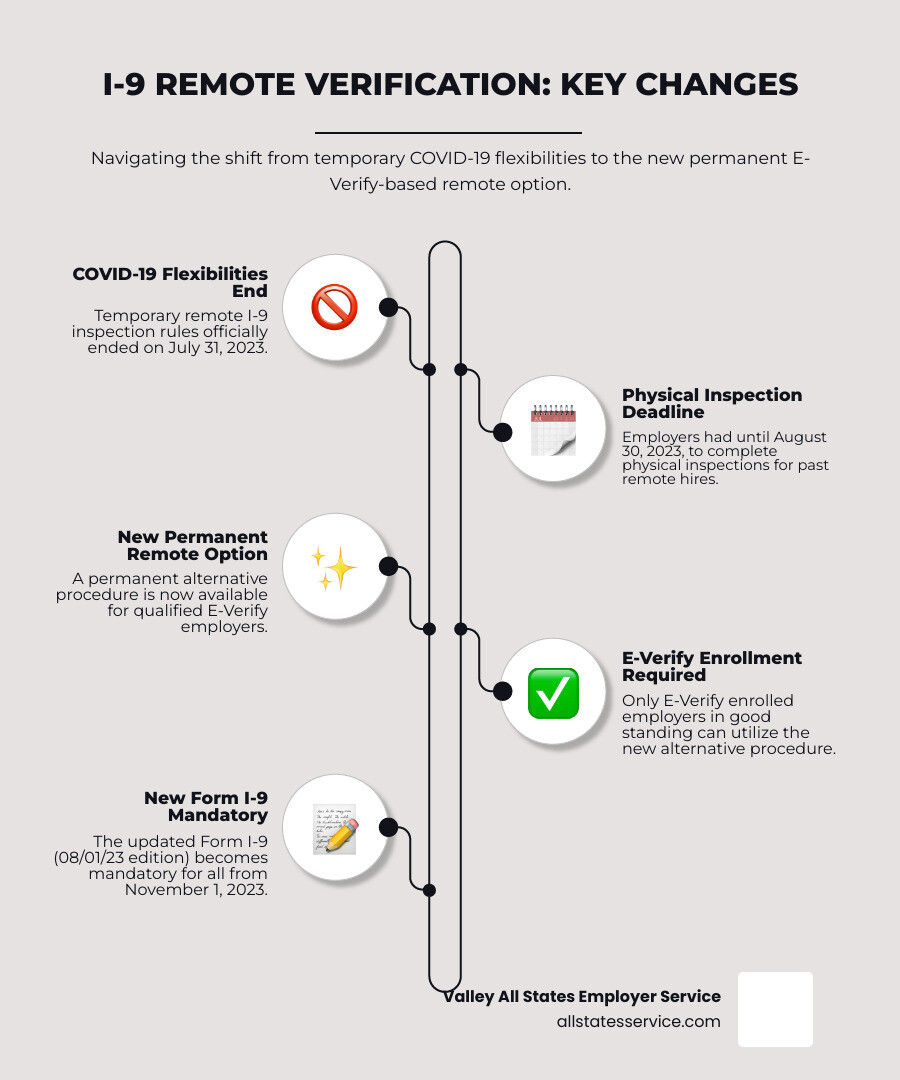
The i-9 remote verification extension that allowed employers to remotely inspect documents during COVID-19 has officially ended, but there’s good news: a new permanent remote option is now available for qualified employers.
Quick Answer:
- COVID-19 flexibilities ended: July 31, 2023
- Physical inspection deadline: August 30, 2023 (for pandemic remote verifications)
- New permanent option: Available for E-Verify enrolled employers only
- New Form I-9: Mandatory starting November 1, 2023 (edition date 08/01/23)
- Key requirement: Live video interaction and document retention
If you’re an HR manager wondering whether you can still verify employee documents remotely, the answer depends on your E-Verify status. The temporary pandemic rules are gone, but the Department of Homeland Security introduced a permanent alternative procedure that’s actually better than the old system.
The shift happened because remote work became permanent for many companies. DHS recognized this reality and created new rules that don’t require a national emergency to use. However, there’s a catch: you must be enrolled in E-Verify and follow specific procedures.
This change affects every employer who hired remote workers during the pandemic. If you used the COVID-19 flexibilities but weren’t enrolled in E-Verify, you had until August 30, 2023, to complete physical document inspections. Miss that deadline, and you could face penalties ranging from $230 to $2,292 per violation.
The End of an Era: What Were the COVID-19 I-9 Flexibilities?
Remember when the world changed overnight in March 2020? Suddenly, everyone was working from home, and HR departments everywhere faced a puzzling question: how do you verify employee documents when you can’t meet in person?
The Department of Homeland Security (DHS) and U.S. Immigration and Customs Enforcement (ICE) had an answer. They quickly rolled out temporary flexibilities for Form I-9 that felt like a lifeline for employers scrambling to adapt. These i-9 remote verification extension rules allowed something previously unthinkable: employers could defer the physical inspection of identity and employment eligibility documents for employees hired on or after March 20, 2020.
Instead of requiring face-to-face meetings, employers could suddenly examine documents through video calls, email, or fax. It wasn’t perfect, but it kept businesses running while keeping everyone safe. For companies transitioning to remote work overnight, these flexibilities made the difference between maintaining operations and grinding to a halt.

The Sunset of Temporary Measures
Like many pandemic policies, these flexibilities kept getting extended as the situation evolved. What started as a temporary measure in March 2020 stretched through multiple extensions: August 2020, April 2022, October 2022, and finally until July 31, 2023. You can see a timeline of the COVID-19 I-9 flexibility extensions to understand just how many times employers thought “surely this is the last extension.”
But every temporary measure eventually meets its end. When the COVID-19 national emergency officially concluded, so did these flexibilities. July 31, 2023 marked the final sunset date for the temporary i-9 remote verification extension rules.
Here’s where things got urgent for many employers. If your company had used remote document inspection during the pandemic but wasn’t enrolled in E-Verify, you suddenly had a critical deadline staring you down. All those employees whose documents you’d inspected remotely since March 20, 2020? You needed to complete physical, in-person inspections by August 30, 2023.
This wasn’t just a suggestion. It was a hard deadline with real consequences. Miss it, and your company could face substantial penalties for each violation. For comprehensive guidance on staying compliant, check out More on E-Verify and I-9 compliance.
Why Physical Re-Verification Was Required
Think of the temporary flexibilities as borrowing time, not eliminating requirements. The core principle of Form I-9 has always been physical examination of original documents by the employer or an authorized representative. This hands-on verification helps ensure document authenticity and confirms employee identity in ways that remote inspection simply can’t match.
When employers conducted remote inspections under the COVID-19 rules, they had to document this clearly. The process required adding “remote inspection” and “COVID-19” in the Additional Information field of Section 2. Once physical inspection was completed, they needed to add “documents physically examined,” the date, and their initials in the same section or Section 3.
This remediation process wasn’t busy work. It was about bringing every I-9 form into full compliance with standard physical inspection requirements. The stakes were high because ICE maintains the right to audit employers and issue penalties for both procedural errors and substantive violations.
Here’s a sobering statistic: 71 percent of employers surveyed found it challenging to obtain, inspect, and retain document copies within the required three-day timeframe once the policy ended. This highlights exactly why so many companies struggled with the transition and why understanding Information on I-9 Self-Audits became more valuable than ever.
The message was clear: temporary flexibility was ending, but compliance requirements weren’t going anywhere. Smart employers started preparing for this transition months in advance, ensuring they could meet the August 30, 2023 deadline without scrambling at the last minute.
The New Permanent Option: The Alternative Procedure for E-Verify Employers
Here’s where things get exciting. The Department of Homeland Security didn’t just end the pandemic flexibilities and walk away. They recognized that remote work isn’t going anywhere, and neither should remote document verification. So they created something much better: a permanent alternative procedure that’s available year-round, no emergency required.
This new rule, published on July 24, 2023, represents a fundamental shift in how we think about employment verification. Instead of the temporary i-9 remote verification extension that felt like borrowed time, employers now have a stable, long-term solution. There’s just one catch: you need to be enrolled in E-Verify.
Think of it this way. The old COVID flexibilities were like getting a temporary hall pass. This new system? It’s like getting your permanent ID card. Much more reliable, and you don’t have to worry about extensions or expiration dates.
Who is Eligible for Remote Verification?
Not every employer gets to use this shiny new remote verification option. The DHS was pretty specific about who qualifies, and honestly, it makes sense from a compliance perspective.
Qualified employers are the only ones who can use this alternative procedure. What makes you qualified? Two main requirements: you must be enrolled in E-Verify and in good standing with the program. No exceptions, no workarounds.
If you’re not enrolled in E-Verify yet, this might be the push you needed. Remote work is here to stay, and so is this verification method. You can get started with the enrollment process by checking out How to enroll in E-Verify directly from the government source.
The “good standing” part means you’re following all E-Verify program requirements and haven’t been flagged for non-compliance issues. It’s like having a clean driving record, but for employment verification.
This new procedure applies specifically to new hires only. If you were already using E-Verify during the pandemic and conducted remote inspections under the COVID flexibilities, you might be able to satisfy the physical examination requirement using this new alternative procedure. But every situation is different, so it’s worth reviewing your specific circumstances carefully.
Step-by-Step: How to Use the Alternative Procedure
The new remote verification process is straightforward, but precision matters. Here’s exactly how it works, according to the DHS final rule on remote verification.
Your employee starts by transmitting clear copies of both the front and back of their identity and employment authorization documents. These need to be from the official List of Acceptable Documents, just like always.
Next comes the live video interaction. This isn’t optional or negotiable. You or your authorized representative must conduct a real-time video call with the employee. During this call, the employee physically presents the same documents they sent copies of. You’re looking to verify that the documents appear genuine and actually belong to the person presenting them.
Document retention is crucial here. You must keep clear, readable copies of both sides of all presented documents. Think of these as your insurance policy during an audit.
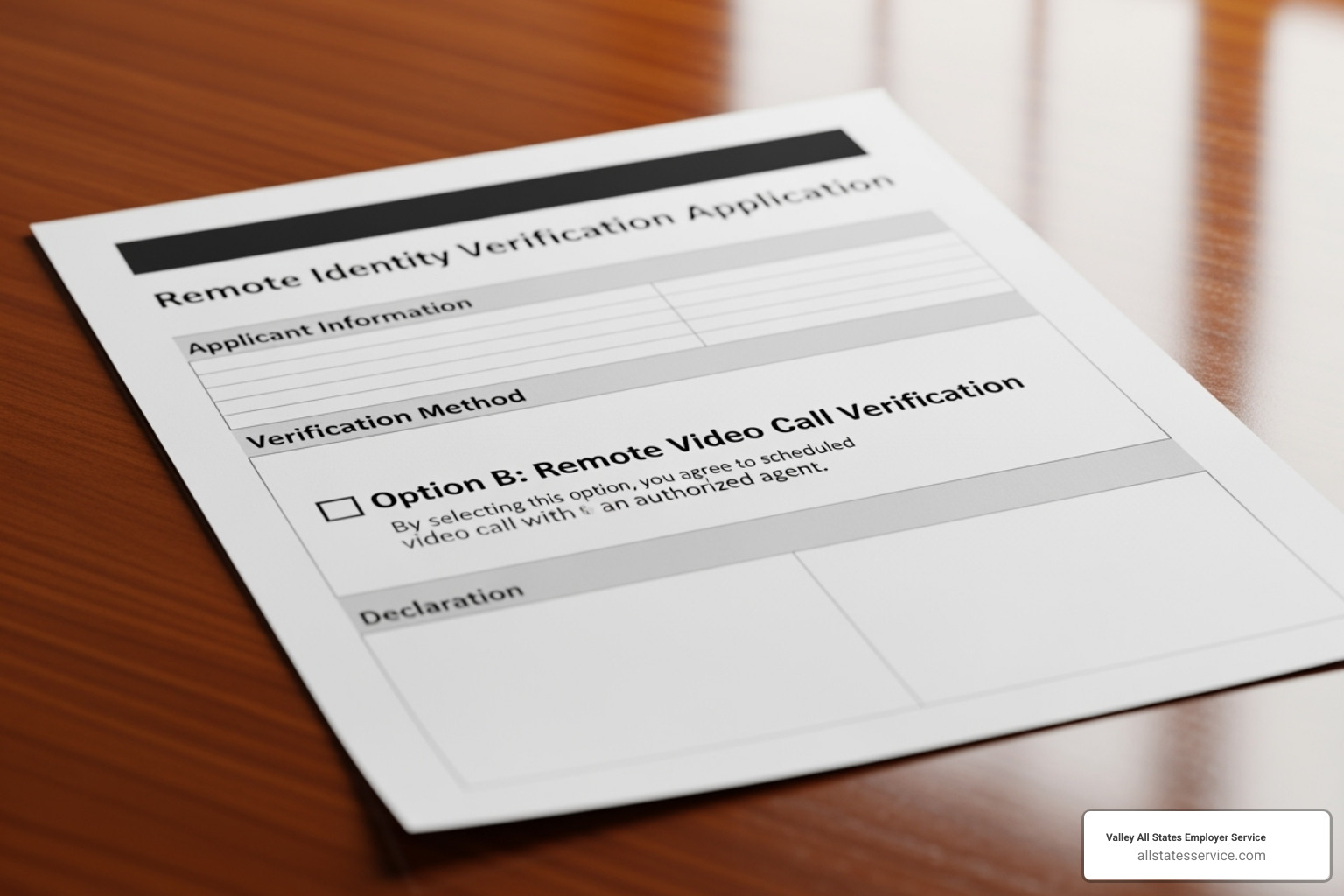
The new Form I-9 annotation is where things get really specific. The updated form (edition date 08/01/23) includes a checkbox in Section 2 specifically for indicating that you used the alternative procedure for remote document examination. Check that box. It’s your proof that you followed the rules.
Finally, don’t forget to create the E-Verify case within three business days of your employee’s first day of work. This step ties everything together and completes the verification process.
The beauty of this system is that it’s designed for the modern workplace. Companies like ours have seen how this streamlined approach reduces administrative burden while maintaining compliance standards. It’s what employment verification should look like in 2024 and beyond.
Understanding the New Form I-9 and the I-9 Remote Verification Extension
When DHS introduced the permanent remote verification option, they didn’t just tweak the rules. They completely redesigned Form I-9 to match how modern businesses actually operate. The new form isn’t just paperwork with a fresh coat of paint – it’s a thoughtful redesign that acknowledges remote work is here to stay.
The i-9 remote verification extension brought more than just policy changes. It ushered in a brand-new Form I-9 with an edition date of “08/01/23” that’s actually user-friendly. Think of it as the difference between an old flip phone and a modern smartphone – same basic function, but infinitely more practical for today’s world.
Key Changes on the “08/01/23” Form I-9
The biggest win? Sections 1 and 2 now fit on a single page. Anyone who’s wrestled with the old multi-page form will appreciate this immediately. But the improvements go much deeper than just saving paper.
The form is now mobile-friendly, which means you can actually complete it on a tablet or phone without losing your mind. This matters when you’re onboarding remote employees who might not have access to a traditional office setup.
Here’s where it gets really smart: there’s a dedicated checkbox in Section 2 specifically for remote document examination. No more scribbling notes in margins or wondering how to properly document your remote verification process. Just check the box, and you’re covered.
USCIS moved the preparer/translator certification to its own supplement (Supplement A). This cleans up the main form considerably and means you only deal with extra paperwork when you actually need it. Same goes for the reverification section, which is now Supplement B. If you frequently work with employees on temporary work authorization, this change will save you significant time.
The updated document lists now include clear information about acceptable receipt notices and automatic EAD extensions. No more guessing whether that temporary receipt is acceptable – it’s spelled out clearly. The Instructions for the new Form I-9 have been cut from 15 pages down to 8, which tells you everything about how unnecessarily complicated the old process was.
Deadlines You Can’t Miss
Here’s what you need to know about timing: employers had until October 31, 2023 to use up their old forms. Starting November 1, 2023, everyone must use the new “08/01/23” version for all new hires and reverifications.
Using the wrong form isn’t just an administrative hiccup – it’s a compliance violation that can trigger penalties during an ICE audit. The penalties range from technical violations to more serious substantive issues, and trust me, you don’t want to explain to an auditor why you’re still using outdated forms months after the deadline.
This is exactly why having professional support for Employee Onboarding Compliance assistance makes sense. It’s not just about getting the forms right – it’s about staying ahead of changes like these so your business never misses a beat. The new form is designed to work seamlessly with the remote verification process, but only if you’re actually using it correctly.
Your Compliance Action Plan: Remote vs. In-Person Verification
Now that you understand the new rules, let’s talk about what this actually means for your day-to-day operations. The beauty of the current system is that you have options, but with those options comes the responsibility to make informed decisions that protect both your business and your employees.
Think of it this way: you’re no longer stuck with just one way to verify documents. Whether you choose remote or in-person verification depends on your E-Verify status, your company policies, and your employees’ preferences. The key is knowing which path works best for your situation.
What if My Company Doesn’t Use E-Verify?
Here’s the straightforward truth: if you’re not enrolled in E-Verify, the new i-9 remote verification extension alternative procedure simply isn’t available to you. It’s like having a key that doesn’t fit your lock. You’ll need to stick with the traditional approach of physical, in-person document inspection.
This means every new hire must physically present their original documents for you to examine. No exceptions, no workarounds. If you used the COVID-19 flexibilities for remote inspection and weren’t an E-Verify employer, you should have completed those physical re-verifications by August 30, 2023. Missing that deadline puts you in non-compliance territory, which is exactly where you don’t want to be.
But what if your new hire is working remotely from another state? You have one main option: using an authorized representative. This person can be anyone you choose, whether it’s a notary public, a family member, or another trusted individual. However, and this is crucial, you remain fully responsible for any mistakes they make. It’s like lending someone your car but still being liable if they get a speeding ticket.
The risks here are real. Your authorized representative might miss document details, make annotation errors, or fail to follow proper procedures. That’s why clear instructions and choosing someone reliable isn’t just helpful, it’s essential for avoiding costly violations.
Employee Rights and the I-9 Remote Verification Extension
Even with all these new options, your employees have a say in the matter. You can’t force someone to participate in remote verification if they’d rather meet you in person. It’s their choice, and respecting that choice isn’t just good practice, it’s required by law.
Employee choice is fundamental here. If someone prefers to present their documents for physical inspection, you need to make that happen. Maybe that means arranging a meeting at your office, or perhaps allowing them to work with an authorized representative in their area.
Consistency matters more than you might think. You can’t offer remote verification to some employees while denying it to others in similar situations. That kind of inconsistency can quickly turn into discrimination issues, which nobody wants to deal with.
The most important thing to remember is that your verification method should never be based on someone’s national origin, citizenship status, or any other protected characteristic. Avoiding discrimination isn’t just about following the law, it’s about creating a fair workplace where everyone feels respected.
At Valley All States Employer Service, we help our clients steer these choices every day. We’ve seen how having clear, consistent policies makes the whole process smoother for everyone involved. Whether you’re doing remote or in-person verification, the goal remains the same: accurate, compliant I-9 completion that protects your business while respecting your employees’ rights.
For businesses trying to balance these requirements with practical operations, professional guidance can make all the difference. That’s where specialized HR Compliance for Small Business support becomes invaluable, helping you create policies that work for your unique situation.
Avoiding Costly Mistakes: Penalties for I-9 Violations
Nobody wants to talk about penalties, but here’s the reality: I-9 violations can cost your business serious money. The fines aren’t just pocket change either. They’re adjusted for inflation regularly, which means they keep going up.
ICE has ramped up their enforcement game in recent years. They’re conducting more audits and investigations, and they’re not giving anyone a pass for sloppy paperwork. Your business could be next, and the audit notice won’t come with advance warning.
When it comes to i-9 remote verification extension violations, ICE doesn’t mess around. If you used the COVID-19 flexibilities but missed that August 30, 2023 deadline for physical re-verification, you could be looking at some hefty fines.
The penalties fall into two main buckets, and neither one is pleasant.
Substantive violations are the big troublemakers. These happen when you fundamentally fail at the I-9 process. Maybe you never completed Section 2, or you didn’t bother examining documents at all. Here’s where it gets expensive: if ICE decides that your remote inspection without proper follow-up basically counts as no inspection, they’ll slap you with a substantive violation. For knowingly hiring unauthorized workers, you’re looking at fines between $573 to $20,130 per violation. Yes, per violation.
Technical errors sound less scary, but don’t let the name fool you. These are procedural mistakes like missing signatures, wrong dates, or forgetting to annotate your form properly. The fines range from $230 to $2,292 per violation. Here’s the kicker: if you don’t fix these technical errors during an audit, ICE can reclassify them as substantive violations. Suddenly, that missing signature becomes a much more expensive problem.
Think about it this way: if you have 50 employees and made the same mistake on each I-9, even the “minor” technical penalty could cost you over $100,000. That’s not exactly chump change for most businesses.
The math gets scary fast, especially for companies that relied heavily on remote hiring during the pandemic. One client told us they had over 200 remote hires during COVID-19. Imagine facing penalties on that scale.
This is exactly why getting your I-9 process right from the start matters so much. The Details on I-9 Compliance Penalties paint a clear picture: staying compliant isn’t just good practice, it’s essential financial protection for your business.
Simplify Your I-9 Process and Stay Compliant
The world of Form I-9 compliance has transformed dramatically. The temporary i-9 remote verification extension that got us through the pandemic is history, but the new permanent remote option for E-Verify employers offers something even better: stability and flexibility that doesn’t depend on national emergencies.
Here’s the reality: if you’re enrolled in E-Verify and in good standing, you now have a powerful tool for managing remote hires. The updated Form I-9 with its streamlined single-page design and dedicated remote verification checkbox makes the process cleaner than ever. You can conduct live video calls, examine documents digitally, and keep your remote workforce compliant without the old bureaucratic headaches.
But what if you’re not using E-Verify? You’re not out of luck, just back to the traditional in-person verification methods. It’s still completely manageable, whether you handle inspections yourself or work with authorized representatives.
The key insight here is that compliance isn’t complicated when you have the right process. Whether you’re dealing with the new remote procedures, making sure your I-9 annotations are correct, or simply trying to avoid those costly penalties we discussed earlier, success comes down to having systems that work.
At Valley All States Employer Service, we’ve been watching these changes unfold and helping employers steer them every step of the way. Our expertise in outsourced E-Verify workforce eligibility verification means we understand both the technical requirements and the real-world challenges you face. We’ve seen how the right support can turn I-9 compliance from a source of stress into a smooth, efficient process.
Whether you’re just getting started with E-Verify, need help implementing the new remote verification procedures, or want to ensure your existing I-9 processes are bulletproof, we’re here to make it simple. After all, your focus should be on running your business, not worrying about compliance deadlines and penalty calculations.
Ready to take the complexity out of I-9 verification? Get expert I-9 Verification Assistance and find how professional support can give you confidence in your compliance efforts while freeing up your time for what matters most.