
Company Background Verification Process: Ultimate 2025 Guide
Why the Company Background Verification Process Matters More Than Ever
The company background verification process is a critical hiring step to confirm candidate credentials, uncover risks, and avoid costly bad hires. It involves systematically checking an applicant’s identity, employment history, education, and criminal records before making a hiring decision.
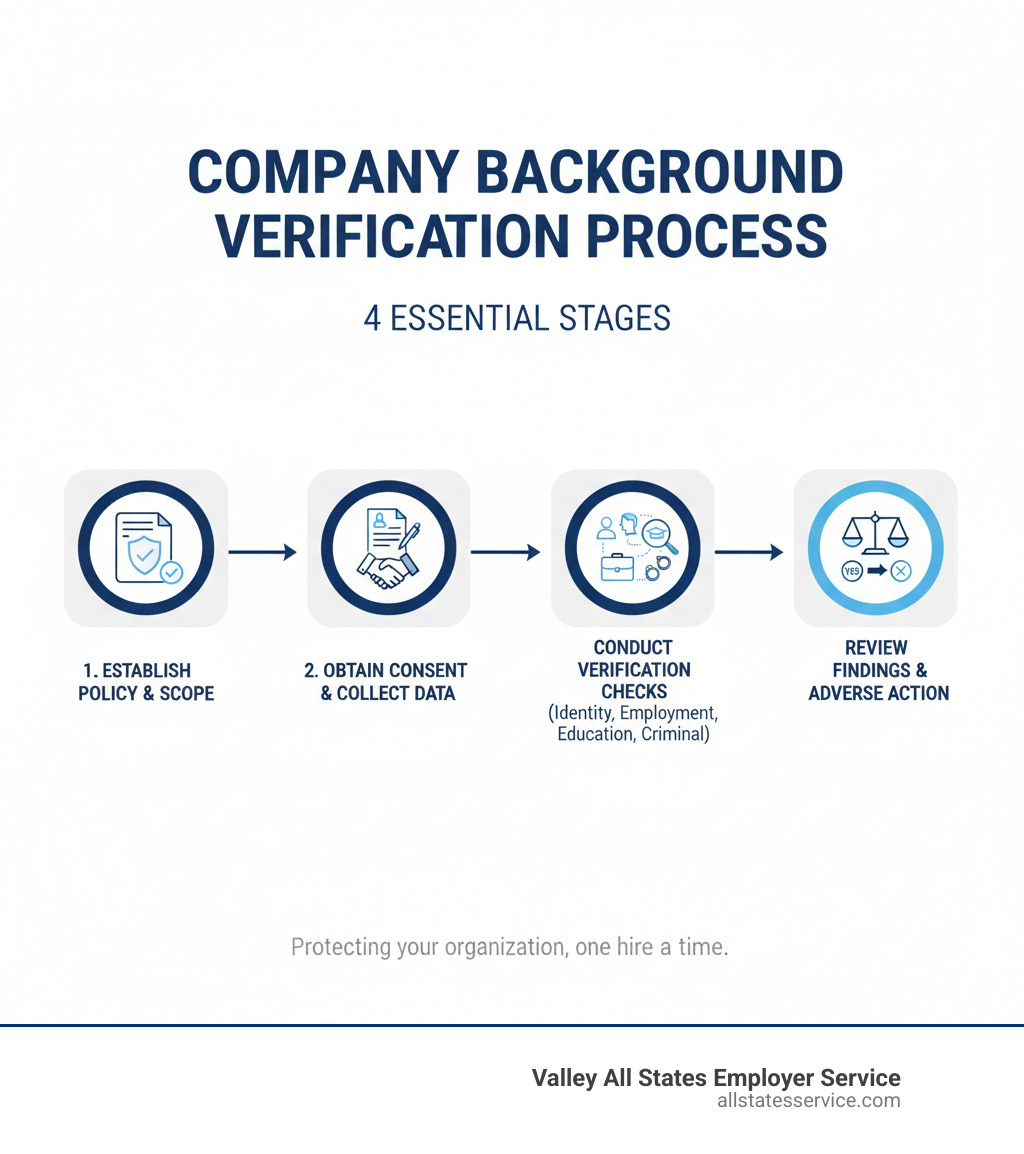
Quick Overview: The Essential Steps
- Establish a clear screening policy defining who gets screened and which checks apply.
- Obtain written consent from candidates and collect necessary information.
- Conduct verification checks through databases, institutions, and previous employers.
- Review findings and follow proper adverse action procedures if needed.
Industry research reveals a sobering reality: 84% of employers have found a lie or misrepresentation on a resume. A fabricated degree or undisclosed conviction could expose your business to theft, fraud, or devastating legal liability. The cost of a bad hire can reach 30% of their first-year earnings, excluding damage to team morale and your company’s reputation.
Beyond risk mitigation, background verification improves retention. Companies with thorough checks report a 10% reduction in employee turnover, saving significant time and money. Understanding this process is key to making smarter, safer hiring decisions.
What is Background Verification and Why Is It a Non-Negotiable?

The company background verification process has become essential for modern hiring. It’s the systematic way employers research and confirm an individual’s employment history, education, and criminal records. Think of it as due diligence before you grant someone access to your business, data, and customers.
Risk mitigation is the primary driver. Background checks uncover red flags that don’t appear in an interview, such as undisclosed criminal convictions or a history of fraud, protecting your business from theft or other harmful behaviors. This process also actively ensures a safe workplace for your current employees and clients, which is vital in industries that serve vulnerable populations or handle sensitive information.
Your company’s reputation takes years to build but can be damaged quickly. Protecting company reputation means carefully vetting who represents your brand. Background verification is your first line of defense.
Beyond filtering out bad actors, these checks improve hiring quality. They confirm that candidates possess the experience and credentials they claim, ensuring you make decisions based on fact. This leads to a surprising bottom-line benefit: companies with thorough background checks report a 10% reduction in employee turnover. Hiring the right people from the start saves on recruitment costs and lost productivity. The company background verification process is an investment in a trustworthy workforce and a culture of integrity.
Want to learn more about protecting your business from day one? Check out our guide to Pre-Employment Screening.
The Step-by-Step Company Background Verification Process
Let’s walk through how the company background verification process works. Understanding these four key steps will help you create a thorough, compliant screening program.
Step 1: Establish a Clear and Consistent Policy
Before screening anyone, you need a written policy. This roadmap defines who gets screened and which checks apply to which roles. For example, a delivery driver needs a motor vehicle record check, while an accountant might need a credit check.
A clear, written policy ensures fairness and consistency, protecting you from discrimination claims. When you apply the same standards to everyone in similar roles, you build trust with candidates. Consulting with legal counsel before finalizing your policy is a smart investment, as employment laws vary by state and change frequently.
Step 2: Obtain Consent and Collect Information
This step is non-negotiable. You must inform applicants about the background check and get their written permission. The Fair Credit Reporting Act (FCRA) requires you to provide a clear disclosure and authorization form explaining that a check will be run and that the results could affect the hiring decision.
Once you have consent, you’ll collect basic information: full legal name, date of birth, a government-issued ID or Social Security Number, and address history for the past seven years. This detail is crucial for accuracy, ensuring you check the right person and not someone with a similar name.
Learn more about ensuring document authenticity through our Document Verification Service.
Step 3: Conduct the Verification Checks
With consent and information in hand, it’s time to verify the candidate’s claims. Many companies outsource this step to a professional background screening company to steer the complex web of databases, privacy laws, and compliance requirements.
During this phase, the screening provider will contact sources directly to confirm employment history and educational credentials. They will also search databases for criminal records, sex offender registries, and other public records based on your policy. All findings are then compiled into a comprehensive report, giving you a full picture to make an informed decision.
Find how we handle Work History Verification to make this process seamless for our clients.
Step 4: Review the Findings and Follow Adverse Action Procedures
Once you receive the report, you must review the findings against your hiring standards. Not every red flag is a dealbreaker; context is key. When assessing discrepancies, evaluate whether any negative information directly relates to the job responsibilities. A minor traffic violation might be irrelevant for an office job but significant for a driver.
If you find something that might lead you to reject a candidate, you must follow the FCRA’s adverse action procedures. This two-step process protects candidates’ rights.
First, send a pre-adverse action notice, which includes a copy of the background report and a summary of the candidate’s FCRA rights. This gives them time to review the information and report any errors, typically at least five business days.
If the candidate disputes the information or provides context, you must reconsider. If you still decide not to hire them, you send a final adverse action notice. This letter explains your decision and provides information on how they can contact the screening company. Following these steps ensures fairness and keeps your company compliant.
What Do Employers Actually Look For? Common Types of Background Checks
The company background verification process isn’t a one-size-fits-all service. The checks you run should depend on the role, industry, and specific risks involved.
Foundational Verifications
These checks confirm the basic facts on a resume and application.
- Identity verification is the starting point. It confirms a person’s identity and legal authorization to work in the U.S., often by validating a Social Security Number.
- Employment history verification involves contacting previous employers to confirm job titles, dates of employment, and responsibilities. Discrepancies here can reveal important information about a candidate’s honesty.
- Education verification confirms degrees, certifications, and attendance dates with schools and universities. With 84% of employers finding misrepresentations on applications, this is essential.
- Reference checks, while more subjective, provide valuable insights from former supervisors about a candidate’s work ethic, performance, and team collaboration.
Safety and Risk-Related Checks
These checks identify potential threats to your workplace.
- Criminal record checks search national, state, and local databases for convictions. The focus is on convictions relevant to the job, not just arrests.
- Sex offender registry searches are critical for roles involving vulnerable populations like children or the elderly.
- Driving records (MVR) are essential for any position that requires operating a vehicle, protecting your team and the public while potentially reducing insurance costs.
- Drug and alcohol screening is common in safety-sensitive industries like transportation, healthcare, and manufacturing, often as a matter of legal compliance.
Industries That Prioritize the Company Background Verification Process
While all businesses benefit from background checks, they are non-negotiable in certain sectors.
- Healthcare: Rigorous screening protects patient data, safety, and controlled substances.
- Financial services: Credit and criminal checks are vital to ensure trustworthiness and prevent fraud.
- Education: Extensive criminal and sex offender registry searches are required to protect children.
- Government: High-level security clearances and comprehensive investigations are often necessary.
- Transportation: Checks for driving records, drug use, and criminal history are crucial for public safety. Canada’s growing tech sector is also increasingly prioritizing verification to protect sensitive data.
The specific checks should always align with the risks of the position. A custom approach to the company background verification process protects your business, employees, and customers.
Best Practices for an Effective and Compliant Screening Program
An effective screening program protects your business while treating candidates fairly and legally. It’s about creating a system that works for everyone.

Navigating Common Challenges in the Company Background Verification Process
Even with a solid plan, the company background verification process has challenges.
- Global compliance complexity: Hiring across state or international lines means navigating a patchwork of different laws.
- Data accessibility: Some records are stored in outdated systems, causing delays when information must be pulled manually.
- Time and cost constraints: Thorough checks take time and money, while top candidates may be fielding other offers.
- Ensuring accuracy: Public records can contain errors. A robust process is needed to catch fabrications while protecting candidates from database mistakes.
Leveraging Technology and Third-Party Providers
Technology has made background verification faster and more accurate.
Automation benefits are significant. Digital platforms can collect data, submit requests, and deliver reports automatically, reducing manual work and errors. This frees up your HR team to evaluate candidates rather than chase paperwork.
Applicant Tracking System (ATS) integration is a game changer. When your screening provider connects to your ATS, data flows seamlessly. With many providers offering 100+ ATS and HCM integrated partners, connecting your systems is easier than ever.
Choosing a reliable partner is a smart move. Specialized third-party providers stay current on regulations, maintain access to comprehensive databases, and handle compliance headaches, making the process efficient and cost-effective.
Want to learn more? Check out our guide to Background Check Companies and find how Outsourced Employee Verification can simplify your hiring process.
Ensuring Fairness and a Positive Candidate Experience
Waiting for a background check can be stressful for candidates. Treating them with respect and transparency can ease their anxiety.
Transparency with candidates builds trust. Explain what checks you’ll run, why they matter, and provide realistic timelines. This shows you value them as people.
Clear communication is key. If there’s a delay, let the candidate know. Simple touchpoints keep them engaged and feeling respected.
Avoiding discrimination means ensuring every check is relevant to the job requirements. A decades-old misdemeanor shouldn’t automatically disqualify someone from an office role. Consider individual circumstances and give candidates a chance to explain negative findings. Ban the Box laws in many areas require delaying criminal history questions until later in the process, giving candidates a fair chance to be judged on their qualifications first.
A well-designed company background verification process protects your business without sacrificing the human element.
Staying Compliant: Legal and Privacy Considerations
Compliance is the foundation of a legally sound company background verification process. Getting it wrong can lead to lawsuits, fines, and reputational damage. Fortunately, staying compliant is manageable with the right knowledge.
Key Regulations: FCRA, PIPEDA, and Beyond
In the United States, the Fair Credit Reporting Act (FCRA) is the primary federal law governing background checks for employment. It sets rules for accuracy, fairness, and privacy, requiring employers to obtain written consent, provide specific disclosures, and follow a strict adverse action process. You can review a summary of your rights under the FCRA to understand these protections.
The FCRA is just the start. States and cities often add their own rules, such as “Ban the Box” laws or restrictions on how far back records can be reviewed. In Canada, Canada’s Privacy Act and PIPEDA (Personal Information Protection and Electronic Documents Act) govern how private-sector organizations handle personal information. Navigating these regional differences is why many companies partner with legal specialists.
The Importance of Consent and Data Privacy
The personal information collected during a background check is highly sensitive and must be handled with care.
Obtaining explicit consent is the first critical step. You must have written permission from the candidate before initiating any check. Once you have their data, you are responsible for protecting it with robust data security protocols, including secure storage and encryption.
You also need clear policies for information retention and disposal to meet legal requirements and minimize breach risks. Violating privacy laws carries significant penalties. For example, PIPEDA violations in Canada can lead to fines up to CAD 100,000 per violation, while FCRA violations can result in statutory damages and attorney’s fees.
We understand this legal terrain is complex. We exist to help businesses maintain rigorous compliance at every step, protecting your organization and your candidates.
Frequently Asked Questions about the Verification Process
Employers often have questions about the company background verification process. Here are answers to the most common concerns.
How long does a background check take to complete?
The timeline depends on the types of checks conducted. Simple identity or criminal record searches can be fast, with 90% of US criminal screens closing in just one day. However, a comprehensive check including employment and education verification typically takes 2 to 5 business days.
Delays can be caused by slow responses from previous employers or educational institutions, or if a candidate has a complex work history across multiple states. We always balance speed with accuracy to ensure no critical information is missed.
Curious about typical timelines? Our guide on Pre-Employment Background Check Time breaks it down.
How far back do background checks go?
This depends on the type of record and applicable laws. The FCRA generally limits the reporting of most non-conviction records, like bankruptcies, to a seven-year lookback period.
However, state laws vary significantly, with some being more restrictive than the federal rule. There are also exceptions for high-salary roles, where some reporting restrictions may not apply. Importantly, criminal convictions often have no time limit and can be reported indefinitely in many states, though some jurisdictions do impose limits. We ensure our checks comply with the most restrictive applicable law to protect both you and your candidates.
What happens if a candidate fails a background check?
A negative finding doesn’t automatically disqualify a candidate. The decision depends on your company policy and whether the finding is relevant to the job. A past DUI is critical for a driver but may be irrelevant for a graphic designer.
If a finding is concerning, you are legally required to follow the adverse action process.
- Pre-Adverse Action: You send the candidate a notice with a copy of their report and a summary of their rights, giving them a chance to review it for errors.
- Review Period: You must wait a reasonable period (typically five business days) for the candidate to dispute inaccuracies or provide an explanation. Candidates have the legal right to dispute inaccuracies with the screening company.
- Final Adverse Action: If you still decide not to hire them after the review period, you send a final notice explaining the decision.
This process ensures fairness and gives everyone a chance to address concerns before a final decision is made.
Secure Your Hiring and Stay Compliant
The company background verification process is more than a simple HR task; it’s a strategic investment in your business’s future. When resumes can be misleading, a solid verification process separates thriving companies from those struggling with hiring mistakes.
Thorough background checks build a safer workplace, a team you can trust, and a culture of integrity. The results are clear: fewer workplace incidents, better employee retention, and stronger productivity. This allows you to focus on growth and innovation instead of constantly backfilling roles.
At Valley All States Employer Service, we understand that employment compliance can be overwhelming. We specialize in helping businesses steer these complexities. Our expertise in E-Verify workforce eligibility verification ensures your hiring process is efficient and fully compliant with all regulations.
We handle the details, minimizing errors and reducing your administrative burden. This gives you the time to focus on what matters most: growing your business with confidence.
Want to build a bulletproof verification process? Get the ultimate guide to the employment verification process and take the guesswork out of your hiring decisions. Your future team (and your peace of mind) will thank you.