Compliance solution providers: Master Your Perfect 2025 Fit
The Modern Compliance Maze: Why Your Business Can’t Afford to Ignore It
Compliance solution providers are companies that offer software and services to help organizations meet regulatory requirements, manage risk, and automate compliance processes. They cover areas like governance, cybersecurity, data privacy, and industry-specific rules.
Quick Answer: What to Look for in a Compliance Solution Provider:
- Centralized Platform – A single dashboard for all compliance tasks.
- Automation Capabilities – Automated workflows, alerts, and evidence collection.
- Industry Expertise – Solutions custom to your specific regulations (healthcare, finance, etc.).
- Integration Options – Connects with your existing HR, ERP, and data systems.
- Scalability – Grows with your business without needing a major overhaul.
- Expert Support – Access to compliance professionals and training.
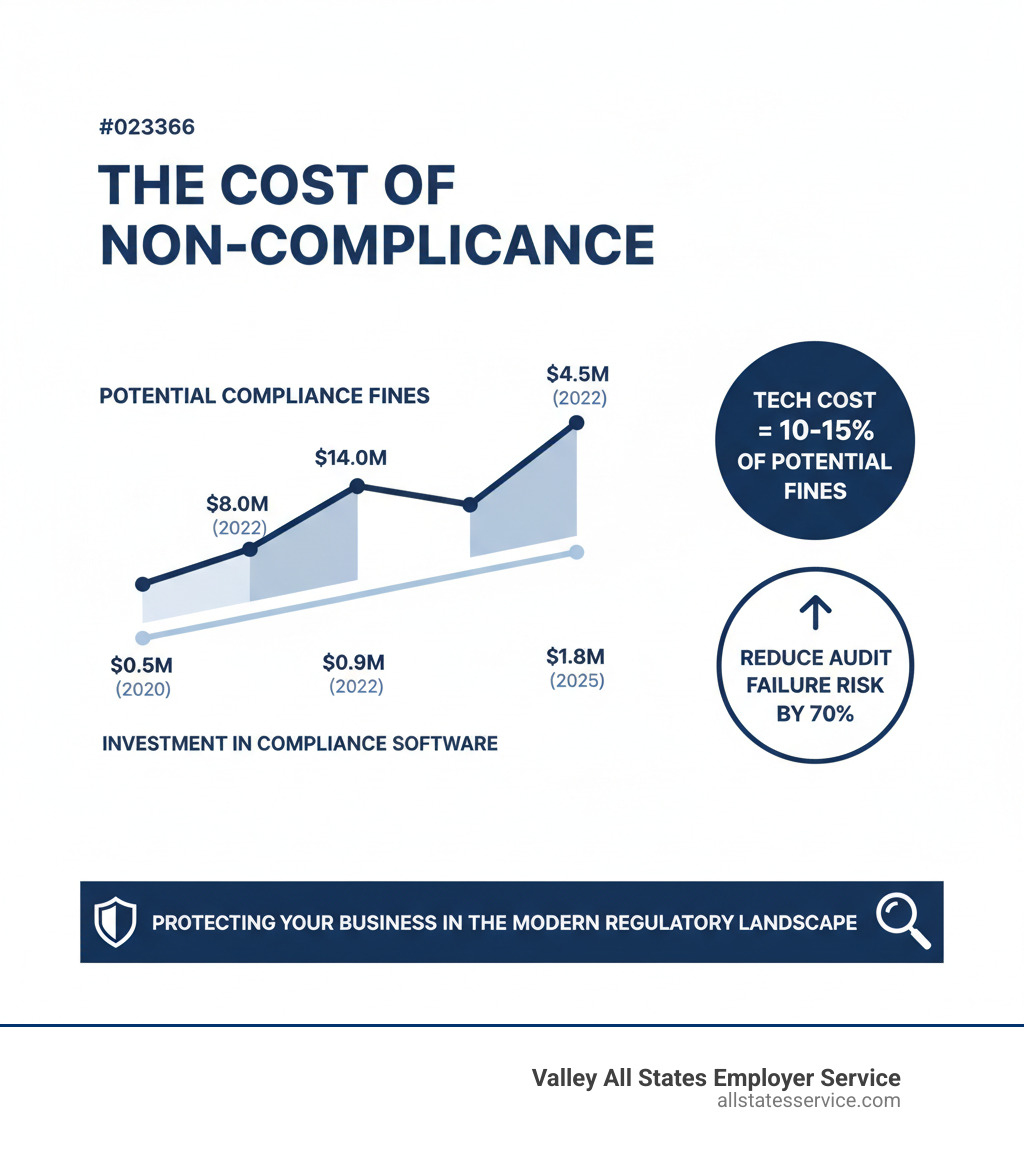
The numbers tell a stark story. 70% of firms juggle five or more compliance frameworks simultaneously, and the average cost of a single audit failure can hit $4 million in lost revenue. With data breaches from misconfigurations on the rise, getting compliance wrong is an existential threat.
For busy HR managers drowning in E-Verify obligations, GDPR requirements, and shifting workplace regulations, the old spreadsheet-and-prayer approach is no longer viable. The governance, risk, and compliance market is exploding because manual processes create gaps where errors multiply.
Modern compliance technology has evolved far beyond clunky checklists. Today’s solutions use AI to predict risks, automate evidence collection, and provide real-time visibility into your compliance posture. The challenge isn’t whether to invest, but finding the right partner that understands your pain points and integrates seamlessly with your existing systems.
Core Challenges in Today’s Regulatory Landscape
Organizations face a perfect storm of compliance challenges. First, evolving regulations like the EU AI Act and various data privacy laws mean the rulebook is never finished. Keeping track of these changes and implementing them across an entire organization is a monumental task.
This constant change leads to a massive data overload and makes manual processes impractical. Errors and omissions become inevitable, leading to costly vulnerabilities. Without a clear, unified view of your compliance status, it’s easy for risks to hide in plain sight, leaving you in a reactive rather than proactive stance.
All these challenges culminate in the threat of escalating fines and reputational damage. Regulators are increasingly strict, and the penalties for non-compliance can severely impact your bottom line and customer trust.
The Strategic Advantage of Compliance Software
Modern compliance software solutions are about gaining a strategic advantage, not just avoiding penalties. They transform compliance from a burden into a powerful asset.
One of the most immediate benefits is reduced risk. Software helps you systematically identify, assess, and mitigate risks. Automated checks and continuous monitoring dramatically lower the chances of an audit failure or data breach.
Next, you’ll see improved efficiency. Compliance software automates routine tasks like data entry and chasing approvals, freeing up your team to focus on more strategic work. This optimizes business processes and makes operations smoother.
These solutions also provide centralized control. A single dashboard offers a holistic view of your compliance posture, ensuring everyone works with the same up-to-date information. This improves collaboration and consistency across departments.
Effective compliance management builds improved brand trust. When customers and partners know you’re committed to ethical practices and data security, it improves your reputation. Finally, while there’s an initial investment, compliance software leads to significant cost savings by avoiding hefty fines and reducing administrative overhead. It helps build an ethical culture by making compliance transparent and integrated into daily operations.
Decoding the Software: Key Features, Types, and the AI Revolution
Now that we understand why compliance solution providers are so vital, let’s look at what makes their software tick. What should you look for, and how is technology like AI changing the game?
Essential Features to Look for in a Compliance Platform
When evaluating compliance software, certain features are absolute must-haves.
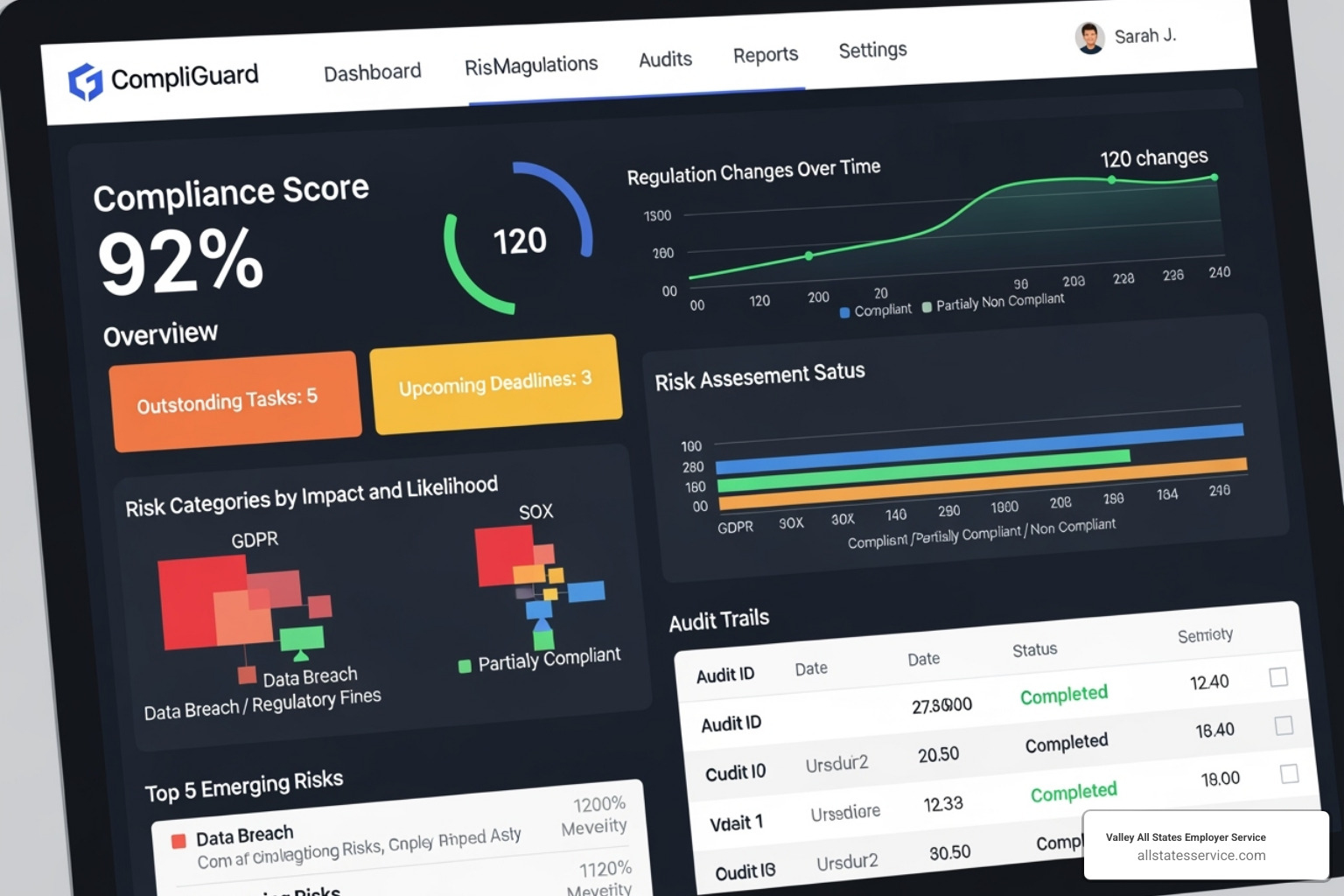
- Centralized Dashboard: This is your compliance cockpit, showing critical alerts, deadlines, and your overall risk posture at a glance.
- Automated Workflows: These handle repetitive tasks like policy reviews and incident reporting, reducing manual work and the chance of errors.
- Risk Assessment Tools: These features help you spot potential problems, evaluate their severity, and prioritize what needs attention first.
- Audit Management: Good software centralizes evidence, maintains detailed audit trails, and provides tools for internal assessments, keeping you audit-ready all year.
- Data Integration: Your platform must connect with your HR system, ERP, and other tools to create a single source of truth and prevent data mismatches.
- Real-Time Reporting & Analytics: These tools turn collected data into useful insights, helping you spot trends and communicate your compliance status effectively.
GRC vs. Specialized Tools: Finding Your Fit
The world of compliance solution providers isn’t one-size-fits-all. You have two main paths: comprehensive GRC platforms or specialized tools.
GRC platforms like MetricStream, Archer, LogicGate, and NAVEX take an integrated approach. They are the Swiss Army knives of compliance, covering governance, risk management, and compliance in a single system. They work well for larger organizations juggling complex, interconnected needs across finance, HR, IT, and legal departments, providing a consolidated view for everyone from practitioners to the board.
Sometimes, however, you need a scalpel. That’s where specialized tools come in. These focus on particular challenges or industries with deep functionality.
- Cybersecurity solutions like SAP GRC and CyberSaint zero in on protecting digital assets and meeting frameworks like ISO 27001 and NIST.
- Data privacy software such as Enzuzo and SAI360 automates the tricky business of GDPR and CCPA compliance, consent management, and data subject requests.
- Industry-specific tools include Arena QMS for the medical industry and IBM OpenPages for the financial services sector. Others like Ideagen, COMPLY, and Prophix bring expertise to their specific domains.
HR compliance deserves special mention. While broad platforms exist, specialized tools can tackle specific employment regulations. This is where we at Valley All States Employer Service come in, providing expert outsourced solutions for E-Verify processing and taking that burden off your plate entirely.
The secret is to honestly assess what you need. Sometimes a comprehensive GRC suite makes sense. Other times, a combination of specialized tools fits better. There’s no wrong answer, just the right one for your situation.
How AI is Making Compliance Smarter, Not Harder
Artificial intelligence is genuinely changing how compliance solution providers work, making everything faster and smarter.
AI-powered risk prediction is like having a compliance fortune-teller. These systems analyze massive datasets to spot anomalies and potential breaches before they happen, flagging unusual transaction patterns or suspicious activities.
Automated evidence collection feels like magic if you’ve ever prepared for an audit the old way. AI can continuously collect evidence and monitor your systems, keeping you audit-ready across multiple frameworks without the last-minute panic. Platforms like Vanta are known for this.
Natural Language Processing (NLP) is revolutionizing policy management. This technology can read new regulations, compare them against your existing policies, and suggest updates, saving countless hours of manual review.
Companies like Diligent are leading the charge with AI-driven insights that help users clarify risk and improve governance. These systems process complex data to surface trends and quantify risks that might be invisible to human analysts. It’s not about replacing human judgment but enhancing it with powerful computation.
A Curated List of Top Compliance Solution Providers
Choosing the right partner from the sea of compliance solution providers can feel overwhelming. To make your search easier, we’ve gathered some of the top players in the field, organized by what they do best.
Best All-in-One GRC Platforms
If you need comprehensive coverage across governance, risk, and compliance, these platforms are the heavy hitters.
- MetricStream: A leader in Integrated Risk Management and GRC, its platform connects governance and risk across the organization to enable smarter, risk-aware decisions.
- Archer: With over 20 years of experience, Archer’s integrated platform helps manage operational risks, audits, and ESG programs for over 1,200 customers worldwide.
- NAVEX: Supporting 13,000 organizations globally, the NAVEX One platform uses “connected intelligence” to integrate people, processes, and data for full risk oversight.
- Diligent: Known for its AI-powered approach, Diligent is used by over 1 million users to clarify risk, strengthen governance, and supervise compliance and ESG programs.
- Resolver: This popular risk intelligence platform brings enterprise risk, compliance, audit, and security incidents together in a centralized hub for diverse industries.
- LogicGate: This platform empowers teams to create their own flexible workflows and reporting, turning risk management into a strategic advantage.
Leading Cybersecurity & Data Privacy Specialists
For businesses where digital security and data protection are critical, these specialists bring focused expertise.
- SAP GRC: A popular choice for cybersecurity compliance, offering enterprise risk assessments, trade management, and identity governance, especially for software companies.
- CyberSaint: This platform helps organizations achieve fast audit readiness across multiple frameworks like SOC 2, ISO 27001, and HIPAA by unifying security, compliance, and risk.
- Enzuzo: A low-code solution that automates data privacy compliance by managing visitor consent, cookie banners, and privacy rights without needing a development team.
- SAI360: While offering broader GRC solutions, SAI360 has a strong focus on managing user consent for web cookies and meeting privacy regulations across many sectors.
Top Niche and Industry-Specific Compliance Solution Providers
Sometimes your needs are so specialized that only an industry-specific solution will do.
- IBM OpenPages: Designed for financial services, this platform offers a task-focused UI and in-depth reporting for banking and finance compliance.
- Arena QMS: A product-centric Quality Management System built for medical device manufacturers to meet FDA and ISO standards like 21 CFR Part 820 and ISO 13485.
- Ideagen: Provides assessments and actionable insights for teams tackling specific standards, including IT governance, GxP, HIPAA, and GDPR.
- COMPLY: A comprehensive platform for financial services firms that integrates data, solutions, and services to manage regulatory filings, AML reviews, and ethics programs.
- Connecteam: An employee management app that helps businesses in healthcare, retail, and construction manage audit trails, activity tracking, and operational procedures.
- Prophix: A financial performance platform recommended for its scalability and flexibility, handling compliance across a wide range of areas with quick implementation.
The right compliance solution provider depends on your specific situation. For workforce eligibility verification, specialized expertise matters. That’s where a dedicated partner like Valley All States Employer Service makes sense, as we focus exclusively on expert, impartial E-Verify processing so you don’t have to become a compliance expert yourself.
Your Roadmap to Choosing and Implementing the Right Solution

Now for the practical part: choosing and implementing the right compliance solution providers. Getting this right can mean the difference between a tool that transforms your operations and one that collects digital dust.
How to Choose the Right Compliance Solution Providers for Your Business
Start by taking a hard look at your specific needs. What are your biggest pain points? Is it data privacy laws, industry certifications, or audit preparation? Your honest assessment is your north star.
Your industry regulations are the lens for everything. A manufacturing company faces different challenges than a healthcare provider navigating HIPAA. Look for providers with proven success in your sector.
Consider scalability. The perfect solution for a 50-person team might fail at 200. Ask vendors how their platform handles growth. SaaS-based solutions typically scale more gracefully.
Integration capabilities are critical. If a new platform can’t talk to your existing HR or ERP systems, you’re creating more work. Ask for real integration examples with the systems you use.
Don’t underestimate vendor support. When you’re facing a deadline, you need quick, effective help. Check reviews, ask for references, and see what training resources are included.
Finally, look beyond the upfront budget. What about implementation fees, training, and maintenance? Factor in the time your team will save and the fines you’ll avoid. A new platform might seem expensive until you remember a single audit failure can cost millions.
A Smooth Transition: Best Practices for Implementation
Even the best software can fail if the implementation is poorly planned.
- Plan Data Migration: Map out what data you have, where it lives, and how it needs to be structured in the new system. Clean up old information before you migrate, not after.
- Focus on Team Training: People resist change. Help them understand how the new tool makes their jobs easier, not just how to click buttons. When they see the personal benefit, adoption happens naturally.
- Develop a Change Management Strategy: Acknowledge that learning new systems is uncomfortable. Celebrate early wins and identify champions in each department to help their colleagues.
- Consider a Phased Rollout: Start with one department or one compliance area. This allows you to learn, adjust your approach, and build confidence before a full-scale launch.
- Establish Clear KPIs: Before you go live, define how you’ll measure success. Are you saving time on compliance tasks? Generating audit reports faster? These metrics prove the value to leadership.
- Measure ROI Continuously: Track both hard savings (reduced fines, less overtime) and soft benefits (better risk visibility, stronger brand trust). This helps justify the investment and plan for the future.
For specialized needs like workforce eligibility verification, a dedicated partner often makes more sense than an all-in-one platform. That’s where companies like Valley All States Employer Service come in, providing expert E-Verify processing that integrates with your broader strategy without adding to your team’s workload.
Frequently Asked Questions about Compliance Solutions
We hear many questions when businesses consider investing in compliance solution providers. Let’s address some of the most common ones.
How do compliance solutions help with evolving regulations?
Modern compliance solutions are built to handle constant change. They keep you ahead of the curve in several ways:
- Regulatory Intelligence Feeds: Many platforms monitor legislative updates and deliver alerts directly to your dashboard, so you’re always informed.
- Automated Updates: Providers often push updates to their software as regulations evolve, ensuring your internal frameworks and checklists stay current.
- Customizable Rule-Sets: You can configure controls specific to your operations and the jurisdictions where you do business.
- Horizon Scanning: Advanced solutions use AI to spot emerging regulatory trends, helping you prepare for future requirements instead of just reacting to them.
Can small businesses benefit from compliance software?
Yes, absolutely. Small businesses often benefit more from these solutions because they lack the resources to absorb compliance mistakes.
Many compliance solution providers offer scalable, subscription-based (SaaS) models, so you only pay for what you need. Rather than a massive GRC platform, a small business might use a specialized tool to fast-track a specific certification like SOC 2.
The biggest benefit is the reduced administrative burden. Automation frees up valuable time, helps you avoid costly errors, and gives your business the professional credibility that customers and partners expect. For specific needs like workforce eligibility, partnering with a dedicated service provider can be even more efficient.
What is the role of reporting in compliance management?
Reporting is the language of compliance. It’s how you prove you’re meeting your obligations and identify areas for improvement.
- Demonstrates Compliance: Reports provide concrete evidence to auditors, regulators, and stakeholders that you are following the rules.
- Provides Board-Level Visibility: High-level dashboards give leadership the strategic overview they need to understand risk exposure and make informed decisions.
- Identifies Trends: Reporting helps you spot recurring issues or patterns, pointing you toward areas that need attention and continuous improvement.
- Supports Audits: Well-organized, automated reporting makes the audit process smoother, as all documentation is timestamped and ready to present.
- Enables Data-Driven Decisions: Instead of guessing where to allocate resources, you have actual data to guide your strategy, moving you from reactive firefighting to proactive management.
Build a Resilient Business with the Right Compliance Partner
The days of treating compliance as a necessary evil are over. Where regulations multiply and the cost of a misstep is immense, compliance solution providers are essential to survival.
Proactive compliance beats reactive scrambling every time. When you anticipate risks instead of reacting to disasters and automate processes instead of pulling all-nighters before audits, compliance transforms from a burden into a strategic asset.
The future of compliance is clear: more automation, smarter AI integration, and deeper connectivity across business systems. The providers leading this charge give you clarity, confidence, and control over your risk landscape.
Whether you need a comprehensive GRC platform or a specialized tool, the right partner is out there. The key is knowing what you need and committing to a proactive approach.
When it comes to specialized needs like workforce eligibility verification, you don’t want to leave it to chance. Valley All States Employer Service brings expert, impartial, and efficient E-Verify processing to the table. We handle the complexities so you can focus on what you do best, minimizing errors and administrative headaches while keeping you compliant.
Building a resilient business means building one that can weather regulatory storms and maintain trust. The right compliance partner helps you build that foundation.
Ready to take control of your compliance? Learn more about our E-Verify services and find out how partnering with experts can simplify one of your most critical obligations.